

Beyond the Salute: How Independent Living Services Help Veterans with Disabilities Thrive
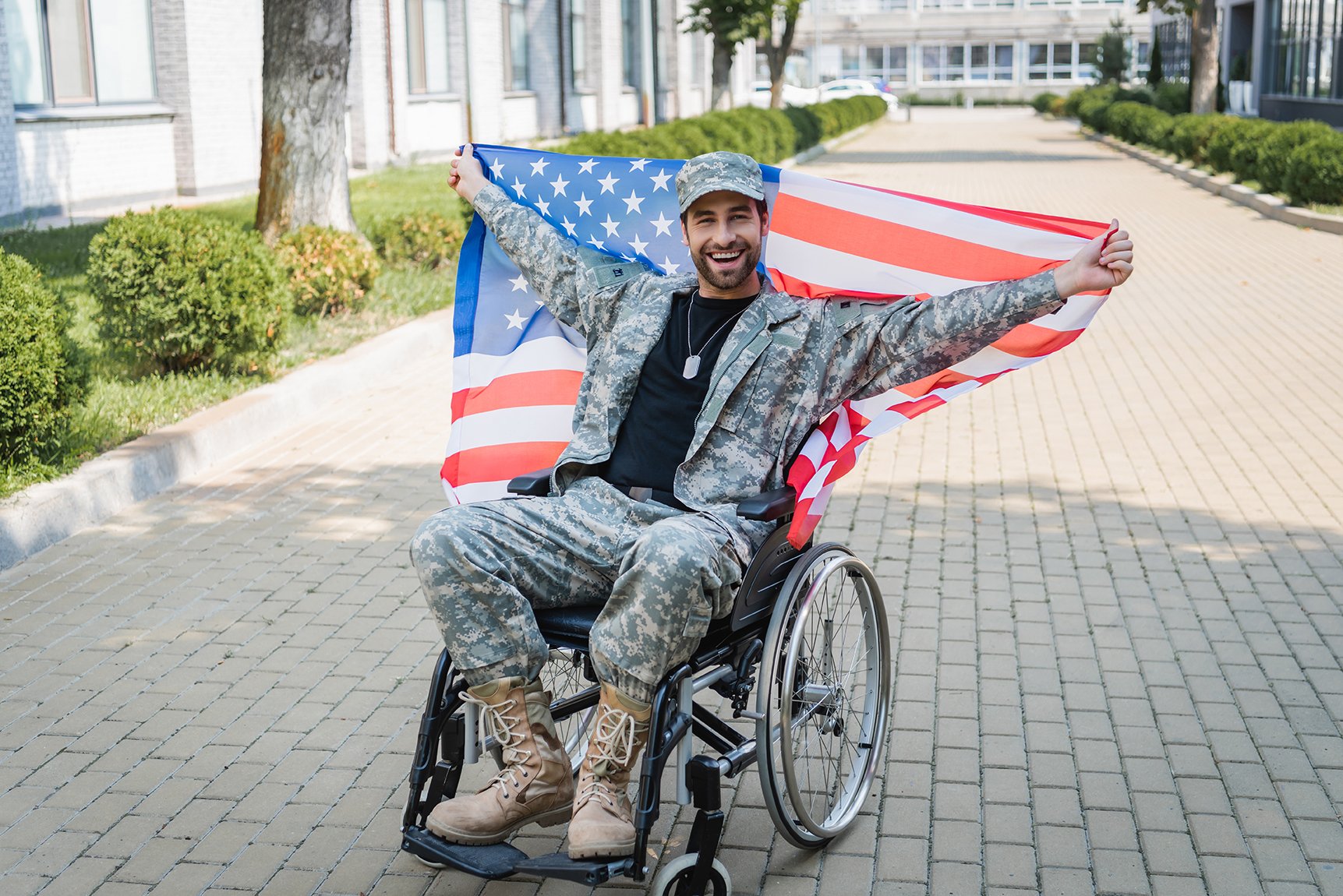
Image: A Veteran is pictured wearing military fatigues while sitting in a wheelchair. He holds an American flag, spreading it wide behind himself.
Every year on November 11th, the United States observes Veterans Day, a federal holiday dedicated to honoring all American military Veterans who have served in the U.S. Armed Forces, whether in wars or during peacetime. This national moment of reflection is our collective expression of gratitude for the service and sacrifice made by Veterans.
But Veterans Day is more than a holiday; it marks a long-standing commitment by federal programs to support the well-being and independence of Veterans with disabilities. Through a variety of Veterans Administration (VA) programs, Veterans can access important services for medical and psychological treatment, as well as services that support independent living.
One such independent living program is CPWD’s Veterans Independence Program (VIP). With approval from the VA, Veterans with disabilities can enroll in VIP, where they can hire and manage caregivers, and get ongoing support and assistance from VIP staff.
Following, we’ll explore a brief history of Veterans Day, take a look at VA programs, and dig deeper into VIP.
Veterans Day: A Foundation of Honor
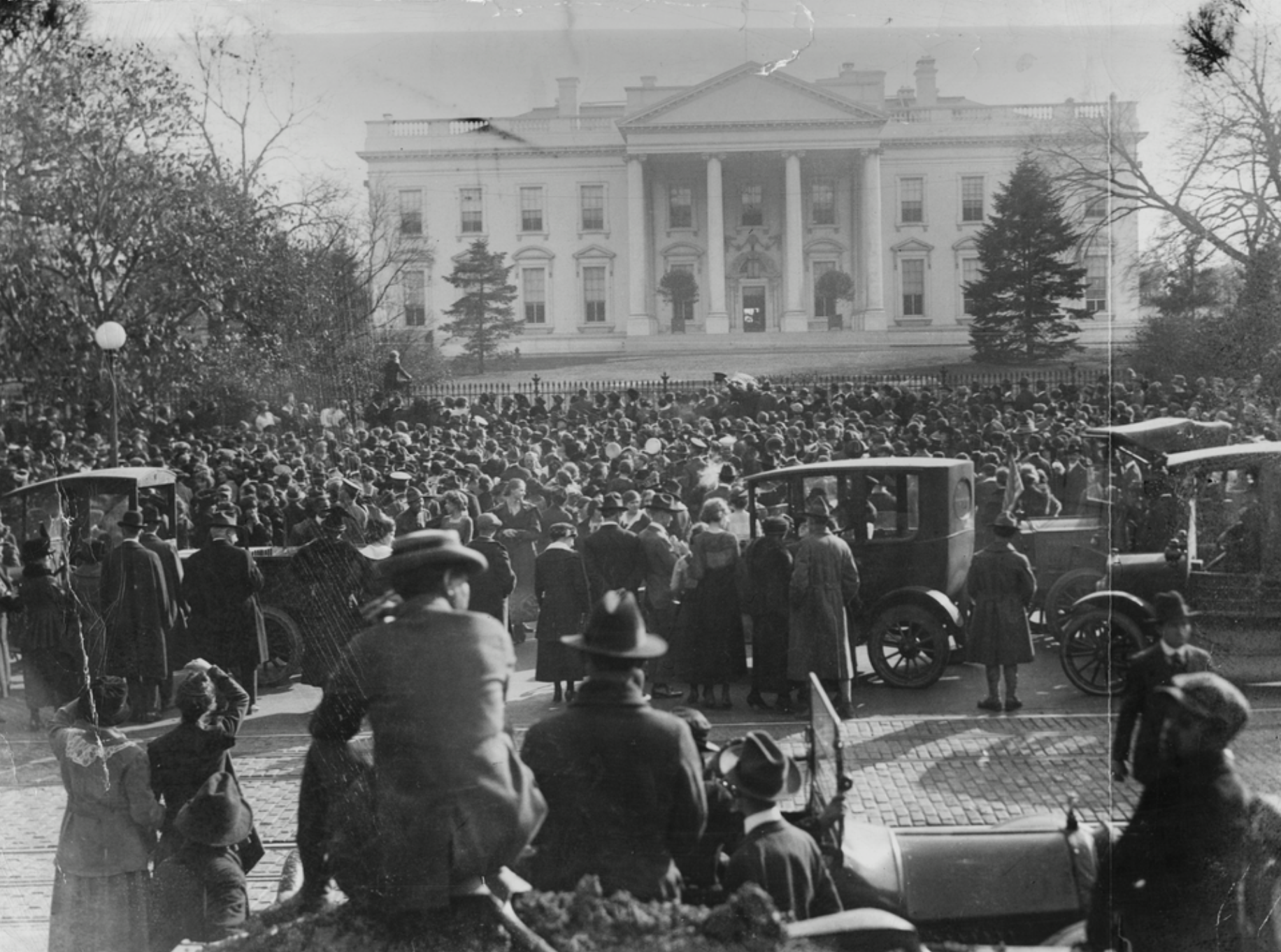
Image: A crowd gathers outside the White House on Armistice Day in 1918.
Veterans Day has its roots in Armistice Day, first proclaimed by President Woodrow Wilson in 1919 to commemorate Veterans and the end of World War I, which ended on the eleventh hour of the eleventh day of the eleventh month (November 11, 1918).
Armed conflicts that followed WWI – World War II (1939-1944) and the Korean War (1950-1953) – resulted in millions of new Veterans, and many more Veterans with disabilities. In 1954, at the urging of Veterans’ organizations and Congress, President Dwight D. Eisenhower signed the legislation officially changing the name from Armistice Day to Veterans Day to honor all American Veterans of all wars. Unlike Memorial Day, which specifically honors those who died while serving the country, Veterans Day honors all Veterans, living and deceased.
Today, each Veterans Day, an official ceremony is held at the Tomb of the Unknown Soldier in Arlington National Cemetery, while our cultural observance of the holiday acknowledges the patriotism and willingness to serve by all who have worn the uniform.
The Commitment in Action: VA Independent Living Services
In addition to a holiday and ceremony, federal laws provide for health, benefits, housing, employment, and independent living services. These laws are couched under Title 38 of the United States Code, formally enacted in 1958.
Timeline of VA’s Governing Law (Title 38, U.S.C.)
Key milestones in U.S. veterans’ benefits law and administration.
| Date | Event | What it Changed | Governed by |
|---|---|---|---|
| 1860s (Post-Civil War) | First Pension Laws | Establishment of federal responsibility for Veterans with disabilities through Pension Laws for Civil War Veterans. | Pension Bureau |
| 1930 | Veterans Administration (VA) Created | Consolidation of the various fragmented Veteran agencies into a single federal body. | Veterans Administration |
| September 2, 1958 | Title 38, U.S. Code Enacted | The body of law governing all Veterans’ benefits (health, disability, education, etc.) is codified into its own stand-alone federal law: Title 38, Veterans’ Benefits. | Veterans Administration |
| 1989 | VA Elevated to Cabinet Level | The VA becomes the Department of Veterans Affairs (VA), a Cabinet-level department. | Department of Veterans Affairs |
Title 38 is the overarching statutory authority for nearly every program and service provided by the three branches of the VA:
1. Veterans Health Administration (VHA): Covers eligibility and scope of medical care.
2. Veterans Benefits Administration (VBA): Covers disability compensation, pensions (like Aid & Attendance), education benefits (like the GI Bill, found primarily in Chapter 30 and 33 of Title 38), and housing benefits.
3. National Cemetery Administration (NCA): Covers burial benefits.
4. Veteran Readiness and Employment (VR&E): The Independent Living Track and the "serious employment handicap"*see note below criterion are found in Chapter 31 of Title 38.
Today, the VA offers several specialized programs designed to help Veterans with severe service-related disabilities achieve independence and remain in their homes and communities.
The Independent Living (IL) Track
The primary gateway for Veterans who cannot pursue employment due to their service-connected disabilities is the Independent Living (IL) Track under the Veteran Readiness and Employment (VR&E) program. This individualized rehabilitation program focuses purely on maximizing a Veteran's ability to function independently in their family and community. A Veteran is eligible if their disability is severe enough to cause a "serious employment handicap"*see note below, and the achievement of a vocational goal is not currently feasible.
Under an Individualized Independent Living Plan (IILP), services can include:
Assistive Technology (AT): Providing specialized equipment, from modified computers to motorized wheelchairs, necessary to overcome functional limitations.
Independent Living Skills Training: Short-term, intensive training to enhance skills needed for daily tasks like self-care, mobility, cooking, and money management.
Attendant Care: Temporary assistance with activities of daily living (ADLs) during rehabilitation or transition periods.
Specialized Medical and Rehabilitation Services: Coordination of comprehensive care, including physical, occupational, and speech therapy.
Adaptive Housing Grants
A critical component of independent living is an accessible home environment. The VA offers two main grants to help Veterans build, buy, or modify their residences:
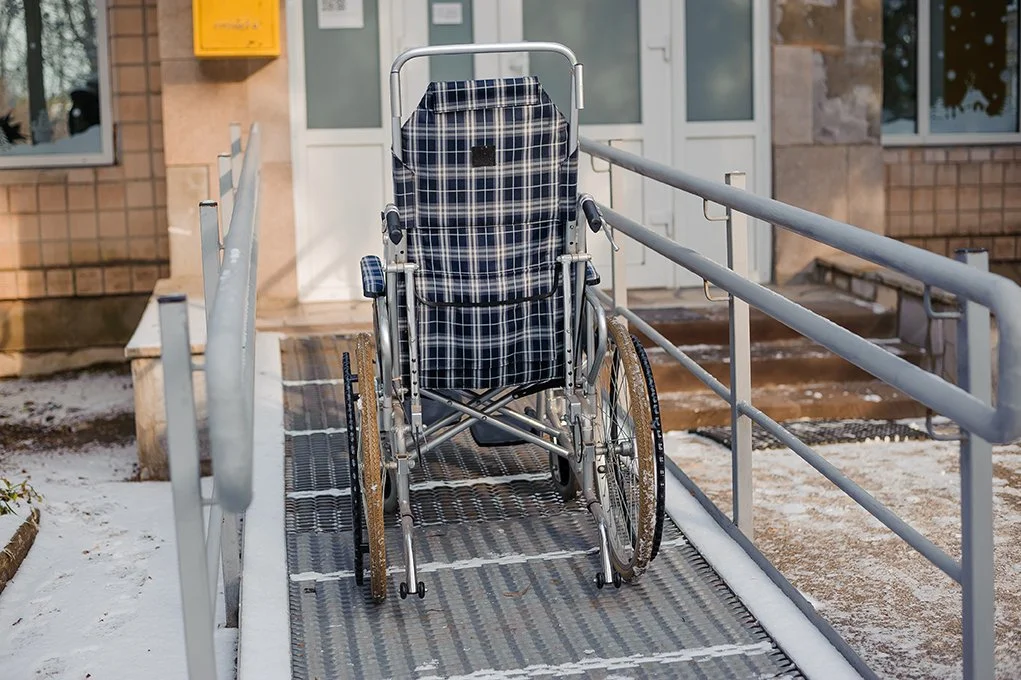
Image: An empty wheelchair sits on a ramp leading into a building
Specially Adapted Housing (SAH) Grant: This grant is for Veterans with certain severe, permanent service-connected disabilities (such as the loss of use of multiple limbs or blindness combined with other severe damage). It provides financial assistance to construct a specially adapted home or make substantial modifications to an existing residence.
Special Home Adaptation (SHA) Grant: This grant is for Veterans with less severe, but still life-altering, service-connected disabilities (such as the loss or loss of use of both hands). It provides funds for modifications like installing ramps, adapting kitchens and bathrooms, or widening doorways to improve mobility and function within the home.
These grants ensure that the structure of the Veteran’s living space does not create a barrier to their independence.
Home and Community-Based Care
For those who need ongoing personal assistance but wish to avoid moving to a nursing home, the VA offers flexible programs under the Veterans Health Administration (VHA):
Veteran-Directed Care (VDC) Program: This model empowers the Veteran to manage a flexible, VA-approved budget to purchase goods and services and hire their own caregivers—which can include family members, friends, or neighbors. VDC emphasizes person-centered care, putting the Veteran in control of their long-term services and supports (LTSS).
Aid and Attendance (A&A) Pension: This is a financial benefit, paid in addition to a Veteran's or survivor's existing VA pension, for those who require the regular aid and attendance of another person to perform basic daily activities (bathing, dressing, eating). This extra, tax-free income is intended to help offset the high cost of home care or assisted living.
CPWD’s VIP Program
Our VIP program is authorized and funded under the Home and Community-Based Care arm of VA services. VIP allows Veterans to receive care and live independently in their own homes.

Image: A man who is a Veteran sits in a wheelchair outside, holding an American flag and smiling to the camera.
· VIP gives Veterans choice and power to choose whomever they want as care providers. These could be family members, friends, other caregivers, or a team of service providers.
· VIP helps Veterans of all ages who need non-medical support with daily living (such as bathing, getting dressed, and cooking meals).
· VIP also gives family members of Veterans a chance to take care of their loved ones while maintaining an income.
Over the past several years, CPWD’s VIP program has grown immensely. Recently, we were designated a “VIP Hub” by the VA, meaning that in addition to serving our own Veterans, we would also train and manage other Centers for Independent Living (CILs) wanting to provide these services. Currently, we are supporting “Spokes”, providing services across Colorado, southern Wyoming, Nebraska, parts of Western Iowa, and parts of California.
Through VIP, Veterans with disabilities have the best chance to maintain independence, continue living at home, stay connected to family, friends, hobbies, and favorite activities.
Watch this story about Mark, one of our VIP Veterans.
The nation's promise to its Veterans, symbolized by the respectful observance of Veterans Day, is fulfilled by the continuous and comprehensive support provided by the VA. Delivery of these services requires more than what the VA can offer alone. By partnering with CILs like CPWD, these highly effective programs can reach more Veterans around the country, and ensure that Veterans with disabilities can live independent and fulfilling lives.
If you are a Veteran, or know of a Veteran who could benefit from VIP services, please visit our VIP page, where you can send us an email to find out more.
In honor of all our Veterans, and especially those who are now living with disabilities, thank you for your service.
* While the VA and other federal agencies have largely moved away from the term "handicap" in favor of "disability," the specific phrase "serious employment handicap" remains active because it is codified in federal law, specifically Title 38 of the U.S. Code (Chapter 31), which governs the Veteran Readiness and Employment (VR&E) program.