

2025: Community, Advocacy, and Hard-Won Progress
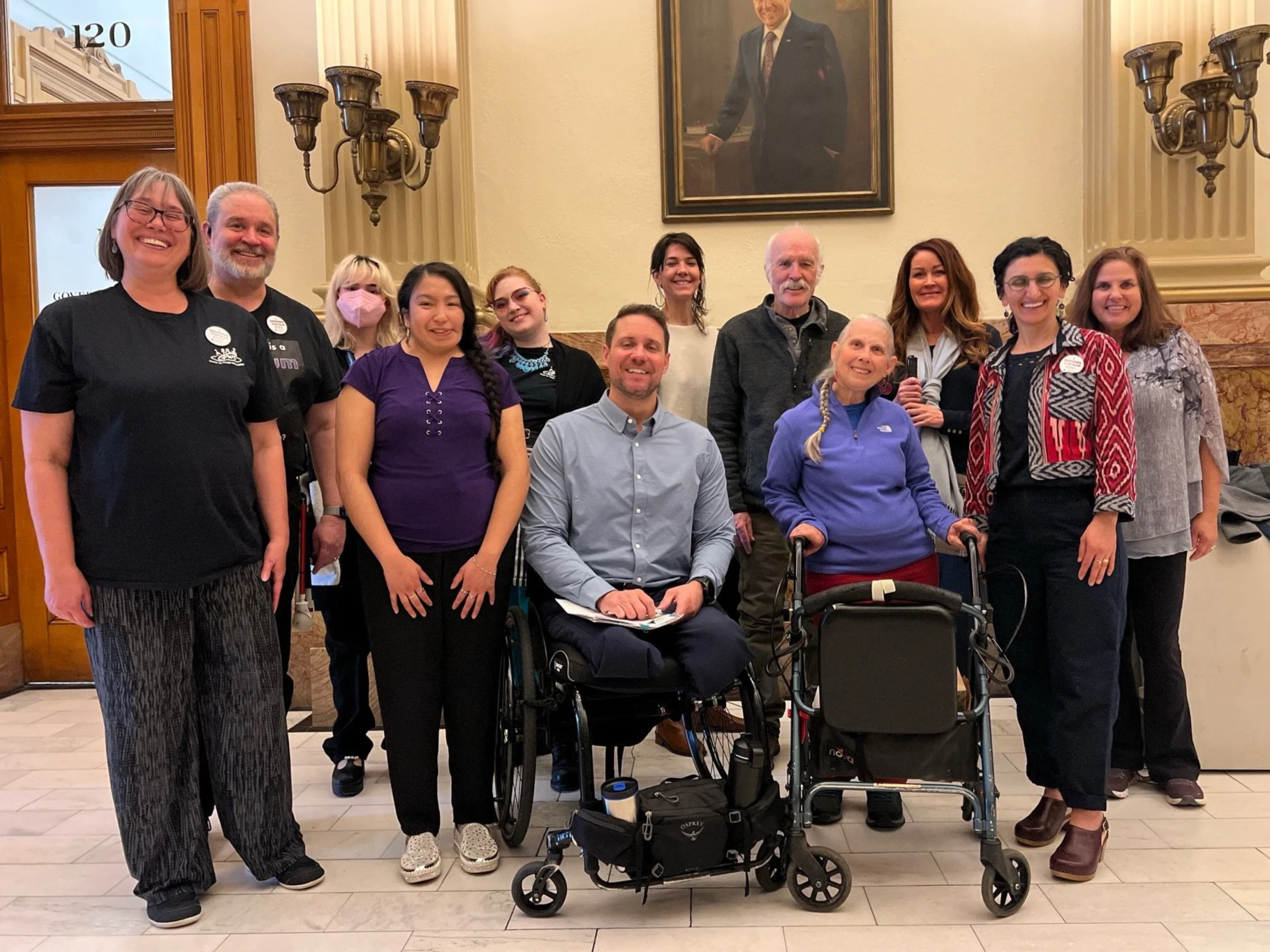
Image: CPWD staff, board members, and consumers stand together in the Colorado State Capitol building during Disability Rights Advocacy Day in March, 2025.
2025 was a full and powerful year for CPWD. In addition to providing services to more than 2,200 people with disabilities in our greater community, we engaged in conversation at every level of society. We conducted or participated in listening and sharing sessions at community centers, with legislators and policy makers, with our companion agencies, municipalities, families, and, of course, individuals with disabilities.
Through these conversations, we were able to share the essence and value of independent living and bring the voice of the disability community to policymakers, planners, and other decision-makers. We were also able to deeply listen to the people, their needs and concerns, successes, and challenges.
In every conversation, we heard the experiences of hope and curiosity, as well as frustration, exhaustion, and concern. Almost universally, in every conversation, core understanding came back to the agreement that people with disabilities need access to services and resources, to be treated with respect and dignity, and to have opportunities to work towards and achieve independent living.
In this article, we want to share with you the work CPWD accomplished in 2025, highlighting outcomes from important conversations and connections, and our community efforts in the areas ofadvocacy, education, and partnerships. We are proud of what we have achieved and look forward to continuing this important, collaborative work in 2026.
Being Present: Trainings and Listening Sessions
Throughout 2025, CPWD facilitated 30 Disability Etiquette Trainings and listening sessions across our service areas and around the state.

Image: A Disability Etiquette training session.
Every training included a room full of people asking real questions, sharing real experiences, and learning how to better support and relate to the people they serve, work with, and live with. It meant staff taking time to listen carefully, explain clearly, and help untangle everyday barriers around communication, access, equity, and inclusion. This kind of learning and growth furthers equality in our communities.
We showed up, week after week, town after town, and room after room. Over time, those conversations built trust, stronger partnerships, and a deeper understanding of what accessibility actually looks like in daily life.
Disability Rights Advocacy Day
One of the clearest examples of that community power was at the Colorado State Capitol. More than 500 people from across Colorado gathered for Disability Rights Advocacy Day on March 6, 2025. These people showed up to speak, to share, and to be seen. CPWD helped organize the day, coordinating a statewide proclamation and supporting meetings between legislators and their constituents.
Lawmakers took time on the House and Senate floors to recognize the day, but the real impact came from the people in the rooms sharing their stories, asking for change, and reminding decision-makers that disability policy isn’t an abstraction, rather it directly impacts daily life for people with disabilities
Watch this video to see a recap of Disability Rights Advocacy Day 2025.
Making Change in Law, Not Just in Conversation
Conversations matter. But policy is what changes systems. During the 2025 legislative session, CPWD’s advocacy team and consumers worked alongside partners to support bills that expanded access, strengthened civil rights protections, and protected community integration for people with disabilities across Colorado.
That work resulted in clear, signed-into-law wins:
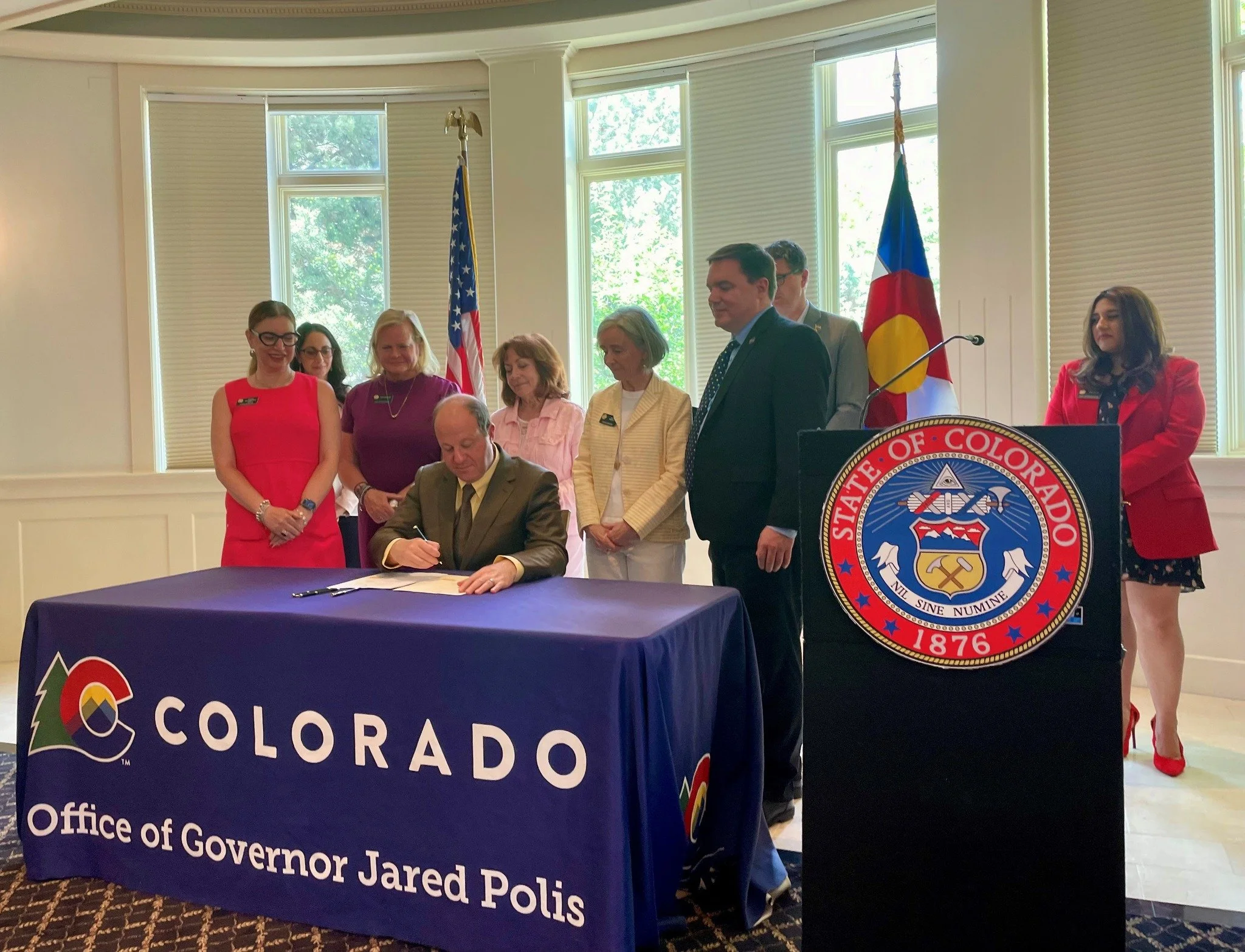
Image: On May 22, Governor Polis signed into law several bills for Disability Rights.
HB25-1154 — Protects critical communication services for Deaf, Hard of Hearing, and DeafBlind communities (signed May 22, 2025).
HB25-1239 — Modernizes and strengthens the Colorado Anti-Discrimination Act (signed May 22, 2025).
HB25-1018 — Removes income and family contribution requirements for vocational rehabilitation services (signed April 18, 2025).
HB25-1007 — Enhances paratransit services (signed April 17, 2025).
HB25-1030 — Ensures building codes meet or exceed accessibility standards (signed March 11, 2025).
HB25-1017 — Advances a statewide community integration plan rooted in the Olmstead framework (signed May 22, 2025).
SB25-001 — The Colorado Voting Rights Act, strengthening voting protections for people with disabilities (signed May 12, 2025).
SB25-073 — Improves continuity of special education services for military-connected children with disabilities (signed April 17, 2025).
These bills are a testament to sustained advocacy, coalition partnerships, and the presence of people with disabilities shaping policy decisions. We need to bring our voice and presence to lawmakers and policymakers, so they can be informed about real needs and concerns, and carry our message to their committees and colleagues.
Growing From Within
Change didn’t just happen with policy; it happened within CPWD, too. In 2025, CPWD implemented a Co-Director of Services model, filling this dual-role position that manages our Core Services and programs, with internal candidates. This created continuity, program stability, and new opportunities for staff to grow into leadership roles.
We also filled five new positions:
Information & Referral Specialist
Ticket to Work Specialist
Independent Living Advisor
Beyond Vision Skills Trainer
Nursing Home Transition Coordinator
Each role helps strengthen our ability to respond to community needs with competency and consistency.
Supporting People Through Uncertainty
2025 also brought challenges. Colorado’s Division of Vocational Rehabilitation (DVR) cost-containment measures led to fewer referrals and authorizations for benefits counseling and youth services, meaning fewer people were able to access those programs.
A government shutdown created concern around potential interruptions to SNAP benefits and other essential supports. In response, CPWD staff shared food and other resource lists, helped connect people to supplemental supports locally, and spent time answering questions, understanding needs, and helping people find new options and solutions for critical independent living needs.
Sometimes advocacy looks like policy change. Sometimes it looks like sitting with someone while they sort through uncertainty. Both matter in an inclusive community.
Standing for Inclusion and Partnerships
This year, CPWD was recertified as a Center for Independent Living for another three years and found to be in full compliance across all review areas. We are proud of this certification; it reflects the professionalism and consistency, as well as the person-centered care built into our work.
We also provided formal feedback on federal changes to gender reporting categories that reduce options for self-identification. CPWD raised concerns that this change moves us backward in recognizing gender diversity and inclusion. We will continue to advocate for systems that reflect the full diversity of the communities we serve.
In 2025, some of our key outcomes from partnerships included:
Hosted Building Communi-TBI!, creating space for people with traumatic brain injury and their supports to connect and share resources
Received the Map My Path grant to expand awareness of services for youth and families
Began a collaboration with the Justice Coalition For All (JCALL) to support older adults experiencing abuse
Sent staff to the National Council for Independent Living Conference in Washington, DC, where we met with Colorado’s federal representatives about the importance of funding for Centers for Independent Living and benefits like Medicaid. During this event, we participated in the disability rights march.
Hosted 1TOUCH™ Self-Defense classesat the Thornton Community Center for blind and low vision community members. To learn more about this program, watch this video.
Partnered on Luna Cultura, an art and wellness gathering for Spanish-speaking community members
Saw continued growth in CPWD’s Movement and Mindfulness Peer Group, welcoming participants from across the community, including people from day programs like Pathfinders. To learn more about this peer group and sign up to attend, check out our Service Calendar.
Each of these spaces gave people room to connect, learn, and support one another — not as clients, but as a community.
Looking Ahead
2025 reminded us that change doesn’t always happen in a straight line, but more through conversations, in rooms, in relationships, and in steady, patient work. We’re grateful for everyone who showed up, spoke up, partnered with us, and trusted us with their stories.
We carry that forward into 2026. We are still listening, still advocating, still building a Colorado where people with disabilities are supported, included, and empowered to live the lives they choose.
Stay tuned next week for an article that will introduce you to our plans for 2026 and beyond.