

Lived Experiences Heard: World Mental Health Day and the Disability Community
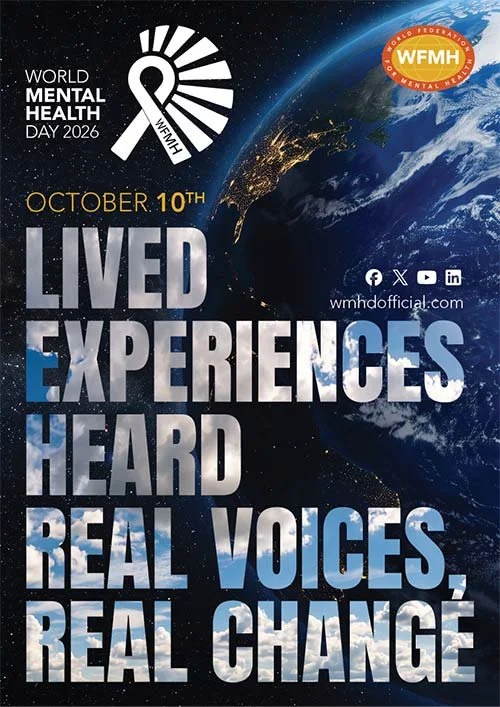
Image: The poster for World Mental Health Day. Text that says “World Mental Health Day 2026, Lived Experiences Heard, Real Voices, Real Change” is overlaid on an image of the Earth.
On October 10, people around the world marked World Mental Health Day. This year, the World Federation for Mental Health chose the theme "Lived Experiences Heard: Real Voices, Real Change," a call to put the voices of people who live with mental health conditions at the center of every conversation about care.
That idea is familiar to us. CPWD is a Center for Independent Living, and since 1977 our work has been guided by a team made up largely of people with disabilities. In this article, we look at what the research says about mental health in our community, how the approach to mental health in the United States has changed over the past 70 years, how this year's global push for community-based care connects to the independent living movement, where to find support in Colorado, and how you can make your own experience heard.
Mental Health and the Disability Community
Mental health and disability are closely connected, and many of us live at the meeting point of the two. According to the Centers for Disease Control and Prevention (CDC), adults with disabilities report frequent mental distress 4.6 times as often as adults without disabilities. Frequent mental distress means 14 or more days of poor mental health in a single month, and it affects about 17.4 million adults with disabilities in the United States, or roughly 1 in 3.
The CDC is clear that the causes are not only medical. Adults with disabilities are more likely to live on low incomes and more likely to go without care because of cost, and both of those barriers are linked to mental health. The CDC's own recommendations point to the same solutions the independent living movement has worked toward for decades: more community participation, stronger social connection, and better access to care and support.
This is exactly why this year's World Mental Health Day theme matters. When people with disabilities describe the barriers we face, such as an inaccessible clinic, a benefits system that punishes work, or a waitlist for in-home support, we are naming the specific things that can be changed.
How Our Approach to Mental Health Has Changed
The way the United States responds to mental health has changed dramatically over the past 70 years, and much of that change came from people with lived experience who insisted on being heard.
The Era of Institutions
For much of the 20th century, the main response to serious mental health conditions was the state psychiatric hospital. In 1955, almost 560,000 people lived in state and county psychiatric hospitals across the country (Psychiatric Services). Many people stayed for years or even decades, separated from their families, their work, and their communities, with very little say in their own care.
The Promise of Community Care
In 1963, President John F. Kennedy signed the Community Mental Health Act, which set out a new vision: people would receive care close to home, through community mental health centers that offered emergency care, outpatient services, and support after a hospital stay. Over the following decades, the number of people living in state psychiatric hospitals fell to about 100,000 (Psychiatric Services). The community services that were supposed to replace the hospitals were never fully funded, and closing that gap is work that continues today.
People With Lived Experience Lead the Way
In the 1970s, former psychiatric patients began organizing for their own rights. One of the founders of this movement, Judi Chamberlin, had been committed to a psychiatric hospital in 1966 at age 21 and was told she would never be able to live outside an institution. In 1978, she published On Our Own: Patient Controlled Alternatives to the Mental Health System, which made the case for self-help, mutual support, and peer-run services. Chamberlin built strong ties with the cross-disability movement, and she described its slogan, "Nothing about us without us," as the belief that would ultimately prevail. Today's peer support programs, including our own, grow directly from that work.
Rights Written Into Law
In 1990, the Americans with Disabilities Act extended civil rights protections to people with mental health conditions, alongside people with every other kind of disability. In 2008, the Mental Health Parity and Addiction Equity Act required most health plans that cover mental health and substance use treatment to offer that coverage on terms at least as favorable as their coverage for medical care. In July 2022, the national 988 Suicide and Crisis Lifeline launched, giving everyone in the country a three-digit number for mental health support.
A Day for the Whole World
World Mental Health Day itself grew out of this same shift. The World Federation for Mental Health first observed the day in 1992 with a single broadcast from Tallahassee, Florida, joined by participants on five continents (World Mental Health Day). It has since grown into a global observance with a new theme each year, and this year's theme brings the story back to where the movement began: the voices of people who have lived it.
Care in the Community: A Global Goal We Know Well
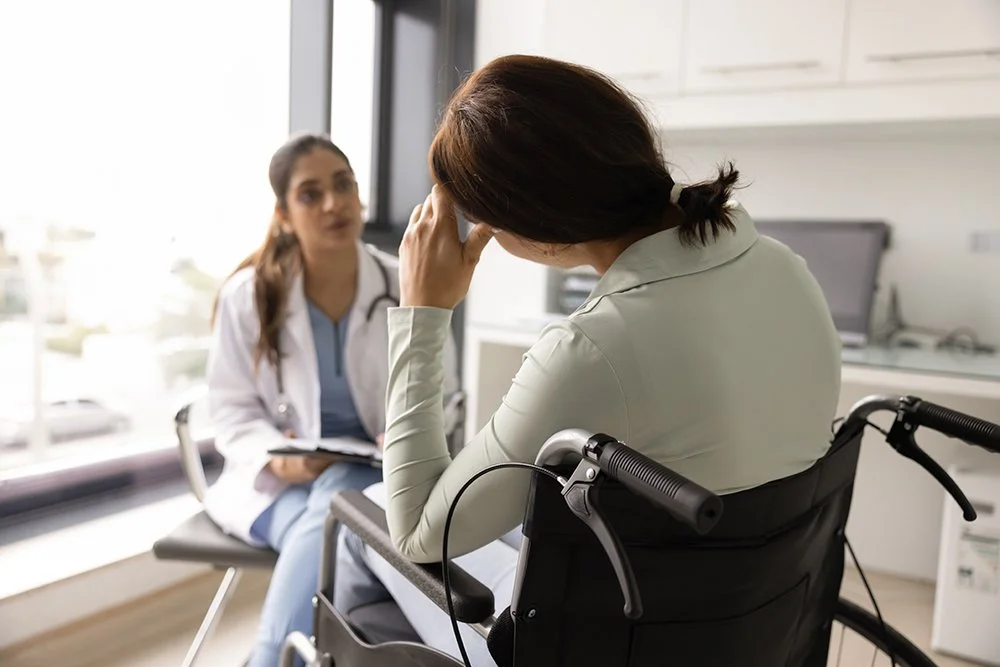
Image: A woman who is a wheelchair user speaks with her doctor about mental health issues.
This year, the World Federation for Mental Health also asked organizations to support the World Health Organization's push to move mental health care out of institutions and into communities. On October 9, the WHO released Supporting the transition to community-based mental health and social care, a practical guide for helping people who have spent long periods in psychiatric hospitals return to life in the community. In announcing the guide, WHO Director-General Dr. Tedros Adhanom Ghebreyesus said, "People should not have to give up their freedom, dignity or place in their community." The WHO also reported that only 9 percent of the countries it surveyed have fully shifted to community-based care (The Star).
In the United States, the disability community won this principle in court more than 25 years ago. In 1999, the Supreme Court decided Olmstead v. L.C., a case brought by two Georgia women, Lois Curtis and Elaine Wilson, who had spent years in a state psychiatric hospital even though their own treatment professionals agreed they could live in the community. The Court ruled that keeping people with disabilities in institutions when they can live in the community is discrimination under the Americans with Disabilities Act. Learn more about the Olmstead Act by reading this previous article.
Olmstead is part of the ground we stand on today. It is why programs like CPWD's Transitions to Community Living exist, helping people move from nursing facilities and other institutions into homes of their own, with the supports they choose.
Where to Turn for Support in Colorado

Image: This is the logo for 988 Colorado mental Health
If you or someone you know needs mental health support, help is available any time of day. Since July 1, 2025, Colorado's crisis line has been part of 988 Colorado, a free and confidential service for emotional, mental health, and substance use support. The 988 line is also accessible in several ways, so everyone in our community can reach it in the way that works best for them:
You can call or text 988 at any hour.
You can chat online at chat.988lifeline.org.
If you use American Sign Language, you can call 988 from a videophone and connect directly with a counselor who signs, as the 988 Lifeline explains.
If you use a TTY, you can dial 711 and then 988.
If you are a Veteran, you can call 988 and press 1 to reach the Veterans Crisis Line, or text 838255.
CPWD is not a crisis service or a mental health treatment provider, but our independent living services can be part of a strong support network. Our Peer Support program connects you with someone who has lived experience with disability. Our Advocacy and Independent Living Advisors can help you work through barriers like housing, benefits, and access to services, which often weigh on mental health. You can reach us at 303-442-8662 or visit cpwd.org to learn more.
Make Your Experience Heard
This year's theme reminds us that real change starts when people with lived experience speak up and are listened to. Here are some ways to add your voice:
Sign up for advocacy updates on the CPWD website, so you hear about bills, public comment periods, and hearings while there is still time to act.
Tell us about a specific barrier you are running into, whether it is an inaccessible provider, a long waitlist, or a gap in services. Our systems advocacy starts when someone names the problem.
Share your experience with your state legislators, who make decisions about mental health and disability funding in Colorado every year.
If you have found your footing, consider offering peer support to someone who is newer to the journey.
You have the right to services that respect your choices and keep you in your community. Our mission is to help people with any disability overcome barriers to independent living, and we are here to stand alongside you. Call us at 303-442-8662 or email inof@cpwd.org to connect with our team.