

Your Voice at the Capitol: Join Disability Rights Advocacy Day (DRAD) 2026
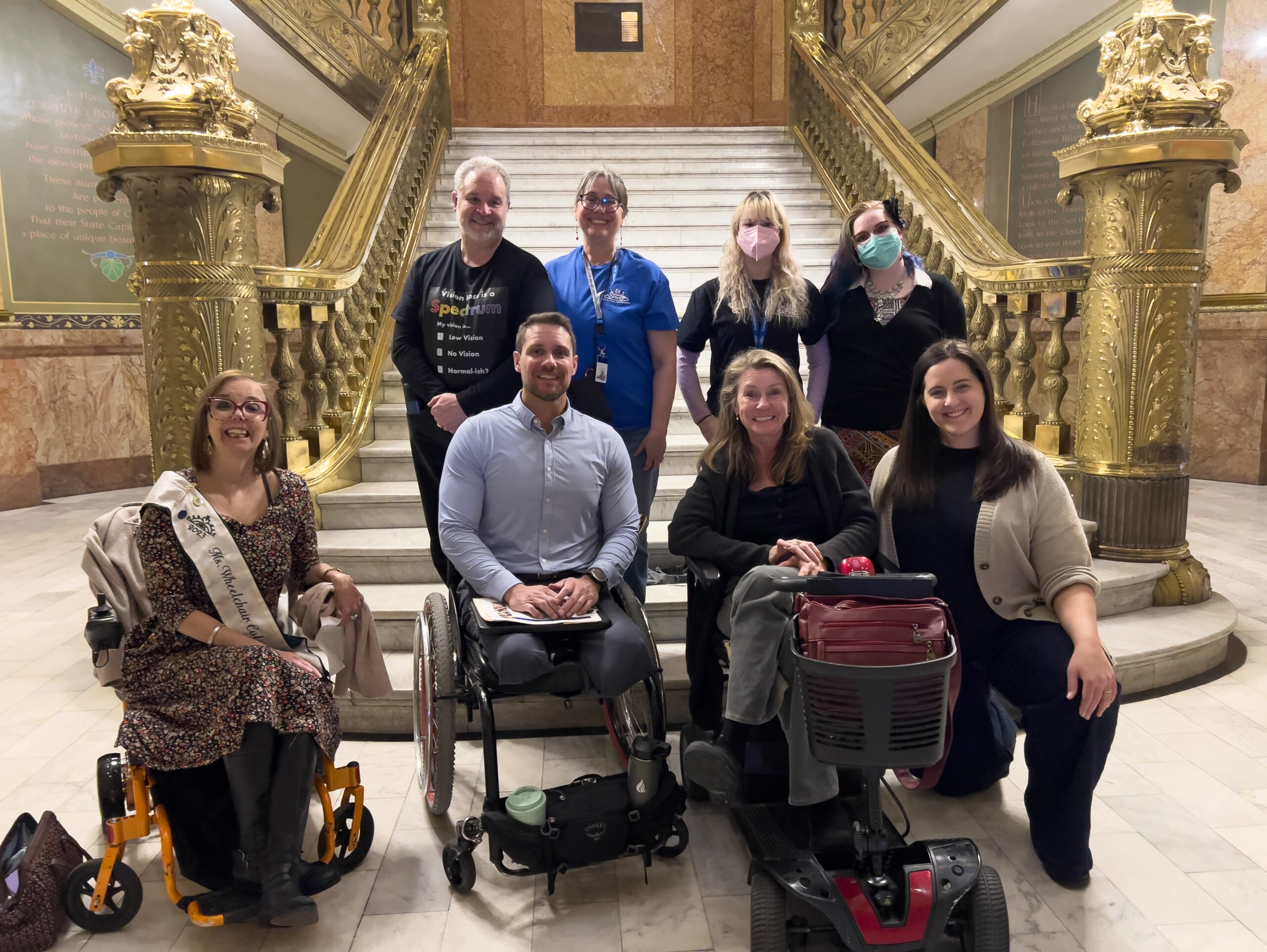
Image: Members of CPWD’s staff, board, and consumers stand in front of the stairs in the foyer of the Denver Capitol building during DRAD 2024.
Each year, advocates across Colorado take time in February to lift up the history, progress, and ongoing work of disability rights. While this time of year is referred to as Disability Rights Advocacy Month (DRAM), a movement initiated by those on the frontlines of disability advocacy.
Recognizing disability rights means understanding that access, autonomy, and inclusion are basic civil rights. It means acknowledging that people with disabilities are part of every community, every family, and every workplace, and that participation sometimes requires accommodations, services, and accessible environments. It’s educating political leaders and the public to recognize that these supports are what make equal opportunity possible.
Recognition also means valuing the public systems that help make independence possible. Programs that fund home and community-based services, accessible transportation, housing supports, communication access, and employment services allow people with disabilities to live in their communities rather than institutions, pursue careers, raise families, and contribute to civic life. When these systems are strong, communities are stronger.
A History of Advocacy
This understanding has deep roots in the disability rights movement. For much of the 20th century, people with disabilities were routinely excluded from schools, jobs, transportation, and public life. Many lived in institutions, separated from their communities, with few legal protections. Attitudes toward disability began to change during WWII, when soldiers returned home from fighting on the frontlines, now with a combat-created disability. In the 1960s, people with disabilities, side-by-side with the civil rights movement, organized and demanded to be seen and heard.
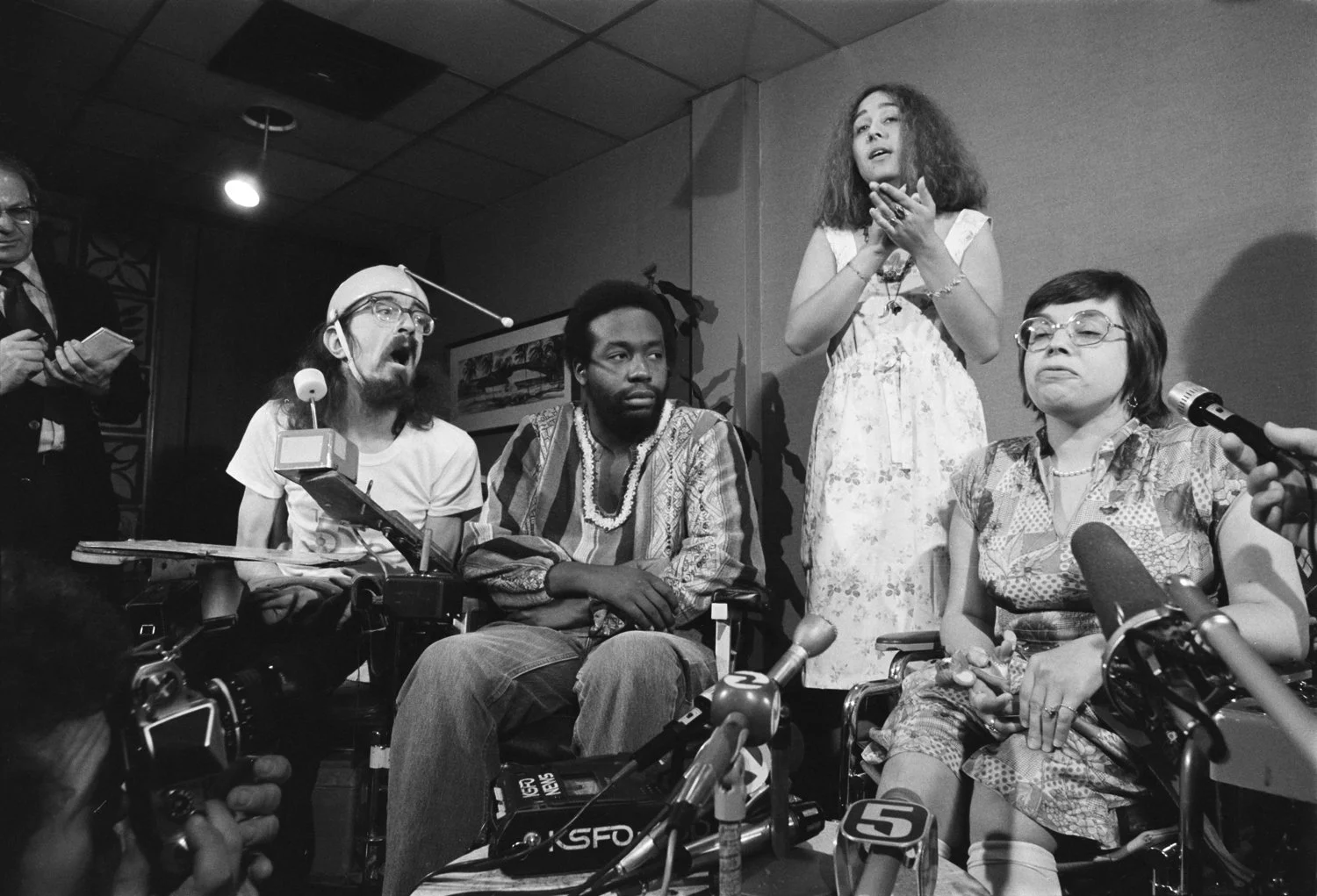
Image: From left: Hale Zukas, Ron Washington, and Judy Heumann respond to a question at a press conference held at the San Francisco airport before protesters leave for Washington. Lynette Taylor provides American Sign Language interpretation.
San Francisco Examiner Archive. Courtesy of the Bancroft Library, University of California, Berkeley.
One of the defining moments came in 1977, when activists led the historic 504 Sit-in, occupying federal buildings to demand enforcement of Section 504 of the Rehabilitation Act — the first federal civil rights protection for people with disabilities. Their action helped establish disability discrimination as a civil rights issue and laid the groundwork for later laws, including the Americans with Disabilities Act (ADA) in 1990. The ADA affirmed that access to public spaces, employment, transportation, and services is a right, not a favor.
But passing laws was only the beginning. Real access requires implementation, funding, and ongoing advocacy. That work continues today — often through policy conversations, community partnerships, and civic engagement. February has become a natural time to highlight this work in Colorado, as disability advocates, organizations, and community members come together to focus on the policies and decisions shaping everyday life.
Organizations such as AdvocacyDenver, Disability Law Colorado, The Arc, CPWD, and many others use this time of year to elevate disability rights awareness, share stories, and encourage community members to connect with their elected officials. Over time, this seasonal focus has helped grow one of the most important annual disability advocacy events in the state.
Disability Rights Advocacy Day — Turning Awareness Into Action
That event is Disability Rights Advocacy Day (DRAD) at the Colorado State Capitol on Thursday, February 12, 2026.
DRAD has become an annual opportunity for people with disabilities, family members, service providers, and allies to meet directly with lawmakers. At its heart, DRAD is a day of listening and sharing.
Legislators make decisions based on the issues and experiences brought to their attention. While industries and interest groups regularly advocate for their priorities, disability issues need and deserve the same visibility. With the creation of DRAD four years ago, the disability community has an open invitation to let its voice be heard.
In many ways, DRAD represents progress. Earlier generations of advocates had to fight just to be acknowledged. Today, disability advocates are invited into the Capitol to speak directly with policymakers. That access was earned through decades of activism, and it remains meaningful only if people use it. We invite you to be a part of it.
What to Expect at Disability Rights Advocacy Day
Whether this is your first time at the Capitol or you’ve been advocating for years, DRAD is designed to be welcoming, flexible, and accessible.

Image: Members of CPWD’s staff, board, and consumers speak with state representatives at DRAD 2024
The day begins with a Choose-Your-Own Advocacy block from 10:00 AM to 12:00 PM. During this time, you and your group can navigate the Capitol together and take part in advocacy in the way that feels most comfortable. Some participants will meet with their legislators or legislative staff. Others may explore how the legislative process works by watching floor proceedings or observing committee hearings. You can also take part in the Capitol Advocacy Quest, connect with other attendees, visit partner tables, or participate in Community-Building Bingo. It’s a chance to learn, connect, and take action at your own pace. Pre-registered lunch will be available in the West Foyer at 11:15 a.m., and snacks will be available for everyone throughout the morning.
Around 12:00 PM, participants will begin gathering in the West Foyer for the afternoon speaking program. Seating is reserved first for people who need it, with additional seating available as space allows.
From 12:30 PM to 2:00 PM, DRAD will host a speaking program featuring disability rights champions and legislative leaders. This year’s program includes remarks from Lieutenant Governor Primavera, State Representative Clifford, and other lawmakers, with the program emceed by former State Representative David Ortiz. Speakers will highlight key disability rights legislation and the importance of continued advocacy. American Sign Language (ASL) interpretation, CART captioning, and assistive listening devices will be available to ensure access.
Accessibility is built into every part of the event. The South entrance is the accessible entrance to the Capitol, and elevators are available on every floor. Accessible restrooms are located on the ground floor near the cafeteria, with an additional single-stall accessible restroom on the third floor. A dedicated accessible seating route is available in the West Foyer for the speaking program.
Support is also available for Deaf, DeafBlind, and hard-of-hearing attendees. A staffed accessibility table will be located in the West Foyer, where participants can borrow portable assistive listening devices. ASL interpreters and CART captioning will be provided during the speaking program, and the first rows of seating are reserved for those who need clear visual access to interpreters and captioning.
If you plan to meet with your legislator, you don’t need to be a policy expert. Advocates are encouraged to briefly share their story, explain how disability policy affects their lives, and thank lawmakers for their time. Every voice matters, and personal experiences are one of the most powerful tools for change.
DRAD is about showing up, learning together, and reminding lawmakers that disability rights are human rights. Whether you spend the day in meetings, learning how bills move through the Capitol, or connecting with other advocates, your presence helps shape the future of disability policy in Colorado.
One Key Focus at DRAD: When “Ready to Go Home” Still Means Waiting
Imagine being told you’re ready to go home from nursing care, then being made to wait three more months.
That’s the reality for some people in nursing facilities today, and it’s one of the key reasons disability advocates will be talking about HB26-1018 at Disability Rights Advocacy Day this year.
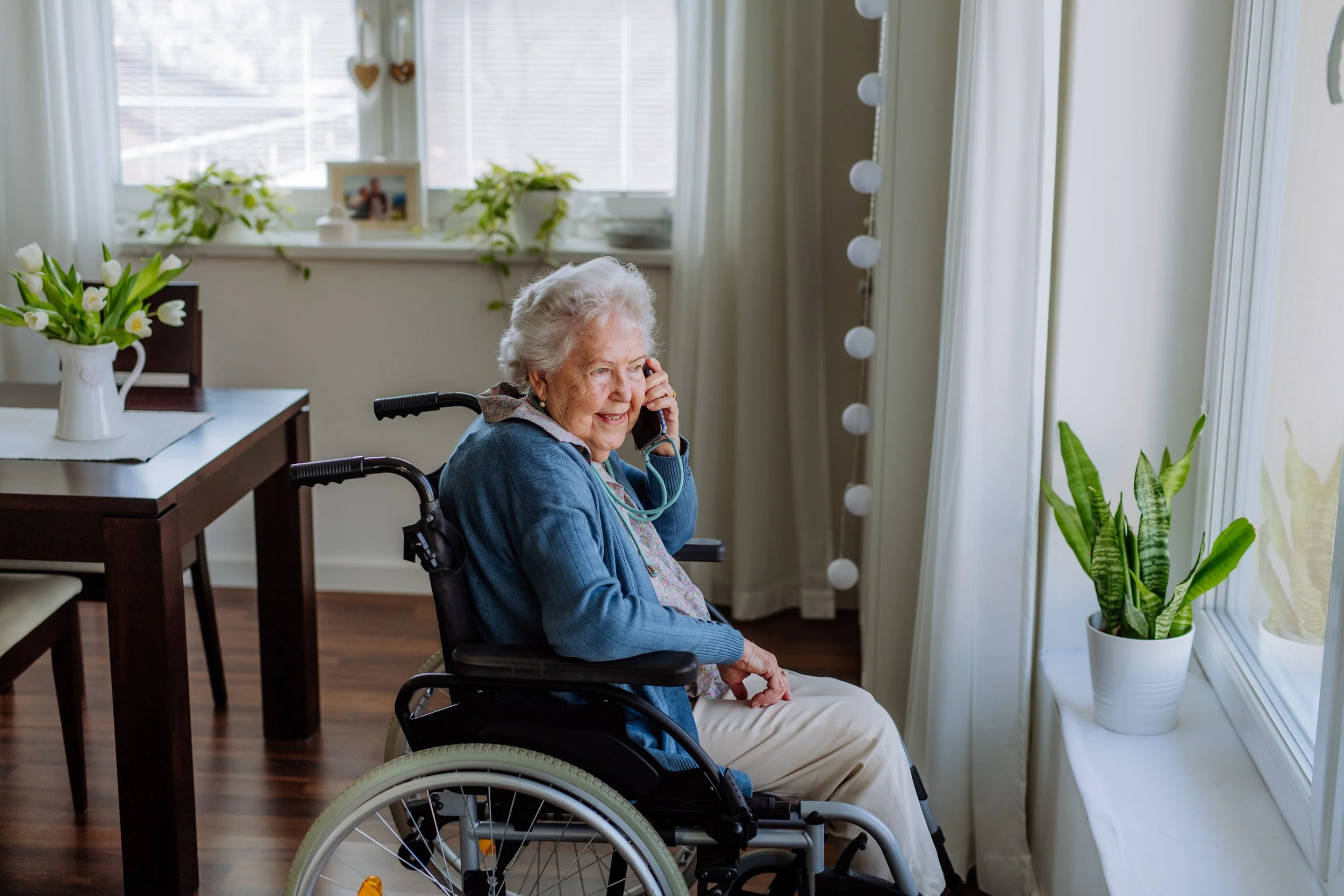
Image: An elderly woman who is a wheelchair user looks out of the window of her home while talking on the phone.
Right now in Colorado, someone can be medically ready to move out of a nursing home, have housing lined up, and still be forced to wait, sometimes for weeks or even months, because of paperwork delays, unclear processes, or miscommunication between agencies. The barrier isn’t always a person’s health. Often, it’s timing, red tape, and system confusion. And while that paperwork slowly moves forward, people remain in institutions longer than they need or want to be.
HB26-1018 focuses on fixing the cracks in the current system to help start eligibility processes earlier, clarify agency roles, and make sure services like home care and meals are in place before someone leaves a facility. In simple terms, it’s about making the path home smoother and more coordinated, so transitions don’t fall apart at the last minute.
At its core, this bill is about independence and dignity. The independent living movement has always fought for the right of people with disabilities to live in their communities, not institutions, whenever possible.
That’s why Centers for Independent Living across Colorado are focusing on HB26-1018 at DRAD. When advocates share real stories about being ready to go home but stuck waiting on approvals, lawmakers can see how small policy fixes can make a life-changing difference.
Why Showing Up Matters
Legislators hear from many groups every day. DRAD ensures that people with disabilities and their families are part of that conversation. When advocates share real stories about housing barriers, long-term care, voting access, or workplace challenges, to name a few, it transforms legislation from abstract policy into human impact. When legislators hear directly from their constituents face-to-face, a connection is made, and the impact is real.
Recognizing disability rights is not only about honoring history. It is about continuing the work. This time of year has become a meaningful moment to reflect, connect, and act, and DRAD is where that action comes to life.
Please register to attend by following this link.
CPWD will be at the Capitol on February 12, capturing stories, photos, and video throughout the day. We look forward to sharing a recap article and video summary in early March, so the impact of these conversations can reach even further.
Your voice is part of this story — it belongs in the room, and needs to be heard!