

From Grief to Action: The Beloved Community as Our Roadmap
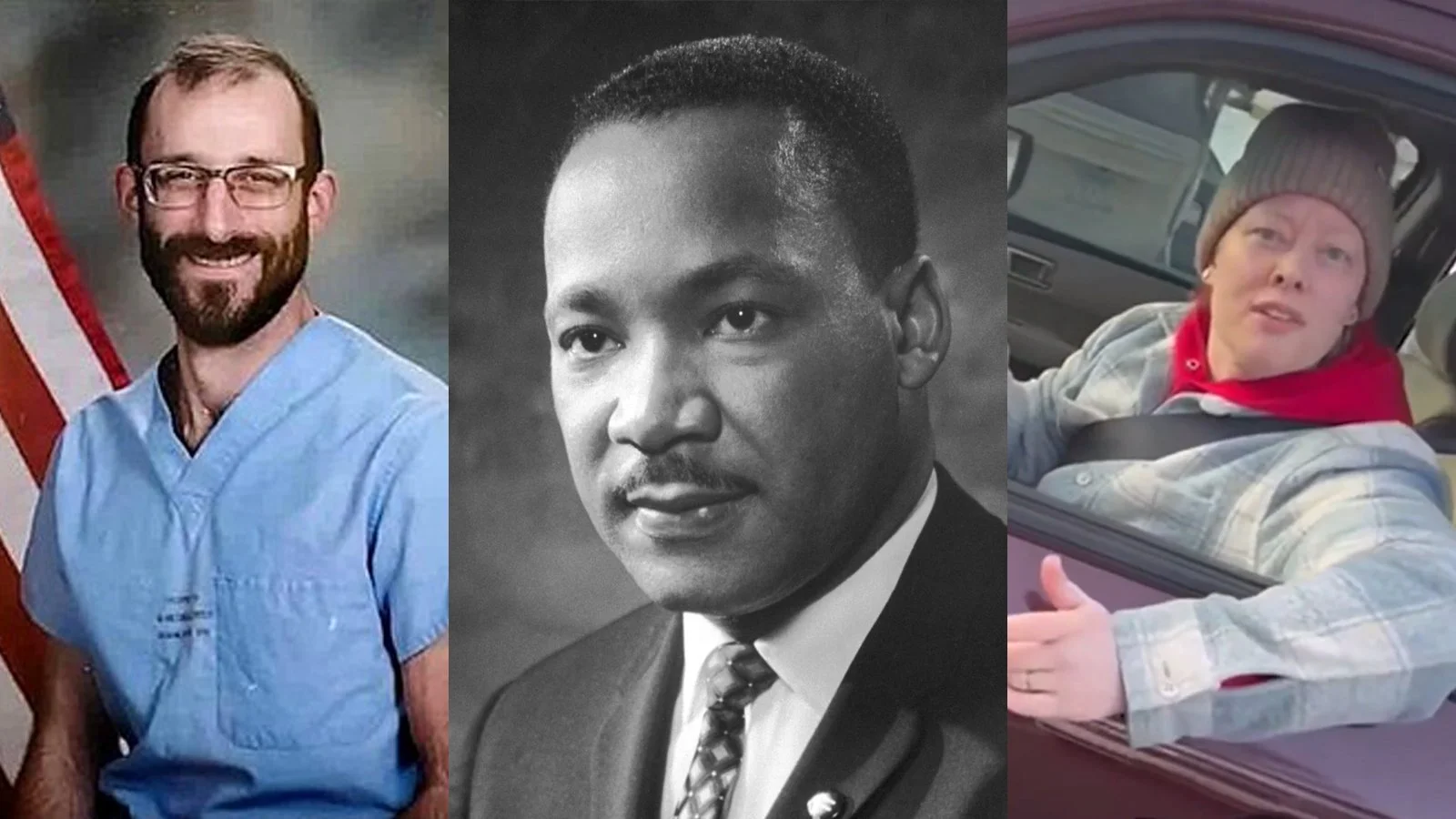
Image: This is a composite of three different images. On the left is pictured Alex Pretti, wearing blue nurse scrubs, standing in front of an American flag. in the middle is a black and white portrait of Martin Luther King Jr. On the right is an image of Renee Good, as she sits in her car.
In January 2026, a series of tragic events in Minneapolis jolted communities across the United States. On January 24, Alex Pretti, a 37-year-old ICU nurse who worked at a Veterans Affairs hospital, was fatally shot by federal immigration enforcement agents during a protest in Minneapolis, amidst a larger surge of federal immigration operations in the city. This followed the January 7 killing of Renée Good, also shot by a federal officer during a separate enforcement action. Both deaths have sparked widespread grief, confusion, and urgent calls for accountability.
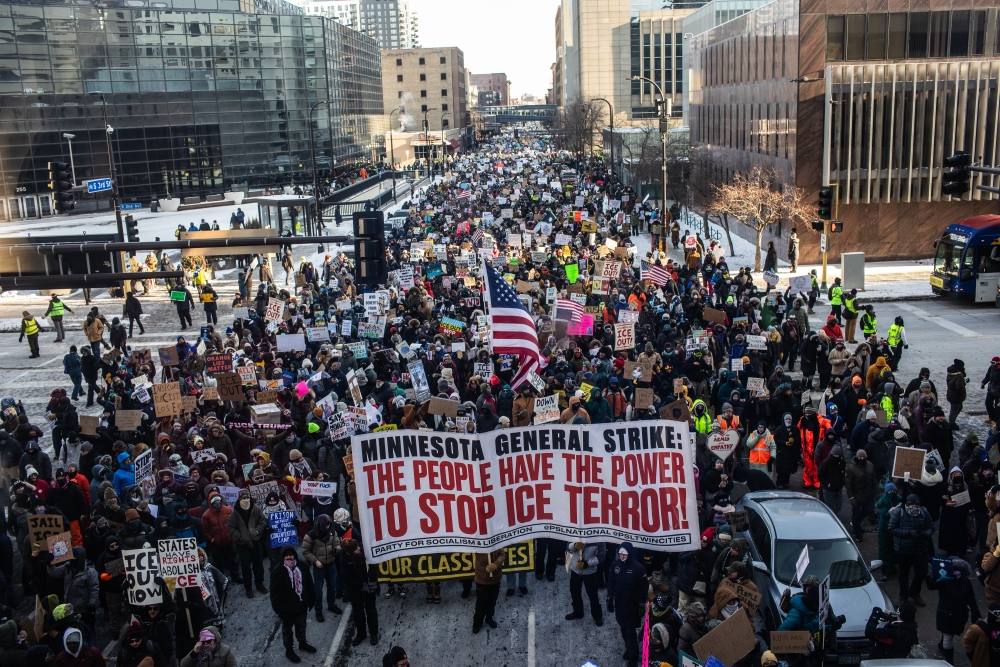
In the days that followed, people took to the streets across the country, marching through cities like Minneapolis, Denver, Boston, San Francisco, New York, and Boulder, even in sub-zero winter temperatures. These people marched out of anger at what they felt was a deep injustice, and also out of love for their communities and a profound sense of shared humanity. These demonstrations reflect a collective refusal to accept violence and exclusion as normal, and instead insist on dignity, justice, and accountability.
Harm is not experienced in isolation. Systems of immigration enforcement, law enforcement authority, racial inequity, economic exclusion, and marginalization of minority communities, including people with disabilities, intersect in ways that compound fear and vulnerability. When violence occurs, its impact radiates through families and communities, navigating overlapping barriers, just as those served by the Independent Living Movement often experience multiple forms of exclusion simultaneously.
Through the work of supporting and empowering Independent Living done by CPWD and all Centers for Independent Living, this understanding of intersectionality is foundational. The Independent Living Movement (ILM), born out of disability rights activism in the 1960s and 1970s, insists that people with disabilities have the right to self-determination, autonomy, access, community participation, and full inclusion in all areas of life. ILM challenges systems that segregate, marginalize, or make assumptions about capacity and worth, demanding instead that society be organized around access, dignity, and shared participation. This has continuously overlapped with the Civil Rights movement, with many foundational community protests bringing together the disability community and the Black Panther Party, and other Civil Rights leaders. Read this previous article to learn more.
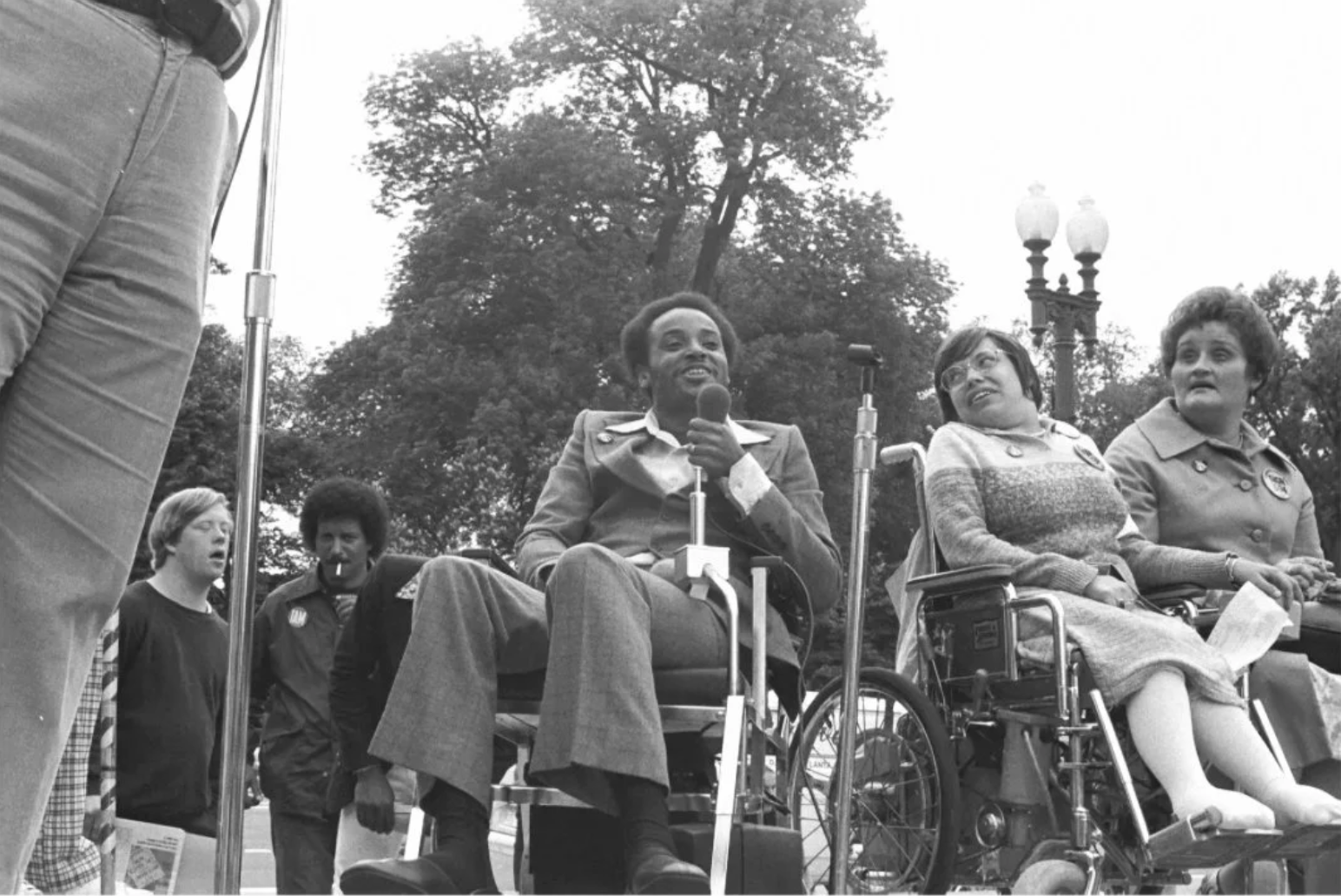
Image: Brad Lomax, the late Black Panther and disability rights activist, sits next to Judy Hueman, disability rights activist, as they lead the 504 Sit-In in 1977, advancing the fight for justice at the intersection of race and disability. Credit: Photo courtesy of United Community Options of South Florida
As February is Black History Month, it is an opportune time to reflect on the tensions of today with the vision of one of history’s greatest Civil Right’s leaders, Martin Luther King Jr. Dr. King held a vision of the Beloved Community, a society where justice is lived, not merely argued; where conflict is resolved through nonviolence and understanding; and where every person belongs, not as an afterthought but as an essential part of the whole. King believed that “injustice anywhere is a threat to justice everywhere,” and that true justice must encompass every human being.
Together, ILM and the Beloved Community provide both a moral compass and a practical blueprint for understanding and responding to our current moment. They remind us that freedom is not a siloed experience, but it is collective and interdependent.
As we face violence and injustice today, let’s reflect on what Dr King envisioned as a roadmap to guide us through these deeply divisive and challenging times our society is currently facing.
What Is the Beloved Community?
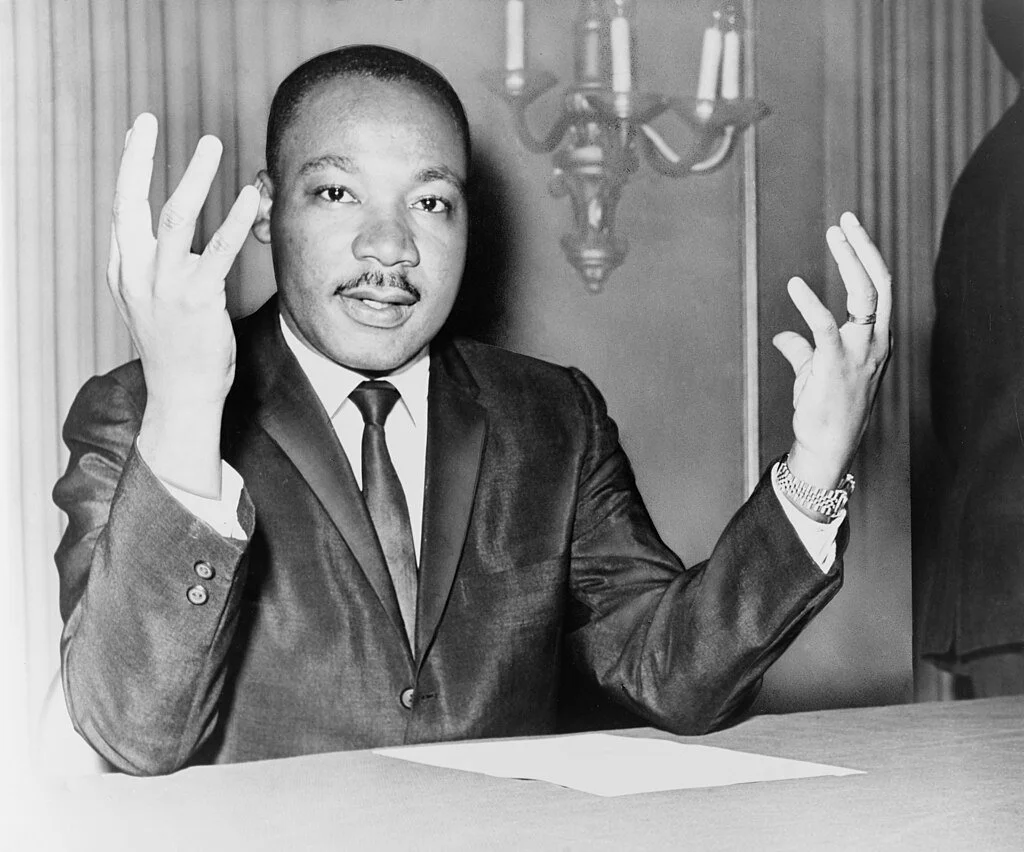
Image: Dr. Martin Luther King Jr. is seen in this black and white image, sitting at a table, his hands raised as he speaks.
Dr. King’s Beloved Community was an ethical and strategic blueprint for transforming society. In King’s view, justice must be universal for all, not parceled out to some while others are overlooked. Beloved Community affirms that all life is part of an interdependent moral network and insists that the means we use to create change must be as compassionate and just as the ends we seek.
This vision emphasizes:
Nonviolence as a way of life, not merely a tactic for protest
Justice that confronts systemic inequity, including poverty, racism, and militarism
Recognition of our mutual interdependence
Conflict resolution rooted in reconciliation and shared humanity
Collective responsibility for systems that shape people’s lives
In a Beloved Community, conflict still exists, but it is resolved peacefully and without hostility. Our shared efforts toward justice require not only compassion but clarity about how systems uphold or undermine human dignity.
10 Features of the Beloved Community — Then and Now

Image: A woman holds a large photo of Renee Good at a vigil in Lexington, Massachusetts.
Dr. King’s principles for the Beloved Community offer guidance for interpreting our current moment and imagining a path forward rooted in justice and inclusion. As we experience further division and outcry in society, we must meet it with a clear vision moving forward that uplifts everyone. Here are the ten features that create the framework of Beloved Communities:
Rooted in Agape Love — Justice guided by an unconditional commitment to human dignity. In the nationwide protests, people braved harsh conditions out of love for one another and a determination to protect life, not because they necessarily have a personal relationship with those harmed, but because they recognize the importance of unconditional love for all humanity. Societies founded on what King described as “God operating in the human heart” recognize unconditional love as foundational to a functioning society. Though recognized by Dr. King as a biblical principle, the idea of Agape love exists within all religious traditions and non-religious philosophies as well.
Power Expressed Within the Context of Love — Power without empathy becomes domination. Systems that use force without accountability contradict this principle. Dr. King said, “Power without love is reckless and abusive, and love without power is sentimental and anemic. Power at its best is love implementing the demands of justice, and justice at its best is power correcting everything that stands against love.” As we see violence escalate in our community, it is imperative that we remember to meet it with love, nonviolence, and a clear demand for justice.
Honors the Image of Every Human Being — Acknowledges worth in all people, rejecting narratives that dehumanize individuals based on identity or circumstance. This is a foundational tenet that intersects the Independent Living Movement as well, which recognizes the value of every individual regardless of ability or disability.
Seeks Peace With Justice — Peace is inseparable from justice; protest movements demanding accountability reflect a desire for both. Beloved Communities take direct action against racism, poverty, and violence.
Affirms the Efficacy of “Soul Force” — Nonviolence as moral courage and strategic resistance is a lesson both civil rights and disability advocates have practiced. In his speeches, King described soul force as a form of resistance that endures suffering without hatred, refuses to avenge violence with violence, and aims to awaken the conscience of both the oppressed and the oppressor so that relationships and systems can be transformed rather than destroyed.
Faith and Action Interrelated — Beliefs about dignity must be embodied in actions that protect life and expand access. Though he used the word faith, this can be seen as a broader moral idea of respect for fellow humans beyond any specific religious lens.
Humanity as a Network of Mutuality — Dr. King taught that we live within an “inescapable network of mutuality, tied in a single garment of destiny,” meaning that the well-being of one community is bound up with the well-being of all. This truth is painfully visible today. The deaths of Alex Pretti and Renée Good affect not only their families or one segment of society, but have rippled outward, shaping how communities experience safety, trust, and belonging. When fear enters one community, it weakens the fabric of us all. The Independent Living Movement is grounded in this same understanding: no one thrives in isolation, and independence is only possible within systems of interdependence, access, and shared responsibility.
Interdependence Actualizes Full Humanity — Dr. King understood that no one is self-sufficient in isolation; we become fully human through relationships of care, accountability, and shared responsibility. This stands in sharp contrast to cultural narratives that glorify rugged individualism while ignoring the systems that make participation possible. The Independent Living Movement has long advanced this same truth: independence does not mean doing everything alone, but rather it means having the supports, access, and community structures that allow people to direct their own lives. In a moment when violence and fear threaten to divide us, this principle calls us back to building systems where people rely on one another in ways that expand dignity rather than restrict it, reminding us that our humanity is fulfilled not by separation, but by connection.
Collaborative Effort Across Differences — Beloved Community recognizes that justice cannot be achieved by any one group alone. We see this today as disability advocates, political leaders, immigrant rights organizers, and racial justice leaders stand together in response to violence and fear in our communities. The Independent Living Movement reflects this same principle, understanding that disability justice is deeply connected to race, class, and immigration status, and that real change happens when movements work in solidarity, not isolation.
Builds Trust Across Differences — Beloved Community also calls us to build trust across differences, especially in times of fear and division. Trust grows through listening, accountability, and showing up for one another, not silence or separation. As communities grapple with violence and uncertainty today, this means neighbors, organizations, and local leaders choosing dialogue, solidarity, and shared action over suspicion. The Independent Living Movement models this by centering the voices of people with disabilities and fostering spaces where people from different backgrounds work together toward dignity, access, and belonging. As a greater community, we can practice this by committing to listening with respect to those we may not agree with through shared respect and dignity. This could be as simple as dialogue on social media, to attending Town Hall meetings.
These features of the Beloved Community are principles that call us to concrete action, including education, systemic reform, community organizing, and collective care. By basing our actions on these in the face of violence, fear, and uncertainty, we help pave the way for a more inclusive, cohesive, and peaceful society.
Independent Living Movement — A Living Expression of Beloved Community
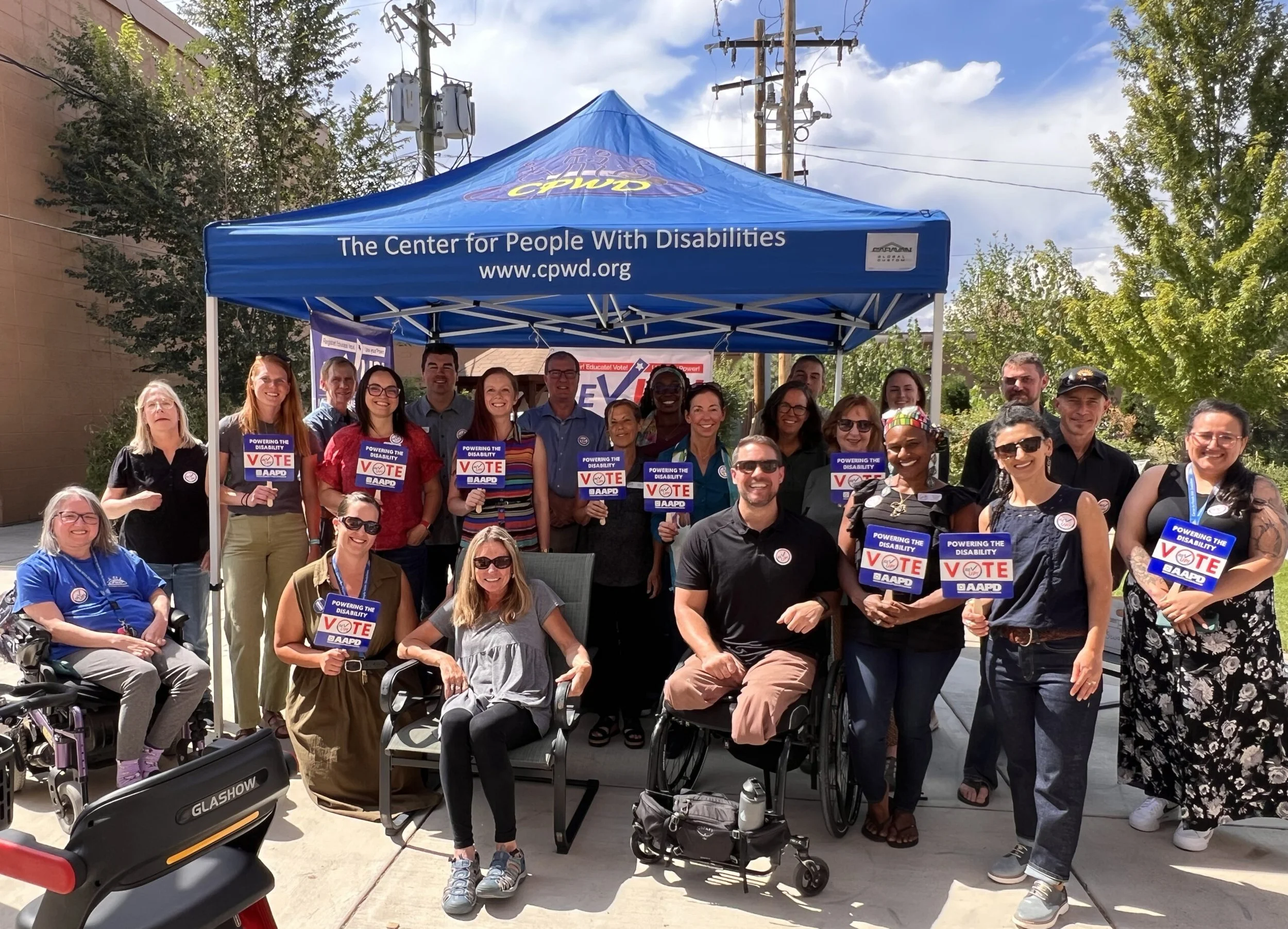
Image: members of CPWD’s staff and consumers stand outside with members of Boulder’s City Council.
The Independent Living Movement embodies many of the same values central to the Beloved Community through a shared moral DNA. ILM asserts that people with disabilities should not be defined by barriers or limited by systems that exclude them. Instead, ILM invites society to reimagine how communities are built so that access, autonomy, and belonging are foundational, not optional.
ILM principles include:
Self-determination — People direct their own lives.
Peer support — Community is built through shared experience.
Accessibility — Environments and systems must facilitate full participation.
Consumer control — People impacted by decisions have a voice in making them.
Systems change — Advocacy focuses on transforming structures, not simply alleviating individual needs.
These elements reflect Beloved Community values through affirming that justice is not a privilege, but a right embedded in policy, design, and culture.
Intersectionality — Understanding Layered Harm
Intersectionality describes how systems of power and exclusion that are based on race, disability, immigration status, and class overlap to create compounded barriers. In Minneapolis, the deaths of Alex Pretti and Renée Good highlight this reality: state violence reaches into multiple communities, impacting people differently yet profoundly. The shared response of nationwide protests, vigils, and advocacy demonstrates that people are unwilling to accept violence or exclusion as default conditions of civic life.
This is why intersectionality must be central to justice work: liberation in one domain strengthens freedom in others, and policies that protect dignity for some must protect it for all.
So what does this look like today? How can we actionably apply this to the current issues we face? Dr. King’s concept of nonviolence is often misunderstood as passive. But in truth, it is disciplined, strategic, and deeply rooted in moral purpose. Nonviolence in action involves:
Education and truth-telling - today, this means sharing verified information about state violence, listening to impacted families, and creating spaces where communities, including people with disabilities, can voice how policy decisions affect their lives. CPWD does this through community workshops, advocacy, advocacy training, and public education about systemic barriers and human rights.

Image: Community members and CPWD staff speak with state representatives.
Direct action - this looks like peaceful protest and organized civic engagement; from the nationwide demonstrations in sub-zero temperatures after the killings of Alex Pretti and Renée Good, to petition drives and meetings with policymakers demanding accountability and humane enforcement policies. CPWD engages similarly when advocating for accessible housing, transportation, and community-based services, insisting that systems change reflect the needs of those most affected.
Reconciliation - this does not mean overlooking injustice. It does mean pairing accountability with healing by creating community forums, sustained dialogue, and transparent investigations that neither erase lives lost nor leave communities in fear, and supporting restorative justice processes alongside legal reform.
In the face of systemic violence and fractured trust, nonviolence becomes a courageous path forward grounded in shared humanity.
From Fear to Collective Purpose
Fear, grief, and anger are honest responses to injustice. But these emotions also point toward what must change. They reveal where systems fail and where communities are most vulnerable. Acknowledging pain does not mean surrendering to it, but instead committing to collective action that expands justice, dismantles barriers, and protects dignity.
Organizations like CPWD operate at the intersections of identity, policy, and community, advocating for a vision of society where everyone belongs and participates fully.
Dr. King believed that communities could be transformed when people choose love, justice, and mutual care over fear, exclusion, and domination. The Independent Living Movement shows us how to operationalize these values in everyday life through accessibility, autonomy, peer support, and community design. The recent nationwide protests, social outcry from leaders across all parties, and general passion of the populace are driven by love and solidarity and remind us why this work matters.
The Beloved Community is not a distant dream. It is a direction we choose through policies that affirm dignity, through relationships that build trust, and through collective action that refuses to let violence define our shared future.