


Image: A Veteran is sitting in a wheelchair, holding an American flag.
This Wednesday, November 11, is Veterans Day, and all of us at CPWD want to say thank you to every Veteran in our community. Many of the Veterans we work with came home from service with a disability, and many more developed one in the years since. They are our neighbors, our coworkers, our family members, and some of the people who work right here at CPWD.
In this article, we look at what the latest numbers tell us about Veterans with disabilities, both nationally and here in Colorado, and at the kinds of disabilities Veterans most often live with. We explore how Veterans with disabilities have been supported over the past two centuries, from pensions and soldiers' homes to the disability rights laws that Veterans helped win. Then, we introduce our Veterans Independence Program (VIP), explain how it is changing the way Veterans receive care at home, and close with who is a good fit and how to get started.
Veterans With Disabilities, by the Numbers
The share of Veterans living with a disability connected to their military service has doubled in recent years. According to a 2024 report from the U.S. Census Bureau, the share of U.S. Veterans with service-connected disabilities grew from 15% in 2008 to about 30% in 2022. Service-connected disabilities are injuries or illnesses that the Department of Veterans Affairs (VA) has found were caused or made worse during military service.
The same Census report found that Veterans who served after September 2001 are especially likely to carry a high disability rating. Among post-9/11 Veterans with service-connected disabilities, half had a rating of 70% or higher in 2022, up from 27% in 2008. Post-9/11 Veterans were also more likely to have cognitive disabilities (8.9%) compared to other Veterans (4.8%) or non-Veterans (3.8%).
These numbers describe millions of working, active people. The U.S. Bureau of Labor Statistics counted 5.5 million Veterans with service-connected disabilities in August 2024, 2.7 million of whom were employed.
About 342,000 Veterans call Colorado home. In 2022, 26.2% of Colorado Veterans had a disability, compared with 12.6% of Coloradans who are not Veterans. That means roughly one in four Veterans in our state lives with a disability of some kind, whether or not it is connected to their service.
The Disabilities Veterans Live With
The disabilities Veterans live with are as varied as the work they did in uniform. Each year, the VA publishes an Annual Benefits Report that ranks the most common service-connected conditions. According to a breakdown of the VA's report for fiscal year 2025 by the Veterans law firm Chisholm Chisholm & Kilpatrick, the ten most common are tinnitus, limited motion of the knee, sciatic nerve conditions, back and neck strain, post-traumatic stress disorder (PTSD), hearing loss, limited motion of the arm, scars, migraines, and limited motion of the ankle.

Image: A man walks using a prosthetic leg.
Those conditions fall into a few broad groups, and many Veterans live with more than one disability.
Hearing disabilities. Tinnitus, a constant ringing or buzzing in the ears, is the single most common service-connected disability. Together with hearing loss, it reflects years of exposure to gunfire, aircraft, engines, explosions, and other loud noises.
Mobility and musculoskeletal disabilities. Knee, back, neck, arm, and ankle conditions come from carrying heavy loads, parachute landings, training injuries, and combat injuries. These are the disabilities that most often affect walking, lifting, and getting in and out of a car or bathtub.
Mental health disabilities. PTSD is the most common service-connected mental health condition, while depression and anxiety are also common. These disabilities are often invisible to coworkers and neighbors, even though they can significantly impact a Veteran's ability to perform activities of daily living.
Brain and nerve disabilities. Traumatic brain injury (TBI), migraines, and nerve damage affect memory, concentration, balance, and sensation. As we noted above, post-9/11 Veterans are nearly twice as likely as other Veterans to report cognitive disabilities.
Disabilities from toxic exposure. Veterans exposed to Agent Orange in Vietnam, or to burn pits in Iraq and Afghanistan, may develop respiratory conditions, cancers, and type 2 diabetes years after they leave the service.
Many of these disabilities also progress with age. A knee injury from basic training at 19 can become a mobility disability at 65, often the point in life when a Veteran first needs help at home with bathing, cooking, or getting to appointments.
How Veterans With Disabilities Have Been Supported, Then and Now
America has supported Veterans with disabilities since its founding, but for most of that history, support meant either a pension check or a bed in an institution. Veterans themselves are a big part of why that changed.
Pensions and Soldiers' Homes
The first Congress passed pensions in 1789 for Veterans who acquired disabilities in the Revolutionary War, according to the VA's History in Brief. The Civil War left so many Veterans with disabilities that the federal government built a new kind of institution for them. On March 3, 1865, President Abraham Lincoln authorized the first National Home for Disabled Volunteer Soldiers. The first such home opened near Augusta, Maine, in November 1866. By 1929, there were 11 of these homes across the country, housing tens of thousands of Veterans for the rest of their lives.
Hospitals and a Single Veterans Agency
World War I brought new injuries, including lungs damaged by mustard gas and what was then called shell shock, so the government opened tuberculosis and psychiatric hospitals for Veterans. Congress created the Veterans Bureau in 1921, and in 1930, President Herbert Hoover combined it with the soldiers' homes and the Pension Bureau to form the Veterans Administration. The VA ran 45 hospitals in 1930 and 125 by 1947. Even so, for Veterans who needed long-term help with daily living, the only options for most of the 20th century were a hospital ward or a nursing home.
Veterans Who Changed the Country
After World War II, Veterans with spinal cord injuries came home to a country with no ramps, no accessible buses, and few ways to live outside a hospital. In 1946, a group of them founded Paralyzed Veterans of America, pushing for independence, civil rights, and better treatment in VA hospitals. Their advocacy helped pass the Architectural Barriers Act of 1968, which required federal buildings to be accessible, and the Rehabilitation Act of 1973. Paralyzed Veterans of America then helped write the Americans with Disabilities Act, which President George H.W. Bush signed on July 26, 1990.
That same era gave rise to the Independent Living Movement, led by people with disabilities who protested and advocated for equal rights, accommodations, and the freedom and choice to live independently. CPWD was founded in Boulder in 1977 as part of that movement. Many of the curb cuts, ramps, and accessible doors we use every day exist because Veterans with disabilities and civilian activists with disabilities fought for them side by side.
From Institutions to Home
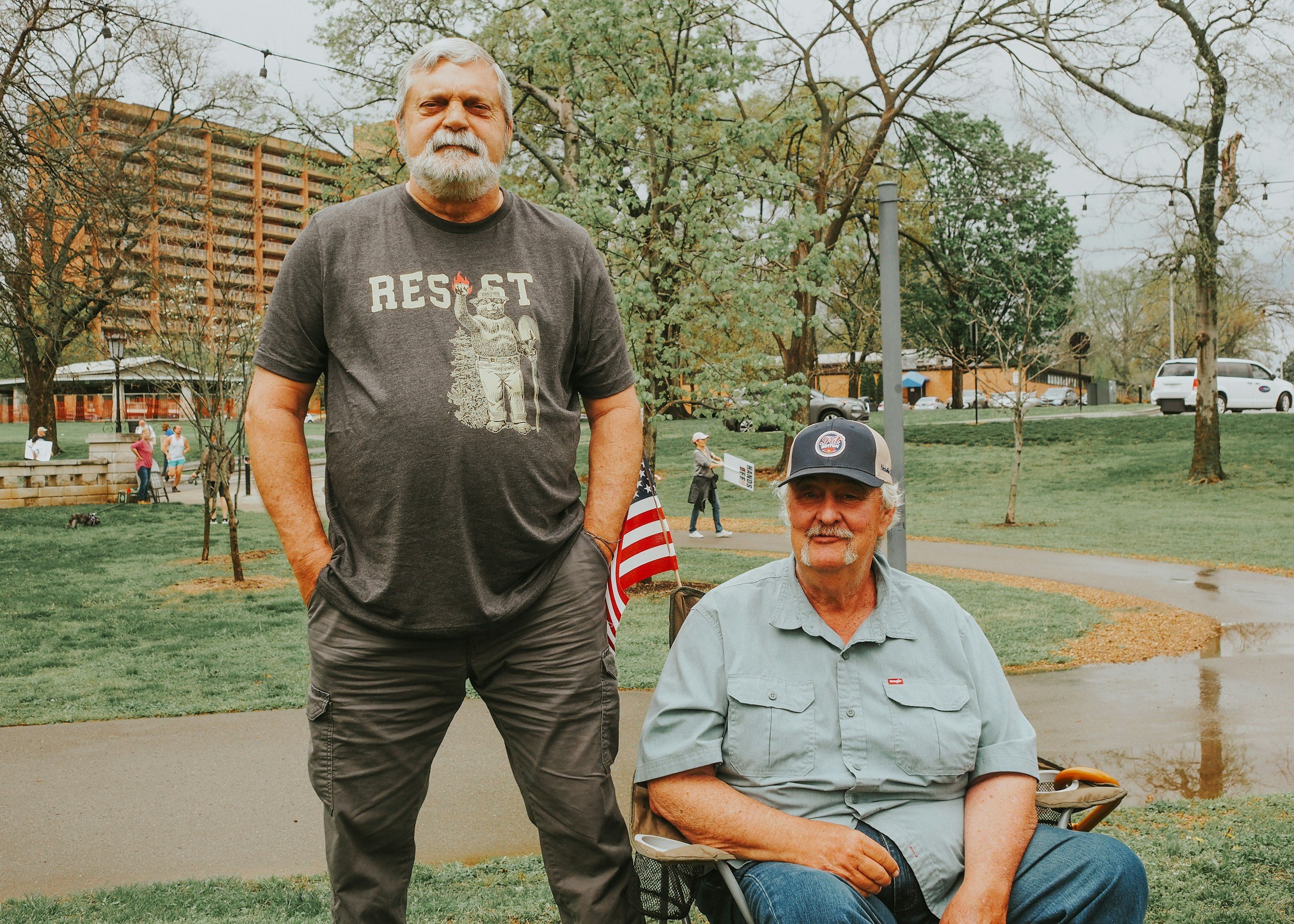
Images: Two veterans are pictured outside; one man stands while the other sits in a wheelchair.
The VA has steadily moved in the same direction. In 1999, Congress passed the Millennium Act, which made home and community-based services a basic benefit for Veterans and the preferred option for long-term care when clinically appropriate, according to a VA study of its Community Living Centers. In 2008, the VA and the U.S. Administration for Community Living launched Veteran-Directed Care, which gave Veterans their own budget, the ability to hire their own caregivers, and the opportunity to live independently, at home, with appropriate care. That program is the foundation of VIP.
What the Veterans Independence Program Is
Our Veterans Independence Program (VIP) helps Veterans whose disabilities affect their activities of daily living receive the support they need at home and in their community. VIP puts the Veterans in charge. Instead of an agency deciding who comes into their home and when, they manage their own service plan and their own budget. (Watch the video above to see Mark’s story. Mark is a Veteran and VIP member.)
As a VIP participant, Veterans can:
Choose who they hire as a caregiver, including a family member, and set how much they are paid.
Select the support services that fit their life.
Save money in their budget for equipment and home modifications.
VIP is built on the VA's Veteran-Directed Care model, which the VA and the U.S. Administration for Community Living launched together in 2008. Veterans are referred to the program through their local VA medical center, and our VIP team walks Veterans through the referral process step by step. VIP also supports the family members and friends who help care for a Veteran.
Veterans who do not have the capacity to direct their own care can still take part. In that case, the Veteran names an Authorized Representative to make decisions on their behalf. The Authorized Representative is an unpaid role and cannot be the same person as the paid caregiver.
Why Veterans Choose VIP
The research on Veteran-Directed Care shows a clear outcome: when Veterans direct their own care, more of them stay in their own homes. A VA study compared Veterans in Veteran-Directed Care with Veterans receiving other VA-paid personal care services. Both rural and urban Veterans in Veteran-Directed Care had fewer nursing home admissions. In an earlier VA evaluation presented to the Administration for Community Living, rural Veterans in the program were 60% less likely to wind up in a VA nursing home compared to Veterans in other care programs.
The same study notes that self-directed programs in general are linked to fewer unmet care needs and higher satisfaction. That matches what we see at CPWD. Most Veterans who work with us go on to live independently for years, at home, with their families, and stay active in their communities.
Beyond living independently and avoiding nursing homes, VIP can strengthen families in other ways. One VIP participant, A.S., told us that the program helped the family financially, and that knowing their spouse was the caregiver, rather than a stranger, brought a peace of mind they could not put a price on.
VIP reflects the same independent living values that have guided CPWD since 1977. You know your needs, your routines, and your home better than anyone else, and VIP gives you the authority and the budget to choose and manage the life you want to live.
How VIP Is Changing Care for Veterans
For more than a century, the default answer for a Veteran who needed daily help was to move into an institution or to accept whatever services an agency scheduled. VIP changes who makes the decisions. Here is what that looks like in practice.
The Veteran is the employer. In traditional home care, an agency chooses the worker and sets the hours. In VIP, the Veteran hires the caregiver, sets the schedule and pay within their budget, and can make changes when their needs change. CPWD's VIP page describes the Veteran as the "captain of the boat," and that is how the program is designed to work.
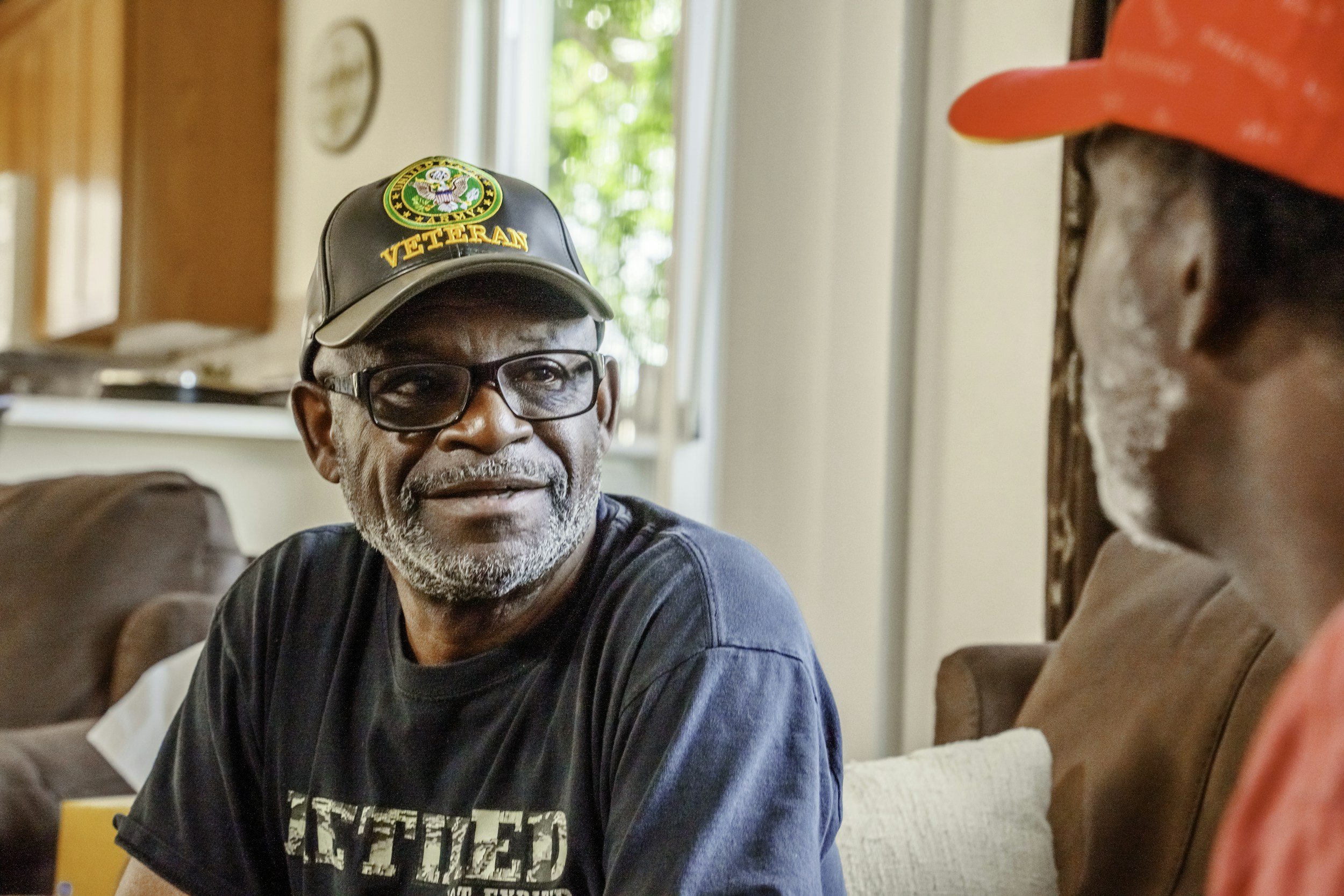
Image: An elderly Veteran smiles at his son, who is his caregiver.
Family caregivers can be paid. Many Veterans already rely on a spouse, an adult child, or a relative who has been helping for years without pay. VIP allows the Veteran to hire that person, recognizing the care that families have always given and supporting the household finances.
The budget goes where the Veteran needs it. Along with paying a caregiver, a portion of a VIP budget can be saved for equipment and home modifications, such as a grab bar, a ramp, or a stair lift, or other accommodations that support living at home independently.
Rural Veterans have a real option. Professional home care providers are scarce in small towns and in rural areas. Because VIP lets Veterans hire a family member or someone they already know, its success doesn’t depend on the availability of home care providers. Due to this caregiver option, VA research found the greatest drop in nursing home admissions among rural Veterans in the program.
CPWD is helping the model grow. In 2024, the U.S. Administration for Community Living named CPWD a Veteran-Directed Care "super hub", one of a small number of organizations recognized for running the program successfully with multiple VA medical centers and across several states. CPWD works with the Denver and Cheyenne VA medical centers and partners with local agencies so that Veterans across a wide region can get support from people close to home. As a Center for Independent Living, we bring nearly 50 years of independent living experience to that work, and more than half of our staff and board are people with disabilities.
Is VIP a Good Fit for You?
You may be a good fit for the Veterans Independence Program if:
You live on Colorado's Front Range or in northeastern Colorado, southern Wyoming, Nebraska, or parts of western Iowa or California.
Your disability affects your ability to successfully perform activities of daily living.
You receive VA medical benefits.
You want to stay at home, live independently, or with your family, rather than move to assisted living.
You want to make your own choices about your care, or you have someone you trust to serve as your Authorized Representative.
You may already have a family member or provider in mind as your caregiver.
How to Get Started
If you are a Veteran, or you love one, this Veterans Day is a good moment to reach out. Our VIP team will explain how the program works, answer your questions, and guide you through getting a referral from your local VA.
Call us at (303) 442-8662.
Email Veterans@CPWD.org.
Learn more and contact us through our Veterans Independence Program page.
To every Veteran reading this: thank you for your service. You have earned the right to live on your own terms, in your own home, and we are here to help you do it.