

The World Works Better With Us: Why Disability Pride Is So Important
Image: A rainbow colored ribbon twirls on a black background. Above it is text that says “July is Disability Pride Month”.
Every July, Disability Pride Month coincides with the anniversary of the Americans with Disabilities Act, which was signed into law on July 26, 1990, and turns 36 this month. Each year, the month carries a theme, and this year it is "The World Works Better With Us," chosen by the National Council of Self-Advocates, a disability-led council of The Arc. This is a powerful phrase because the evidence behind it is stronger than most people realize.
At CPWD, we focus our services and programs on access, equity, and equality: ramps, captions, accessible websites, flexible work, and the many accommodations that allow a person to participate fully in a community. We also advocate for people with disabilities, seeing them as valuable, equal, and vital members of our society. This year's theme asks us to look at this perspective: what does the world gain when people with disabilities are in it, and participating as individuals living independently? This article explores both, and it draws on research that we think deserves a much wider audience than it has.
The Disability Community’s Positive Impacts To Date
The clearest example is the one that is under everyone's feet. Curb cuts, the small ramps where a sidewalk meets a street, were fought for by wheelchair users who had been effectively locked out of their own downtowns. Today those curb cuts are used by parents pushing strollers, travelers pulling suitcases, delivery workers with hand trucks, children on bicycles, and older adults who simply find a gentle slope easier than a step. Nobody thinks of a curb cut as an accommodation anymore. People think of it as a sidewalk. Researchers and designers have a name for this pattern, sometimes called the curb-cut effect, which describes what happens when a change made for a specific group ends up improving life for everyone.
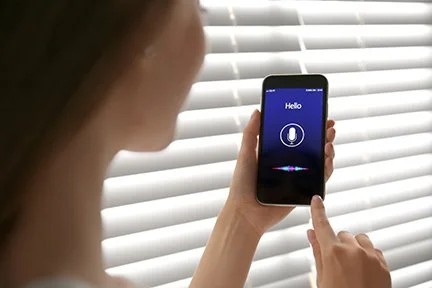
Image: A woman uses the voice-to-text feature on her phone.
The same pattern repeats across the technology most of us now use without thinking. Closed captions were developed for people who are deaf or hard of hearing, and they are now used constantly by people watching video in a noisy restaurant, a quiet office, or a second language. Screen readers, text-to-speech, and voice control emerged from the need to make computers usable for people without sight or fine motor control, and those tools are now built into every phone sold.
Flexible and remote work was requested by people with disabilities for decades and was repeatedly refused as impractical, right up until the moment the entire country discovered it was not impractical at all, but provided more balance and convenience in everyday life.
This is what the 2026 theme is pointing to. Accessibility features built with the input and needs of people with disabilities serve many more. The world works better with us because of the improvements we have championed.
Identifying as a Person with a Disability: The Burden of Stigma
There is a complication in all of this, and it is one that Disability Pride Month is uniquely positioned to address.
According to the Centers for Disease Control and Prevention, more than one in four adults in the United States, or 25+ percent, over 70,000,000 people, report having a disability. That is an enormous population. And yet research led by Dr. Kathleen Bogart, a psychologist at Oregon State University who studies ableism and disability identity, found something surprising. In a survey of roughly 700 adults living with health conditions, only 12 percent agreed or strongly agreed that they were a person with a disability.
That’s about half of people living with a disability acknowledging it. The gap is not an accident. Bogart's team found that the two strongest predictors of whether someone identifies as having a disability were the severity of the impairment and the experience of stigma. As Bogart put it, the finding "supports the idea that the concept of disability is primarily a social construct, developed by society's reaction to that impairment. It's not just the physical impairment. It's the way people treat you and the way society builds an environment that does or does not include you."
Many people decline the label because the label is a burden to carry. Anyone who has watched a colleague hesitate before disclosing a condition, or watched a person work twice as hard to appear as though nothing is difficult, understands why. People with disabilities have internalized the stigma, and fear judgment, exclusion, and rejection - from employment and others. And there is also a community cost. When people are hesitant to identify, disability stays in the shadow of stigma, and becomes something negative that happens to other people, somewhere else.
Researchers use the term internalized ableism to describe what happens when a person absorbs society's judgments about disability and turns them inward, measuring themselves against a standard they were never going to meet. Studies have associated internalized ableism with psychological distress, social isolation, and diminished well-being. One of its subtlest yet most damaging effects is that people stop asking for the accommodations they are legally entitled to, because the request begins to feel like a confession. When that happens, the barrier is no longer only in the building. It has moved inside the person, where no ramp can reach it.
Disability Pride: A Powerful Buffer
In addition to revealing challenges for people with disabilities, Bogart and her team found that Disability Pride is actually a powerful antidote to many of the challenges.

Image: A large group of people gathers with signs for a Disability Pride event in New York City.
In a second study, Bogart and her colleagues examined what happens to people who identify as having a disability and who take pride in that identity. They found that Disability Pride protects self-esteem against the effects of stigma. People who had experienced discrimination and who also took pride in their identity had measurably higher self-esteem than those who did not. Pride was not simply making people feel better on a good day. It was functioning as a buffer, absorbing something that would otherwise have caused harm. "Developing disability pride seems to protect self-esteem against the negative effects of stigma," Bogart said. "It's a really valuable protection for people with disabilities."
This is why we would argue that pride should be a core aspect of disability advocacy, rather than window dressing in July. A person who has Disability Pride is far more likely to resist internalized ableism and stigma, and more likely to ask for accommodations, seek services, live independently, and be a positive, contributing member of our community. Pride is a key part of what makes successful independent living possible.
Pride is Built, and It is Built with Other People
The most encouraging finding in Bogart's research is also the most practical one. Disability Pride was more common among people with strong social support. It did not arrive on its own, nor was it summoned by willpower. It grew in community, through peer connection, mentoring, representation in media, and the ordinary experience of spending time among other people who share the identity and carry no shame about it. Bogart's own recommendations point toward social groups, mentoring, activism, and disability pride events as the places where pride is cultivated.
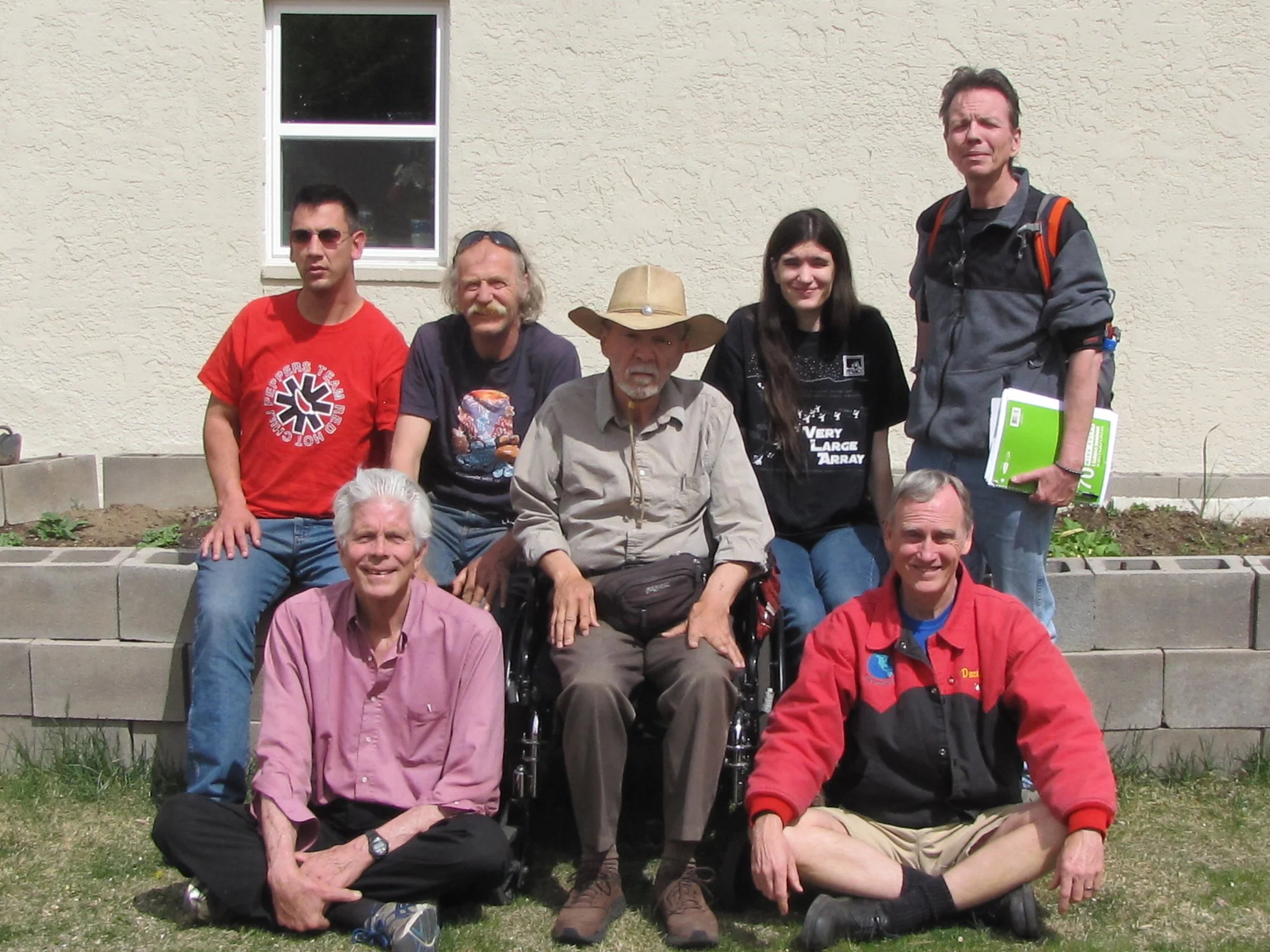
Image: A group gathers outside for a Peer Support Group in Boulder.
Anyone familiar with the Independent Living Movement will agree with Bogart’s conclusions immediately. Her findings reinforce what Centers for Independent Living were built to do. CPWD's Peer Support groups are not an accessory to our advocacy work. They are one of the places where the cultivation of Disability Pride happens. When people with disabilities gather and speak honestly with one another about their lives, something occurs that no brochure and no training session can produce on its own. Internalized ableism shrinks, and self-esteem grows. In the company of other people, and with their support, we can see the lies of stigma and find out who we really are. It turns out not to be true and not to have belonged to them in the first place.
What the World Is Missing
The employment numbers make the theme concrete. According to the U.S. Bureau of Labor Statistics, in 2025 the employment-to-population ratio for people with a disability was 22.8 percent, compared with 65.2 percent for people without a disability. About 75 percent of people with disabilities are not in the labor force at all, compared with about 32 percent of people without disabilities.
Those figures describe how workplaces are designed, and how hiring managers think, in general, about applicants with disabilities and accommodation requests. Behind every one of those percentage points is skill, judgment, creativity, and hard-won perspective that an employer decided it could do without. The world is not working better in their absence. It is still operating from a greater rhetoric of judgment and discrimination. The theme this July asks us to change that perception.
Where We Go From Here
Disability Pride Month asks two things of us at once, and both are worth carrying into August and beyond.
It asks society to stop treating access as a favor and to start treating it as design, because 50 years of evidence shows that what is built for people with disabilities makes life better for everyone.
And it asks something gentler of people with disabilities themselves, which is that identifying as having a disability is not something to be ashamed of. Pride is not vanity or denial. Pride is acceptance and self-esteem. The research tells us that pride is protective, that it is developed in the community of others, and that it makes the important work of advocacy possible. That is a good reason to claim it, and a good reason for the rest of us to make claiming it easier.
The world works better with us. This July, and in the months after it, CPWD invites you to help build the world that already knows it.
CPWD's Peer Support groups bring people with disabilities together to share experiences, build community, and strengthen confidence to advocate. To learn more, visitcpwd.org/peer-support.
If your organization is ready to move from awareness to practice, CPWD's Disability Etiquette Training is led by people with lived experience.