

Celebrating 49 Years: A Journey of Independent Living with the Center for People With Disabilities
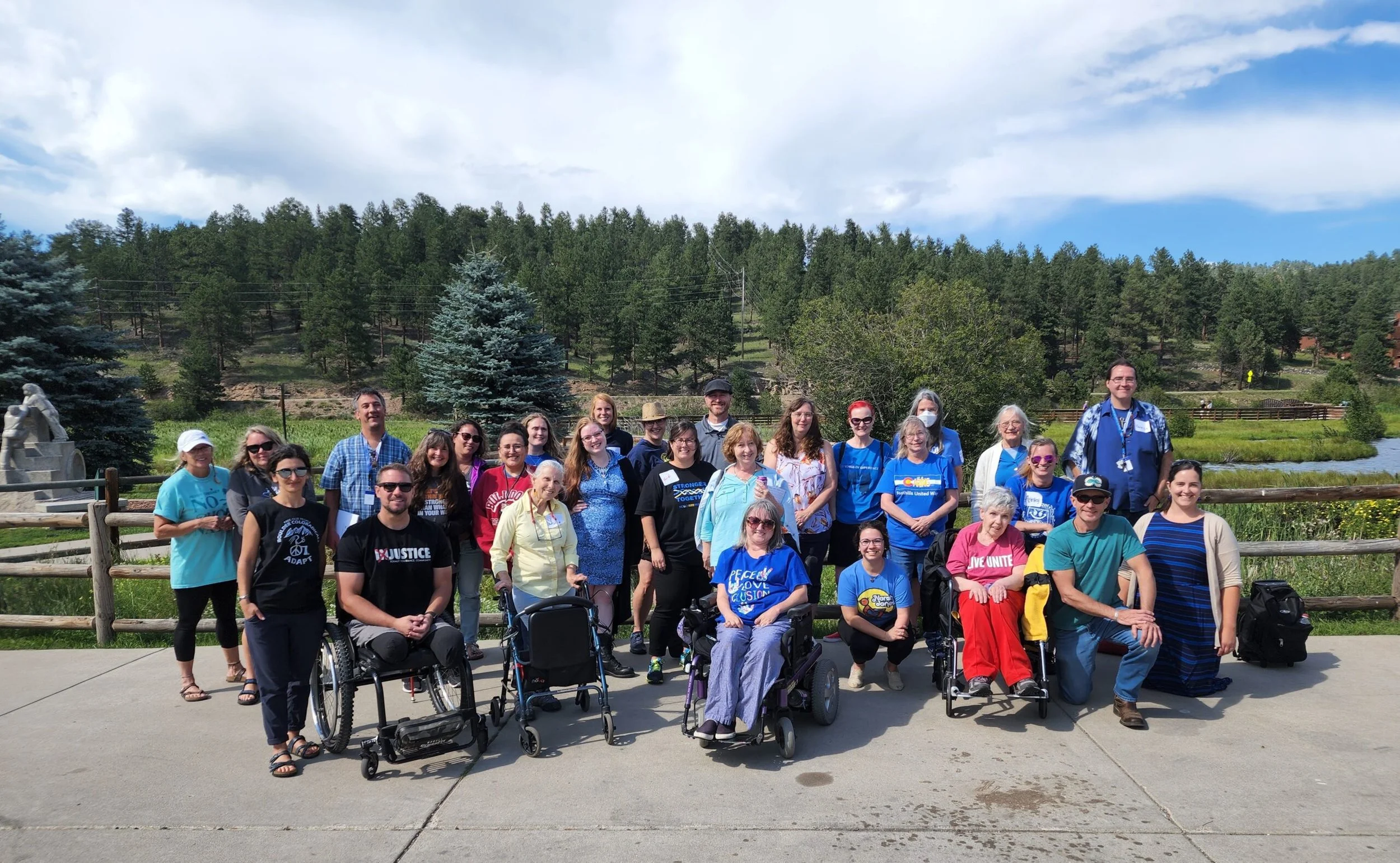
Image: Members of CPWD’s staff and Board of Directors gather outside, smiling at the camera.
For nearly five decades, the Center for People With Disabilities (CPWD) has served as a cornerstone of independence, equity, and advocacy across Colorado’s Front Range. Founded in 1977, CPWD has grown from a visionary grassroots initiative into a vital community resource network, operating out of locations in Boulder, Longmont, Broomfield, and Thornton (North Metro), and serving Adams, Arapahoe, Boulder, Broomfield, Clear Creek, Denver, Douglas, Gilpin, Jefferson, and Weld counties.
As CPWD marks its 49th anniversary, it is a time to reflect on the organization's rich history, celebrate its positive community impact, and look ahead to a future built on its core philosophy: that people with disabilities have the right to lead self-directed, independent lives.
Rooted in History: A Legacy of Action
In 1977, Judy Dixon and former Boulder County Commissioner Homer Page recognized a powerful opportunity to champion community inclusion. They envisioned a dedicated space where people with disabilities in Boulder County could access the specific resources, tools, and encouragement needed to thrive independently and secure meaningful careers. Driven by this goal, they built a pioneering support network.
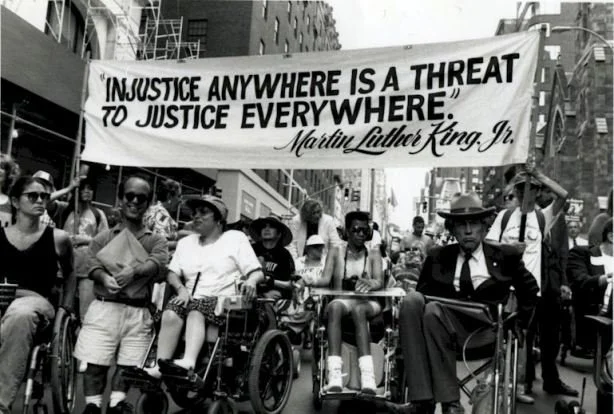
Image: A black-and-white image shows a group of people, including several wheelchair users, at an ADA rally, holding a banner with an MLK Jr quote.
CPWD emerged alongside a rising nationwide movement that was redefining what independence could mean: The Independent Living Movement. Independent living traces back to trailblazers like Ed Roberts, who became the first student with a significant disability to attend UC Berkeley in 1962 and went on to form the Berkeley Center for Independent Living in 1972, the first organization of its kind run by and for people with disabilities.
The movement's legal foundation was solidified by the Rehabilitation Act of 1973, particularly Section 504, which prohibited discrimination based on disability in any program receiving federal funding. Despite the Act's passage, academia, business, transportation, and other industries were slow to implement accessibility and inclusion measures. Disability rights advocates across the country, led in large part by Judy Heumann, mobilized to bring these vital protections to life. Their historic protests and sit-ins in 1977 successfully moved the federal government to sign Section 504 into regulation. (Check out this previous article to learn more about this historical protest.)
CPWD opened its doors that very same year, stepping forward as part of a growing network of Centers for Independent Living (CILs) nationwide. These CILs shared a unifying belief: people with disabilities thrive best when they direct their own lives and make their own choices.
In its early days, CPWD prioritized employment. But understanding that true autonomy requires an all-encompassing approach, over the years CPWD actively worked to expand access across all areas of daily life, advocating for accessible buildings, reliable transportation, inclusive housing, and everyday community systems that were designed to welcome everyone.
That founding belief remains the driving force of the organization today: real independence begins with respect and equal opportunity. People with disabilities are us, the are our neighbors, coworkers, and leaders, and they bring great and valuable contributions to our communities. As a CIL, CPWD proudly operates as an organization run by people with disabilities for people with disabilities. Today, nearly 75% of CPWD's staff and Board of Directors are individuals with disabilities, ensuring that lived experience guides every decision.
Meeting the Moment: An Evolution of Adaptive Care
A defining hallmark of CPWD’s longevity is its proactive approach to serving a vibrant, shifting community. Recognizing that needs evolve and intersect, CPWD has continuously created and adapted specialized programs to community needs, and current independent living goals:
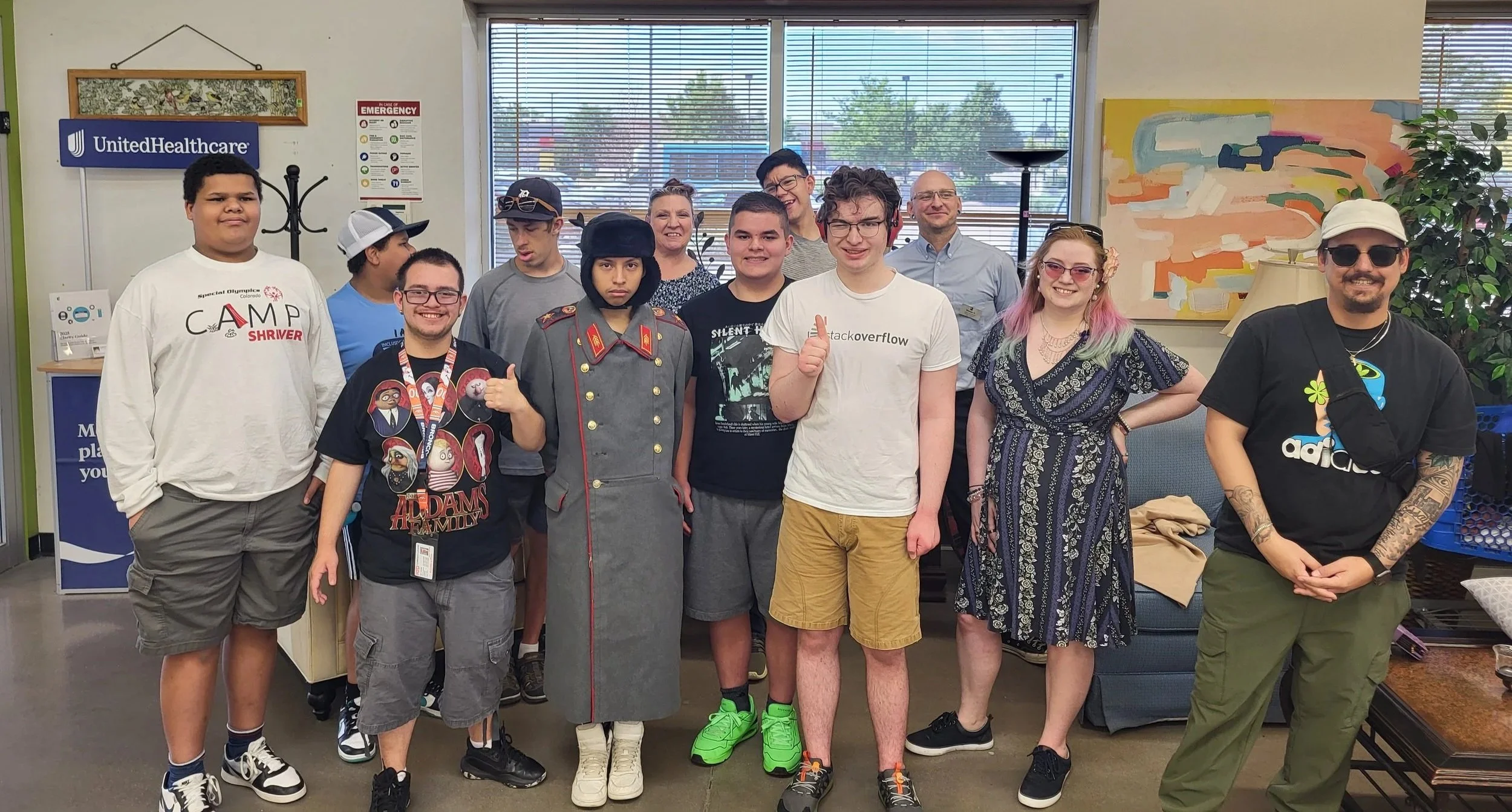
Image: A group of consumers who are part of the Youth Transitions program stand smiling at the camera.
Youth with Disabilities: Guiding the next generation, CPWD’s Youth Transition Services empower young adults to navigate the exciting-yet-challenging leap from high school into higher education, meaningful careers, and confident adult independence.
Veterans with Disabilities: Through the Veterans Independence Program, CPWD honors those who served by providing dedicated resource navigation, peer support, and home modifications so veterans can successfully age in place and enjoy the comfort of their own homes.
Immigrants with Disabilities: Embracing the truth that independent living belongs to everyone, CPWD has broadened its outreach to support immigrant families. Welcomed by bilingual staff, consumers learn to confidently navigate disability resources while CPWD advocates for policies that ensure language and residency status are never barriers to living fully and independently.
The Foundation of Independence: Five Core Services
At the heart of CPWD’s success are five Core Service areas designed to assist individuals with disabilities in overcoming barriers to independent living. As a peer-led organization, CPWD is more of an ally than a case manager for our consumers, providing the resources, skills, supports, and confidence to make their own choices, and write their own stories of independence:
Information and Referral: Serving as a reliable starting point, this service connects community members with the exact resources they need to thrive, including benefit navigation, affordable housing options, reliable transportation, and career opportunities.
Independent Living Skills Training: Collaborating with Independent Living Advisors (ILAs), consumers build functional life skills based on their independent living goals. Training includes financial budgeting, adaptive cooking, technology management, community navigation, and many other skills that support activities of daily living and independent living goals.
Peer Support: Built on the idea that shared experiences create deep connections, CPWD hosts welcoming peer support groups. These spaces offer mutual encouragement, practical life strategies, and vibrant social and recreational opportunities.
Advocacy (Individual & Systems): CPWD coaches individuals to understand and assert their rights under the law with confidence, while simultaneously leading systemic efforts to build a more accessible society.
Transitions: CPWD provides steadfast support during major life changes. This includes Transitions to Community Living, which assists individuals in successfully moving from institutional facilities back into homes of their choice within the community, alongside our comprehensive Youth Transition initiatives.
To complement these services, CPWD offers specialized programs like Beyond Vision, which provides adaptive skills and tailored peer networks for individuals who are blind or visually impaired, and the Disability Benefits & Employment Program, which connects consumers with stable benefit streams while they pursue fulfilling career paths.
Championing Change: Systemic Advocacy for an Accessible Future
CPWD has always believed that true independence requires building an environment that welcomes everyone. This is why the organization takes a proactive, energetic role in Systems Advocacy, collaborating with lawmakers and community leaders to shape inclusive policies and strengthen independent living rights.
CPWD’s systems advocacy engages with officials from local city council chambers all the way to the Colorado Capitol to modernize regulations and advocate for policies and laws that promote accessibility, equity, and inclusion:

Image: CPWD staff and members of the community meet with state representatives at Disability Rights Advocacy Day.
Creating Seamless Pathways: CPWD actively works to streamline access to essential supports. Advocates regularly engage with the Social Security Administration to improve processing times for applicants, and they actively advocate for fair tax policies regarding disability benefits. Furthermore, CPWD is a proactive voice in aligning immigration and disability policies, advocating for pathways that allow individuals with disabilities to easily bring trusted, culturally competent family caregivers from abroad to support their independent living.
Building an Inclusive Tomorrow: CPWD proudly champions forward-thinking policies that expand community accessibility. Recently, CPWD partnered with the Institute for the Built Environment to help draft and advance the Universal Design Standard Tax Incentive Act in Colorado, which encourages developers to integrate modern accessibility features directly into new construction. From participating in Disability Rights Advocacy Day (DRAD) to partnering with healthcare networks on inclusive emergency planning, CPWD ensures the community's voice actively builds the future.
Looking Forward to the Next 49 Years
The landmark passage of the Americans with Disabilities Act (ADA, 1990) was a monumental milestone, but CPWD recognizes that the journey toward full inclusion is a continuous path. As economic environments shift, CPWD remains dedicated to expanding access to benefits, supports, and all aspects of community living across the Front Range, ensuring that legal protections consistently translate into real-world possibilities.
As CPWD approaches its historic 50th year of service next year, its vision remains steadfast: a fully integrated society defined by absolute equality, accessibility, and mutual respect. By emphasizing consumer choice and self-determination, CPWD stands with the belief that every individual can experience the dignity of taking risks, the joy of personal achievement, and the freedom to choose their own path.
The next chapter of this journey will be driven by the same dedicated community that has carried it for 49 years: passionate staff, inspired volunteers, visionary board members, and most importantly, the incredible individuals who work with CPWD every day to build the lives they choose.
Happy 49th Anniversary, CPWD—thank you for nearly five decades of elevating voices, expanding possibilities, and empowering our community!