

Understanding and Accepting Autism
Image: The words “April is National Autism Acceptance Month” appear on a blue-and-white background. To the left is a graphic of a butterfly, with colorful circular pieces making up the wings.

Image: Sylvan Pearlstein, board member.
[This is a guest blog post written by CPWD board member Sylvan Pearlstein, who is autistic.]
April is often observed as World Autism Awareness Month. Most people today are already aware of autism in the sense that they have some ideas about what it means for someone to be autistic. However, there are a lot of very common misconceptions about autistic people, and popular narratives frame autism as something frightening and tragic. When “awareness” campaigns further spread misinformation, they can actually make things worse for autistic people.
Autistic advocates have called for a shift from autism awareness to autism acceptance. Respect for and accommodation of autistic differences are necessary for genuine support. As April comes to an end, autism fades from public conversation, but the need for autism acceptance continues.
What is Autism?
Autism is a pattern of human nervous system function found in a minority of people. It is a developmental disability, meaning autistic brains develop differently from non-autistic brains from the beginning. All evidence points to autism being genetic, like many other forms of human variation.
Autistic people think, sense, move, and relate in different ways from the non-autistic majority. Specific autistic traits are unique to each person. There are some common themes, but this is far from an exhaustive list.
Thinking:
Compared to non-autistic people, autistic people may more easily go into “attention tunnels” of intense focus on areas of interest, and have a harder time switching focus at will. The autistic-developed theory of monotropism describes this tendency toward deep rather than broad attention.
Surprises and sudden changes can be deeply disruptive for autistic people. Many find routines and sameness comforting and stabilizing, especially when other aspects of life are unpredictable.
Autistic people often notice and take interest in things that non-autistic people don’t find important or meaningful. Conversely, autistic people don’t necessarily notice or value things that mainstream culture does consider important.
Context in general is very important for autistic people, who tend to be more conscious of ambiguity than non-autistic people, and less likely to make assumptions when details aren’t specified. Details can also stand out more to autistic people than “the big picture.” These differences in processing mean autistic people are better equipped to learn and make decisions when information is explicitly provided, and have a harder time when others assume the information is implied.
Sensing:
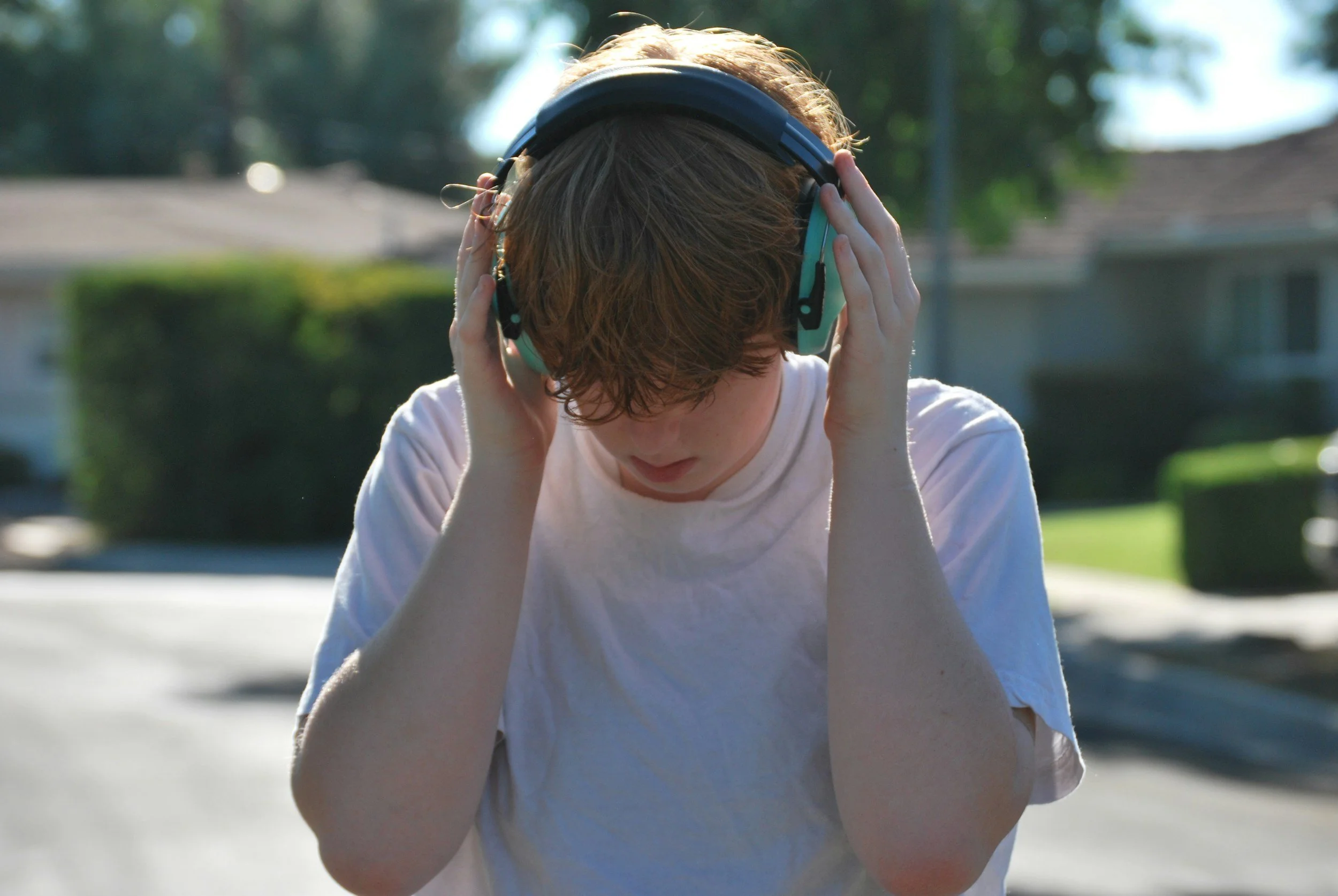
Image: A boy uses ear defenders, sound-blocking equipment worn like headphones. Many autistic people who are sensitive to sounds find ear defenders helpful.
Autistic people have a wide range of variation in sensory sensitivity. Many autistic people can see, hear, smell, feel, and/or taste things that non-autistic people may not be able to perceive. Autistic people can also be less sensitive than non-autistic people to certain bodily sensations, like hunger signals.
Sensations that don’t bother non-autistic people can be deeply unpleasant for autistic people. This includes sensations like food textures, which can make foods totally unpalatable, and being touched lightly or making eye contact, which register to some autistic people as pain.
Autistic people may not automatically filter out “background” stimuli. For example, an autistic person might be unable to make out what someone is saying if there are ambient noises in addition to the person’s voice.
Moving:
Many autistic people have trouble controlling voluntary body movements. Motor control issues can affect full-body movements like walking or standing up (which are also affected by sensory differences in perceiving one’s body in space) or more precise movements like handwriting or tying shoelaces.
Nonspeaking and semi-speaking autistic people usually describe voluntary motor control–not language processing–as the main factor that prevents oral speech.
Autistic people stim much more frequently than non-autistic people. Stimming refers to self-stimulatory body movements like bouncing one’s leg, repeating a phrase, or fidgeting with a handheld item. Everyone stims sometimes, but stimming is especially important for autistic people because it helps with sensory and emotional regulation.
Relating:
Autistic people tend to value direct, sincere communication. Non-autistic people tend to consider it inappropriate to state facts directly or express sincere opinions, and often say things other than what they really mean. Their intended meaning may be apparent to fellow non-autistic people, but autistic people are more likely to hear the words that were actually spoken.
Because context is important, autistic people often ask questions to gain more information. Non-autistic people can mistake these questions for attempts to avoid doing something, or to challenge authority–even though most autistic people aren’t attuned to social hierarchy at all.
While many non-autistic people enjoy the feeling of looking and acting like their peers, autistic people don’t usually find “fitting in” to be satisfying. They may try to conform in order to avoid being mocked or ostracized, but these attempts at fitting in are stressful experiences, not sources of genuine connection. (Autistic people do value interpersonal relationships, but want them to be real.) By the same token, autistic people are often less susceptible than non-autistic people to peer pressure and in-group bias.
Autism frequently overlaps with other disabilities. An autistic person’s specific cognitive or sensorimotor traits might be given additional diagnostic labels, such as ADHD or intellectual disability (both of which are widely misunderstood and stigmatized in similar ways to autism). Some health problems are common among autistic people, including epilepsy, joint hypermobility, gastrointestinal issues, and trouble managing sleep.
Who’s Autistic? Has That Changed?
Anyone can be autistic. Autistic people existed long before the label “autism” was invented to describe their neurology. But there have been changes to which autistic people are recognized as such, because psychologists have learned more about autism over time.

Image: An Autistic woman holds up a rainbow pop fidget and smiles at the camera.
Early studies of autistic people focused mostly on non-speaking and semi-speaking young white boys with middle- to upper-class parents. Psychologists used these studies to form their ideas of what autism was, so they developed diagnostic criteria for autism based on the externally visible behavior of the children they observed. As a result, many autistic people from other demographics–including white girls, children of color, children who speak, children with working-class parents, and adults in general–have not been diagnosed as autistic. They’ve been more likely to be labeled with mental health disabilities or “behavioral issues.” (Many autistic people do have mental health disabilities like anxiety and depression, but these develop in response to societal treatment of autistic people, so attempts to address them as isolated issues miss the root cause.) In other words, only a small percentage of all autistic people have been formally identified.
Diagnosticians have been getting better at identifying autistic traits in a wider range of people, so more autistic people get diagnosed with autism now than before. There is a common misconception that this increase in rates of autism diagnosis reflects an increase in the proportion of autistic people in the population, but it really reflects an increase in autism recognition.
What Do People Think About Autism?
Most mainstream descriptions of autism, including official diagnostic sources, define it as a disorder characterized by “restricted, repetitive interests or behaviors and persistent deficits in social-emotional reciprocity.” Medical definitions like these have two notable distinctions from autistic people’s descriptions of autism: they use external observations to assume autistic people’s internal experiences, and they frame all autistic ways of being as symptoms of pathology. This view of autism can be called the deficit model.
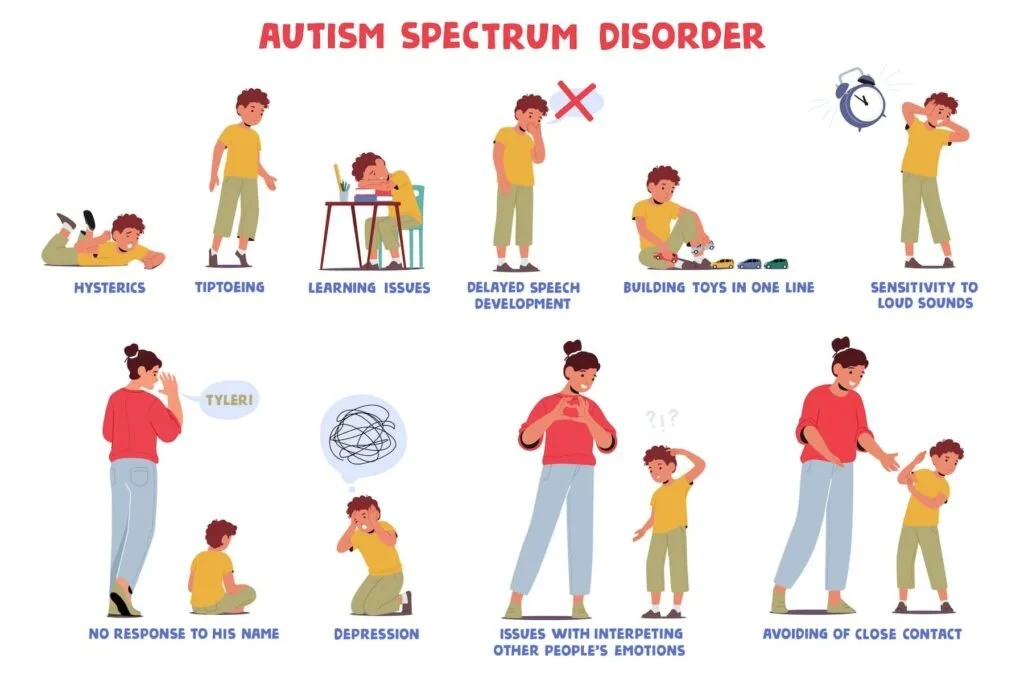
Image: A deficit model–based cartoon infographic labeled “Autism Spectrum Disorder” that shows a young boy demonstrating what the deficit model views as symptoms of autism. Two examples are “hysterics” (meltdowns) and depression, which are responses to dysregulation and trauma. Another is “issues with interpreting other people’s emotions,” which is often claimed to be an autistic deficit, even though non-autistic people also have trouble reading autistic people’s emotions.
The deficit model is so widespread because most public discourse around autism has been led entirely by non-autistic people. Psychologists’ initial identification of autism was directly shaped by ableism, cultural judgments that devalue people with disabilities. They saw it as a problem that autistic people didn’t “behave normally,” and when they saw autistic children in distress, they attributed that to autism being a disorder (rather than autistic children being in distressing situations). Most researchers since then, primarily non-autistic, have accepted and elaborated upon that framing. So the people upheld as authorities on autism don’t know what it’s like to be autistic, but are confident that it’s not okay, both because they see autistic people suffering, and because of the ableist belief that the most common pattern of neurological function is the correct one.
The neurodiversity paradigm was developed by autistic people as an alternative to the deficit model. Neurodiversity, meaning neurological diversity, refers to all the variations between human nervous systems. Every single person’s mind works differently, but society accepts a limited range of nervous system function as “normal,” and treats any variation outside of that range, like autism, as pathological. The neurodiversity paradigm rejects the idea of the “normal” brain and sees neurological variation as natural and worthy of acceptance. Building on those principles, the neurodiversity movement is a disability rights movement for and by neurodivergent people, those whose nervous systems have been pathologized as non-normative, including but not limited to autistic people.
Seeing autism as natural and deserving of respect doesn’t mean denying that autism is a disability. Centers for Independent Living like CPWD embrace the social model of disability, which sees disability as a natural part of human experience that causes problems when society fails to accommodate it. Like the social model, the neurodiversity paradigm acknowledges that disability is a combination of internal and external factors. Some aspects of being autistic can make life harder in themselves, but societal barriers, like discrimination and lack of accessibility, exacerbate those problems and create bigger ones.
Are There “Levels” of Autism?
Autistic people are all different. This is true of everyone, but individual differences between autistic people can be particularly noticeable. For example, five non-autistic people would be expected to vary in how they process language, but generally within an “average” range. Among five autistic people, there might be one person who finds translating concepts into words consistently difficult, one who can parse others’ words easily but can’t speak aloud, one who processes spoken and written language more quickly and easily than “average,” and so on.
Another factor is that the same autistic person’s capacities and visible traits can vary greatly under different circumstances. This is one of many problems with IQ tests: practitioners use test scores to make global assumptions about how a person thinks and learns, but all the scores really show is how the person scored on an arbitrary test, often administered in an unfamiliar and potentially distracting environment, on one specific day.
Given all the different possibilities for variation in autistic people, autism can be thought of as a spectrum. Just as the visible light spectrum contains all the colors that humans can see, the “autism spectrum” represents all the traits that autistic humans can have.
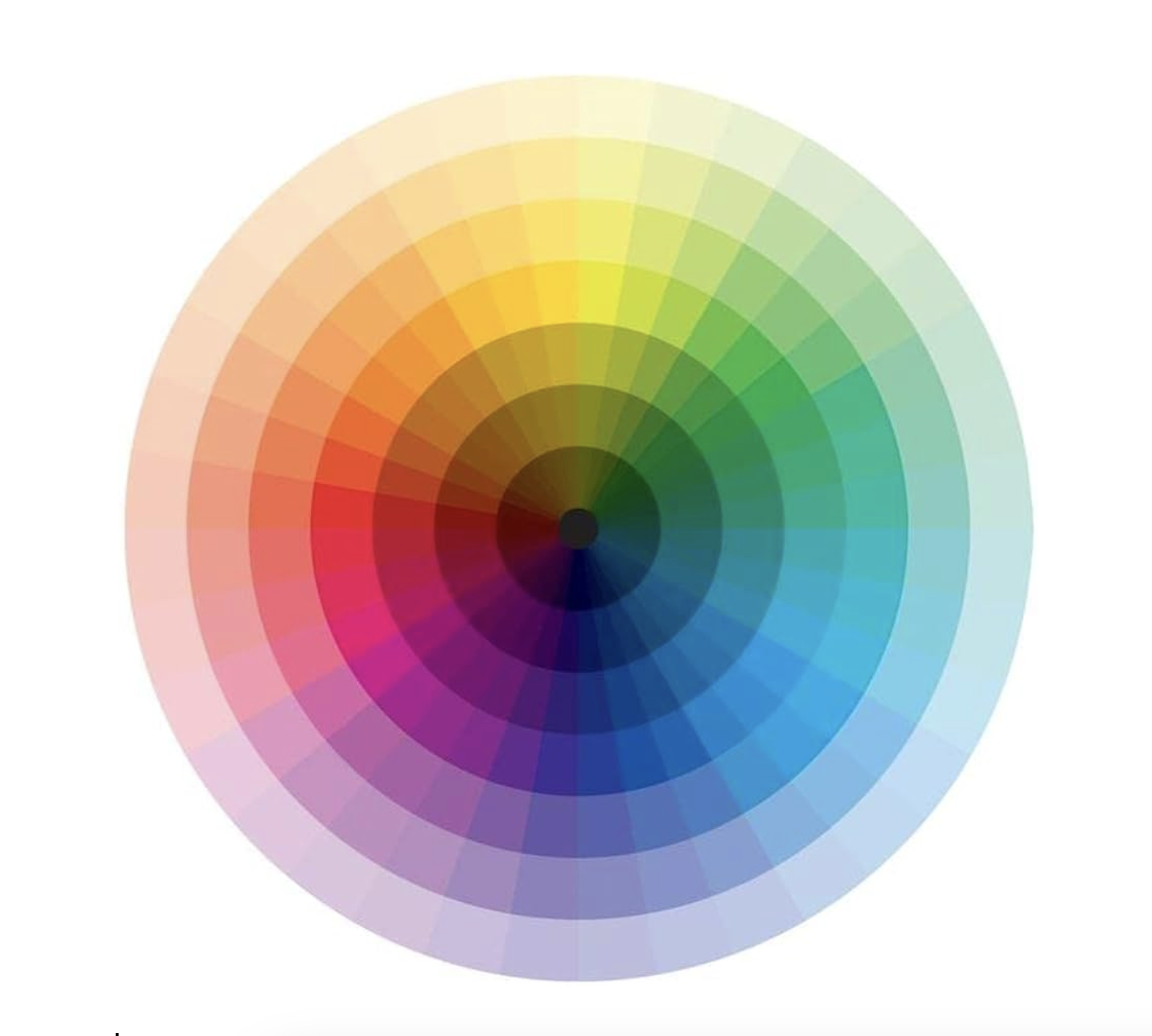
Image: A Color wheel representing the Autism spectrum
People frequently misunderstand the concept of the autism spectrum, thinking of it as a linear scale that goes from “only a little autistic” to “very autistic.” This misunderstanding is connected to ableism, the deficit model, and the focus on normative appearances. Autistic people whose movements or communication are more visibly non-normative tend to be judged as “more autistic” and thus pitiable or frightening, while those whose differences from the accepted norm are less externally visible are judged as “less autistic” and thus potentially tolerable. This kind of categorization assumes that autistic people’s normativity or strangeness–as gauged externally by non-autistic people–reflects their skills, their difficulties, or even their worth as humans.
There have been many efforts by non-autistic people to divide autism into subtypes, but this sets all autistic people up to fail. People viewed as “mildly autistic” are expected to meet neuronormative standards while being denied support, while those viewed as “severely autistic” are presumed incompetent and denied autonomy.
What Helps Autistic People?
Compared to the general population, autistic people experience worse physical and mental health; fewer good relationships, higher rates of abuse and neglect; and more barriers to housing, employment, and the basic right to direct one’s own life.
These are serious problems. But because the deficit model is the mainstream view, most ideas about how to solve these problems have taken for granted that their underlying cause is autism.
“Autism interventions” based on behaviorism–a style of psychology that focuses only on subjects’ observable behaviors, not their internal states–attempt to condition autistic children to move, act, and communicate in ways that parents, teachers, and practitioners consider more correct. This treatment is widely touted and heavily marketed by non-autistic professionals. But autistic adults who were subjected to behaviorist programs as children attest that this approach actively harmed them.
Having one’s natural ways of existing in the world treated as bad behavior in need of correction is traumatic and deeply damaging to self-esteem. Some autistic people can mask their autistic traits somewhat, and behaviorism pressures them to do so at all costs, but this is unsustainable and ultimately results in a long-term crisis called autistic burnout. Conditioning autistic people for compliance also teaches them to ignore their own boundaries and distress signals, making them more vulnerable to abuse.
Real support for autistic people is rooted in autism acceptance. Autistic people who have an accepting view of autism rather than a deficit-based one have better mental health and self-esteem, and family members who share this view have better relationships with their autistic loved ones. Acceptance alone doesn’t solve every problem that autistic people face, but it is essential: rejecting the idea of autism as an incorrect way of being allows the focus to shift to accommodating autistic people’s needs and working to reduce systemic barriers.
Autistic people deserve more than a month of deficit-based “awareness.” Accepting autism through the lens of neurodiversity makes the world better for autistic people all through the year.
Recommended Resources
Autistic Self-Advocacy Network, an advocacy organization that provides political action alerts and plain-language explanations of issues related to disability rights
Autastic, a community site that offers information and connection for people of color who discovered their autism in adulthood
Autistic Women & Nonbinary Network, a nonprofit that supports projects by and for autistic women and trans people
Thinking Person's Guide to Autism, a shared blog that publishes news and essays about autism from a neurodiversity-affirming perspective, aimed largely at parents of autistic people
CommunicationFIRST, a nonprofit that advocates for the rights of people with communication disabilities, including autistic people who are unable to speak some or all of the time