

When a Disease Changes What's Possible: Understanding Disability, Benefits, and Your Rights
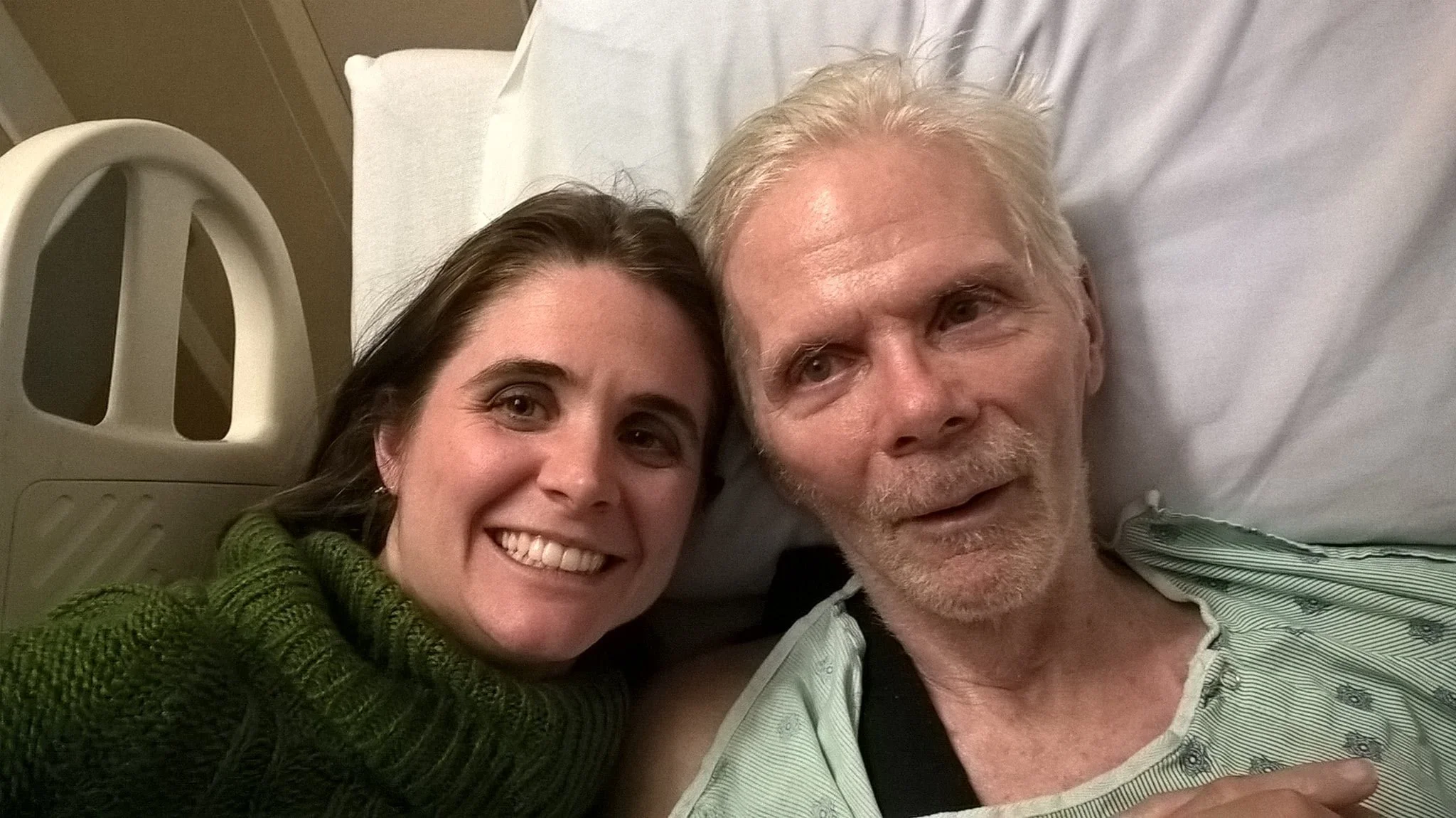
Image: The author, Kyra Coates, is pictured with her father Paul, resting in a hospital bed.
When writing for CPWD, typically, we present information in an editorial, third-person style. However, there are moments when personal stories paint the most realistic picture of how systems work, how human lives are touched, and how people move through the processes of navigating life with a disability. For this reason, I want to share my father’s story with you.

Image: My father in high school
My father was a Laser Eye Surgery Technician. His job demanded the kind of stillness and precision that tremoring hands eventually made impossible. He was soft-spoken, fun-loving, the kind of person who baked cookies and spent his free time at car shows and races. When Parkinson's Disease came for him, it came for his hands first.
He was diagnosed more than fifteen years before he died. Over that time, something that began as tremors and stiffness gradually became a full reorganization of his life and the lives of everyone around him. The tremors that ended his surgical career were just the beginning. Slowly, he reduced his hours at work, then more, until he couldn't work at all. Then the financial floor dropped out.
My stepmother worked multiple jobs to keep them afloat while also becoming his primary caregiver, managing his medications, his appointments, his daily needs, all while holding down whatever work she could find. At one point, they were living in her brother's house because they couldn't afford their own. Eventually, the cost of living in California pushed them out of the state entirely. They landed in Idaho, where a local church community stepped in with financial support and meals when the family couldn't cover everything alone. The church was the help they needed to finally find some stability.

Image: My father and stepmother.
I was living out of state for much of this, with two young kids of my own, and couldn't be there the way I wanted to. What I know of those years came secondhand and through family visits: the phone calls, the updates, the sense of a family stretched thin across distance and circumstance. What I remember most is that, through it all, my father kept his sense of humor. Parkinson's eventually took his ability to smile, to make the expressions that carry a joke across a room. But he kept cracking them anyway: deadpan, unblinking, unsmiling, his eyes doing all the work. Somehow, it made everything funnier. That was who he was, even then.
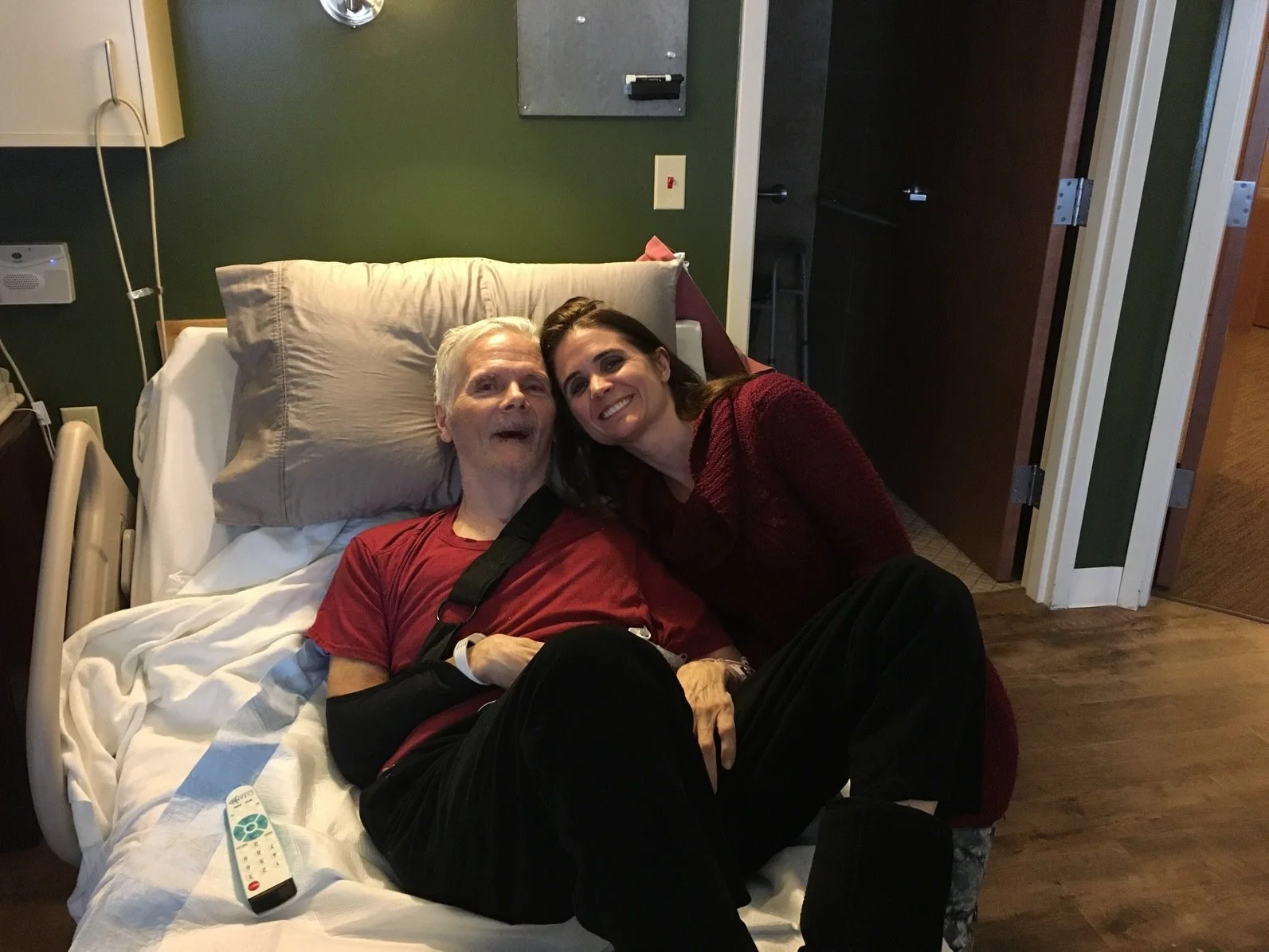
Image: My father and I the day before he passed away, which he said was one of the happiest days of his life.
I don't know every detail of what benefits he ultimately received or was denied. But that gap in my knowledge isn't just personal. It reflects something true about how these systems work, or often don't: even people close to someone navigating disability benefits can end up with no clear picture of what happened, what was applied for, what was denied, what was eventually granted, or why.
My father passed away at 69 years old. In the days before he died, my sisters and I were by his side. He told us it was the best few days of his life. He was at peace, surrounded by the people he loved, cracking jokes to the end. What I know for certain is that the years before that, the years when Parkinson's was actively dismantling his ability to work and his family's financial stability, were very hard. And now, since his death, my stepmother has never financially recovered. Unfortunately, their story is not unusual.
When Does a Disease Become a Disability?
Parkinson's Disease is a progressive neurological condition. It doesn't arrive as a disability; it becomes one. Most people first notice symptoms in their 50s or 60s: a tremor in one hand, some stiffness, small changes in movement. Many continue working for years after diagnosis, adjusting their roles, reducing their hours, or moving to less physically demanding tasks. But Parkinson's is degenerative, and the progression is inevitable. What begins as a manageable inconvenience can, over time, become a profound limitation on movement, balance, coordination, memory, and the ability to perform even basic daily activities.
The disease moves through five stages. In the early stages, symptoms are mild and often affect just one side of the body. By mid-stage, balance is compromised, and daily activities become more difficult. In the later stages, people may require around-the-clock assistance and may be bedridden as tremors and stiffness advance and cognitive impairment sets in. By the last few months of his life, my father was falling regularly and injuring himself often. It was after he fell and broke his collarbone that he decided it was time to head to hospice.
The legal recognition of disability follows a different timeline than the medical reality. Under the Americans with Disabilities Act (ADA), a person has a disability if they have a physical or mental impairment that substantially limits one or more major life activities. Under the Social Security Administration's definition, disability means being unable to do the work you did before and unable to adjust to other work because of your medical condition and having a disability that has lasted or is expected to last at least one year or result in death. These definitions matter because they determine what help a person can access and when.
Parkinson's Is One Example. The Pattern Is Much Wider.
Parkinson's Disease is the lens through which my family experienced this reality. But the gap between a diagnosis and disability, and the complexity of navigating the benefits system in between, is not unique to Parkinson's. It is the lived experience of millions of Americans with a wide range of progressive and chronic conditions. If you or someone you love has received a diagnosis that feels distant from the word "disability," understanding how that transition happens, and how often, matters.
Arthritis is the single most common cause of disability in the United States. Nearly 60 million Americans, equivalent to one in four adults, live with some form of arthritis, and the condition is projected to affect 67 million by 2030. Osteoarthritis (the gradual breakdown of joint cartilage) and rheumatoid arthritis (an autoimmune condition attacking joint tissue) are the two most common types. Both can progress from manageable pain to significant limitations in walking, standing, gripping, and performing work, often over years or decades. Together, they account for 172 million lost workdays annually and more than $156 billion in lost wages and medical costs.
Multiple Sclerosis (MS) affects nearly one million Americans and is considered the leading cause of disability among middle-aged adults. It most often strikes people in their 20s, 30s, and 40s, the peak years of working life. MS is unpredictable: some people live with it for decades with relatively stable symptoms, while others experience rapid progression. About 50% of people with MS lose their jobs within five years of diagnosis, and unemployment rates across studies range from 32% to as high as 80% over time. Before diagnosis, roughly 90–96% of people with MS are employed. This is in stark contrast to what often follows.

Image: A woman injects insulin into her arm.
Diabetes affects 38.4 million Americans, about 11.6% of the population, with another 96 million at high risk. Diabetes itself doesn't automatically qualify as a disability, but its complications frequently do. People with diabetes face a 50–90% increased risk of disability compared to those without it, including mobility loss, vision impairment, nerve damage, kidney disease, and cardiovascular complications, any of which can make sustained employment impossible. Like Parkinson's, diabetes often becomes disabling gradually, through accumulating complications that the system requires extensive documentation to recognize.
Neurological conditions broadly are now the leading cause of disability in the United States. A 2025 analysis found that more than half of the U.S. population, 180 million people, are affected by at least one neurological disorder. Stroke, Alzheimer's disease and other dementias, diabetic neuropathy, and Parkinson's account for the greatest share of disability. Alzheimer's alone is the seventh leading cause of death globally and one of the most significant drivers of disability among older adults, requiring around-the-clock care as it advances and stripping away independence over time.
What these conditions share is a pattern: they begin as medical diagnoses, progress, accumulate impact on function and work, and eventually reach a medical, legal, and financial threshold where the word "disability" becomes unavoidable. The gap between diagnosis and that threshold is where families absorb the cost. And the gap between that threshold and the approval of actual benefits is where the system gets the most complicated.
The Benefits System: What It Is and Why It's So Hard to Navigate
There are two main federal disability benefit programs people with Parkinson's may qualify for: Social Security Disability Insurance (SSDI) and Supplemental Security Income (SSI). SSDI is for people who have worked and paid into Social Security through payroll taxes. SSI is a needs-based program for people with disabilities who have limited income and resources, regardless of work history. Both programs are administered by the Social Security Administration (SSA).
A Parkinson's diagnosis alone is not enough to qualify. The SSA requires medical evidence showing that symptoms are severe enough to prevent a person from working, and that they have persisted or are expected to persist for at least a year. Parkinson's is listed in the SSA's Blue Book under Listing 11.06 (Parkinsonian Syndrome), which means it's a recognized condition. But meeting the listing still requires documented evidence of significant motor dysfunction in two limbs or marked limitations in physical functioning, along with cognitive or behavioral impairment.

Image: A clipboard with a form labeled “Social Security Disability Claim” at the top.
Even with clear documentation, the process is slow, and the odds are not in applicants' favor at first. About 70% of initial SSDI and SSI applications are denied. Many denials are not based on eligibility but on insufficient documentation or paperwork gaps, not on whether the person truly has a disability. The initial application process takes, on average, around 227 days, or roughly eight months. And that's just for an initial decision.
If that initial application is denied, as it is for most people, the appeals process begins. The first step is requesting reconsideration, which results in another denial about 84% of the time. From there, an applicant can request a hearing before an Administrative Law Judge. This process adds another eight to ten months. From initial application to final decision, the average is about 23 months. For those who go through all levels of appeal, the process can take three years or more.
Throughout that time, applicants receive no financial assistance from the SSA. They cannot earn above the program's "substantial gainful activity" threshold without being disqualified. An estimated 10,000 people die each year while awaiting a disability benefit decision. Thousands more file for bankruptcy while they wait.
The Gap Years: What Families Actually Live Through
My father's situation, a gradual reduction in work, financial destabilization, housing instability, and geographic displacement, is what the gap years of this process actually look like in practice. When a person can no longer work but hasn't yet been approved for benefits, the financial impact falls on whoever is nearby. In his case, that was my stepmother: working multiple jobs while simultaneously managing his care, coordinating with doctors, and keeping the household together. She didn't have the option to stop. There was no one else close enough to absorb it.
Financial strain also shapes what treatment is even possible. As Parkinson's progressed, my father's medication helped manage his symptoms for a time, but medication has limits. For many people with Parkinson's, when medication stops working effectively, the next step is deep brain stimulation (DBS): a surgical procedure that implants electrodes in the brain to regulate the signals causing tremors and rigidity. It is considered one of the most effective interventions for advanced Parkinson's and can significantly extend a person's functional independence. My father never had it. Medicare wouldn't cover it for him. The cost, without coverage, was out of reach.
Later in his illness, when his care needs had grown beyond what my stepmother could manage alone, he was able to access a part-time caregiver through Medicaid. This person came in a few days a week to help with daily tasks. It was meaningful support, and it gave my stepmother some relief. But it came late, after years of her carrying everything. That's a pattern that shows up again and again in families navigating progressive disability: the help arrives, but often long after the heaviest lifting has already been done.
Even when benefits are eventually approved, the financial picture for people with Parkinson's who qualify for SSDI involves more waiting. Once approved, there is an additional five-month waiting period before payments begin. And for people under 65 who need health coverage, Medicare eligibility through SSDI comes only after a 24-month qualifying period, meaning a person can be approved for disability benefits and still wait two more years before their health coverage kicks in. And as my father's situation illustrates, even once Medicare arrives, it doesn't cover everything. Coverage gaps, like the one that put DBS out of reach, can determine the entire shape of a person's remaining years.
Because I was out of state and not involved in the day-to-day logistics, I don't know exactly how his full benefits story came together. That uncertainty reflects a broader truth: the people living inside these systems often don't have full visibility into them either. The process is long and complex, and it places the burden of proof on the person who is already managing a progressive illness, which is why knowing the system and having support to navigate it matters so much.
What Needs to Change

Image: A woman, who is a caregiver, pins back her mother’s hair as the elderly woman looks forward.
The gap between when a disease becomes a disability and when a person can actually access support is a structural bottleneck. The current system asks people who are losing their capacity to work, sometimes rapidly, to simultaneously build an airtight legal and medical case against a bureaucracy that denies the majority of first-time applicants. If you experience a delay in filing, the system punishes you for it while also making the process itself very slow because of its design. And it leaves families to absorb the cost during the years it takes to reach a resolution.
There are things that can help. Applying for SSDI as early as possible once symptoms prevent consistent work matters. Waiting can mean losing retroactive benefits. Ensuring that neurologists and treating physicians are documenting symptoms thoroughly and continuously in medical records gives applicants a stronger foundation. And working with a disability attorney or advocate who typically works on a contingency basis and is paid only if you win significantly increases the likelihood of approval, particularly at the hearing stage.
But individual preparation is not the same as systemic justice. A system that denies 70% of first-time applicants, takes nearly two years on average to reach a final decision, and provides no financial bridge during that time is a system that needs to change, not just be better navigated. Through awareness, education, and advocacy, we will see step-by-step improvement with time. In the meantime, as you navigate this system, CPWD is here to help you.
How CPWD Can Help
If you or someone you care about is living with a progressive condition, whether you're newly diagnosed, mid-process, or years into navigating the benefits system, CPWD offers direct, practical assistance. You don't have to figure this out alone, and you don't have to start from scratch.
CPWD employs a certified Non-Attorney Representative (NAR) and an Attorney who can serve as your official representatives through the Social Security disability process. That means they work with you to build the strongest possible application, communicate with the SSA and Disability Determination Services (DDS) on your behalf, and guide you through every stage from initial application through appeals, if needed. If you've already been denied, CPWD can still help: their staff can represent you at hearings and explain your case to a judge.
There are no upfront fees for this service. If you're approved, CPWD receives a fixed percent of the approved back pay, approved by the SSA, so you never pay out of pocket to get help. If you're not approved, there are no fees. I wish we had CPWD to help my father and stepmother through the process of applying for and receiving benefits. That would have been a profoundly positive support in their lives. But their story doesn’t have to be your story or your loved one’s story.
To get started, visit cpwd.org/ssissdi-assistance to learn more and access the Request for Initial Social Security Benefits Assistance form. You can also reach CPWD directly at info@cpwd.org or (303) 442-8662. Knowing the system and having someone in your corner who knows it too makes a difference.