

When the Alert Comes: Getting Ready Before the Next Emergency

Image: The silhouette of a firefighter and a person in a wheelchair is lit from a fire behind them.
On December 30, 2021, a fire that investigators later traced to two separate ignition points swept into Superior, Louisville, and unincorporated Boulder County, a fire that caused devastating losses. The Marshall Fire moved through Superior, Louisville, and unincorporated Boulder County. It destroyed or damaged more than 1,000 homes and more than 30 commercial buildings. It was not a remote mountain fire. It burned through subdivisions, past shopping centers, across streets that thousands of people drove every day.
What made it different from most disasters was the speed. Driven by hurricane-force winds, it moved through neighborhoods faster than most people expected a fire could, and many households had very little time to decide what to take.
This article is about preparing for an unexpected emergency like the Marshall Fire. We will walk through what an unprepared evacuation looks like hour by hour, what the research says about preparedness in our community, five things worth doing this month, and the specific programs and resources already in place to help. At the end, you will find three free trainings CPWD is hosting this fall, where you can learn how to build your own emergency preparedness plan.
What an Unprepared Evacuation May Look Like
Picture a weekday afternoon. The wind has been loud since morning. You are home. Your phone buzzes with an alert, or it does not, because you never registered your address with your county's notification system, and the reverse-911 call goes to a landline you gave up in 2019. Say you get the alert. It reads "Warning to Evacuate." You are not sure whether that means go now or get ready to go, and you spend four minutes looking it up.
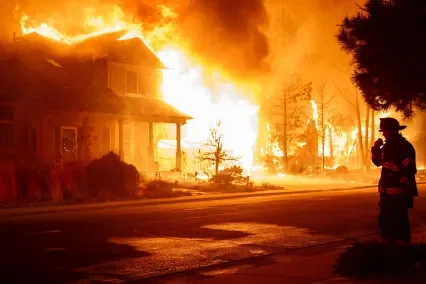
Image: A firefighter speaks into a walkie-talkie while standing in front of a burning home during the Marshall Fire on Dec. 30, 2021.
Now the practical part. Your medications are in three places: the daily organizer in the kitchen, two bottles in the bathroom, and a refill that has not been picked up. You know the names of most of them. You are less sure about the doses, and your prescribing doctor's office is closed. Your wheelchair charger is plugged in behind the bed. Your CPAP is in the bedroom, and it needs power. If you use a service animal, the food and the vet records are in two different rooms.
You call for a ride. Paratransit does not run on emergency schedules, and the accessible vehicle you normally use requires a reservation. The neighbor who usually helps is not home. The shelter address in the news is a high school gym, and you have no way yet of knowing whether the cot height works for you, whether there is a place to plug in equipment overnight, or whether an attendant can come with you.
None of this is a story about helplessness. Every single point in it is a decision that could have been made in advance, on a calm Tuesday, in about two hours total. That is the rationale for preparing before a disaster, and it can save your life.
The System Does Have Barriers; And You Can Get Prepared
There is a common assumption that people with disabilities are typically less prepared for emergencies, and that earlier warnings or more effective notifications would close that preparedness gap. These suggestions may be helpful, but they don’t address the real challenges people with disabilities face during emergencies.
The CDC's guidance on emergency preparedness and disability inclusion names the barriers directly, and they are worth reading closely: transportation, communication, and shelter accessibility. Not planning. Not willingness. Not attention.
Consider what each of those means on the afternoon of an evacuation. Effective transportation means the accessible vehicle you rely on runs on a reservation schedule and is available immediately in the case of a wildfire. That’s not usually the case. Effective communication means the alerts arrive in a format you can read/hear, and that the emergency broadcast has captions or other accessibility features. Again, not common. Shelter accessibility means the building has ramps or elevators, accessible bathrooms, power available for equipment, refrigeration for medication, and so forth. Not always the case. These are real barriers that people with disabilities face in an emergency. While we work at a systems advocacy level to inform municipalities and first responders about these issues, you can get as prepared as possible. Making sure you have a go bag, know where the essential equipment, medication, and other items are, and can gather them quickly, and having a plan are essential. Because if you do get a ride - in a fire truck or other vehicle - you want to be ready to go right away. Following, we’ll explore the things you can do to get as prepared as possible.
Five Things To Do This Month
1. Register for alerts, and learn what the words mean now.
Most counties use an opt-in notification system, and being a resident does not automatically enroll you. You have to sign up, and you can usually register more than one address, so your home, your workplace, and a family member's house can all reach you. In Boulder County, that system is BOCO Alert.
The terminology also changed recently. Boulder County has adopted three standardized terms as part of a regional Front Range effort to align emergency language across counties and agencies. Check what your own county uses, because adoption is still rolling out. Order to Evacuate means leave without delay. Warning to Evacuate means a significant threat exists and you should prepare to leave immediately. Shelter in Place means go inside, secure doors and windows, and stay put. The word "Advisory" has been retired because it was too easily confused with National Weather Service language. Boulder County has also added a two-tone Hi/Lo siren on patrol vehicles, with the plain-language reminder: when you hear Hi-Lo, it is time to go.
One small tip that matters more than it sounds: save your county's alert number in your phone as a named contact, so the message is not filtered out by do-not-disturb or by a spam blocker.
2. Write the plan around your health/mobility, equipment, and medications.
A generic checklist will not cover what you actually need. Write down your specific medications with doses, your pharmacy, your prescribing providers, your allergies, your equipment and its model numbers, and your insurance information. Keep one copy in your go-bag, one with a person you trust, and one photographed on your phone.
If you use an attendant, a service animal, an interpreter, or a communication device, the plan needs to say what happens to each of those if you have to leave in twenty minutes.
3. Pack for 72 hours, and pack what cannot be replaced quickly.
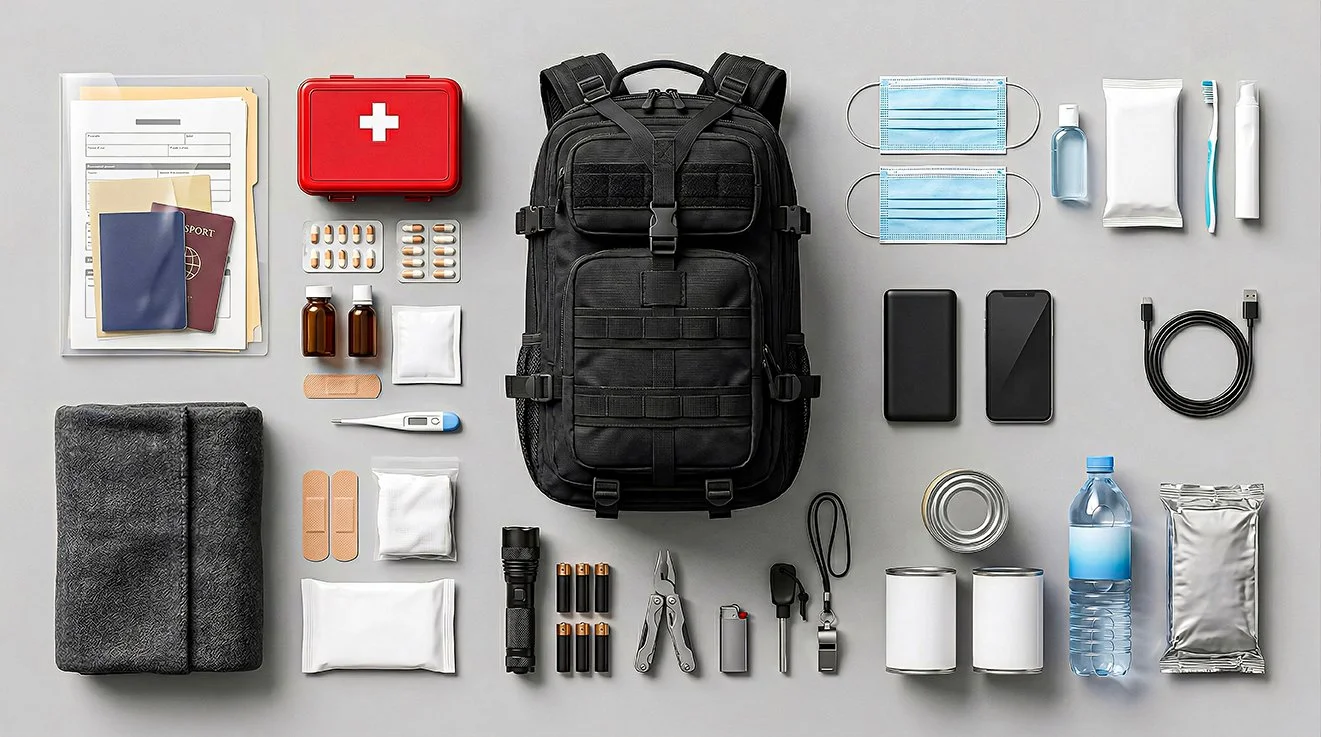
Image: An emergency go bag is pictured with various elements to go inside, such as medication, passports and papers, charging cables, etc.
Water, food, and a flashlight are the easy part. The harder and more important part is the list of things that would take days or weeks to replace: an extra pair of glasses, a charger for a specific wheelchair, catheter supplies, hearing aid batteries, an extra cannula, a printed copy of a durable medical equipment order. Shelters will have blankets. They will not have your charger.
4. Make a power plan.
If you depend on electricity for a wheelchair, an oxygen concentrator, a ventilator, a feeding pump, refrigerated medication, or a CPAP, an outage is its own emergency. Know how long each device runs on battery, how to charge it in a car, and where to go if the outage lasts more than a day. If your household depends on powered medical equipment, tell Xcel. Enrolling in their Medical Certification Program puts a medical need on record at your address and also makes you eligible for their home battery rebate. Both are in the resources section.
5. Name your people, and tell them the plan.
Pick one out-of-area contact, someone far enough away that they will not be evacuating at the same time, and give that name and number to everyone in your circle. Local phone lines get overwhelmed. A text to someone two states away often goes through when a call across town will not. Then tell your neighbors what you would need. Most people want to help and have no idea what to offer. Let them know ahead of time what would be helpful in the case of an evacuation.
Resources Worth Knowing About
Xcel Energy's Medical Certification Program and the Colorado Medical Exemption Program. If someone in your household depends on electrically powered medical equipment, enrolling flags your account so the utility knows there is a medical need at your address. Enrollment requires verification from a healthcare provider. Details and forms are at my.xcelenergy.com/s/billing-payment/energy-assistance/medical-exemption-program, or ask us, and we can help you start it.
Xcel Energy's home battery rebate. Customers enrolled in one of those two medical programs who also live in a Tier 2 or Tier 3 wildfire risk zone may be eligible for up to $10,000 toward the purchase and installation of a home battery energy storage system. Funding for the program is limited, and Xcel is contacting eligible customers directly, so it is worth asking rather than waiting to be found.
Ready.gov, People with Disabilities. The federal preparedness site has a section built specifically around access and functional needs.ready.gov/people-disabilities
CDC, Emergency Preparedness and Disability Inclusion. Practical guidance on planning for medication, equipment, and communication needs. cdc.gov/disability-emergency-preparedness
Your county's emergency notification system. Search your county's name along with "emergency alerts" to find the sign-up page. If you are not sure which system covers you, call CPWD, and we will find it with you.
CPWD. Independent living skills training, information and referral, peer support, and advocacy. If a barrier in this process is one you cannot get past on your own, that is exactly what we are here for.
Three Free Trainings This Fall
CPWD is hosting three disaster preparedness workshops, in partnership with Xcel Energy and county emergency management offices. Participants will build a personalized plan, assemble a kit or go-bag, sign up for alerts, and practice communicating and evacuating safely. Everyone receives emergency preparedness supplies to start a go-bag and is entered into a raffle to win a portable backup power generator. Supplies vary by event.
"People with disabilities and older adults can face additional challenges during emergencies, including receiving alerts, evacuating safely, and maintaining access to medications and medical equipment," said Craig Towler, Director of Public Policy and Advocacy at CPWD. "These trainings are designed to provide practical tools and resources so participants can make a plan that meets their individual needs and be better prepared when disasters occur."
Boulder County Saturday, September 12, 2026, 1:00 to 3:00 p.m. Boulder Fire Station #3, 2967 Bluff Street, Boulder Register:cpwd.wufoo.com/forms/join-our-disaster-preparedness-training With the Boulder Office of Disaster Management, Boulder Fire-Rescue, and Xcel Energy.
Gilpin County: Saturday, September 26, 2026, 11:00 a.m. to 1:00 p.m., Gilpin Community Center, Multi-Purpose Room, 250 Norton Drive, Black Hawk. Register: cpwd.wufoo.com/forms/join-our-emergency-preparedness-training with the Gilpin County Office of Emergency Management and Xcel Energy.
Broomfield County: Saturday, October 17, 2026, 1:00 to 3:00 p.m., Broomfield Health and Human Services Building, Heritage Room, 100 Spader Way. Register: cpwd.wufoo.com/forms/join-our-emergency-preparedness-training-x162zhy41wpxlj7. With the Broomfield Office of Emergency Management and Xcel Energy.
These workshops are open to people with disabilities, older adults, family members, friends and neighbors, caregivers, and anyone who wants to be better prepared. Registration is appreciated and helps us plan supplies.
One Step To Do This Week
If you do nothing else after reading this, register for your county's emergency alerts. It is free, it takes about five minutes, and it is the one piece of a plan that keeps working whether or not you are home, awake, or watching the news.
Then pick a second preparedness task and add it to the calendar. Write the medication list. Charge the spare battery. Call Xcel about the medical certification. Preparedness is not a weekend project you finish. It is a handful of small decisions made early, so that if the wind picks up and there’s a fire, you are ready to go and not caught off guard.
For more information or help registering for a training, contact info@cpwd.org or call (303) 442-8662. To learn more about CPWD and our programs and services, visit www.cpwd.org.