

Nothing About Us Without Us: What Independent Living Actually Means
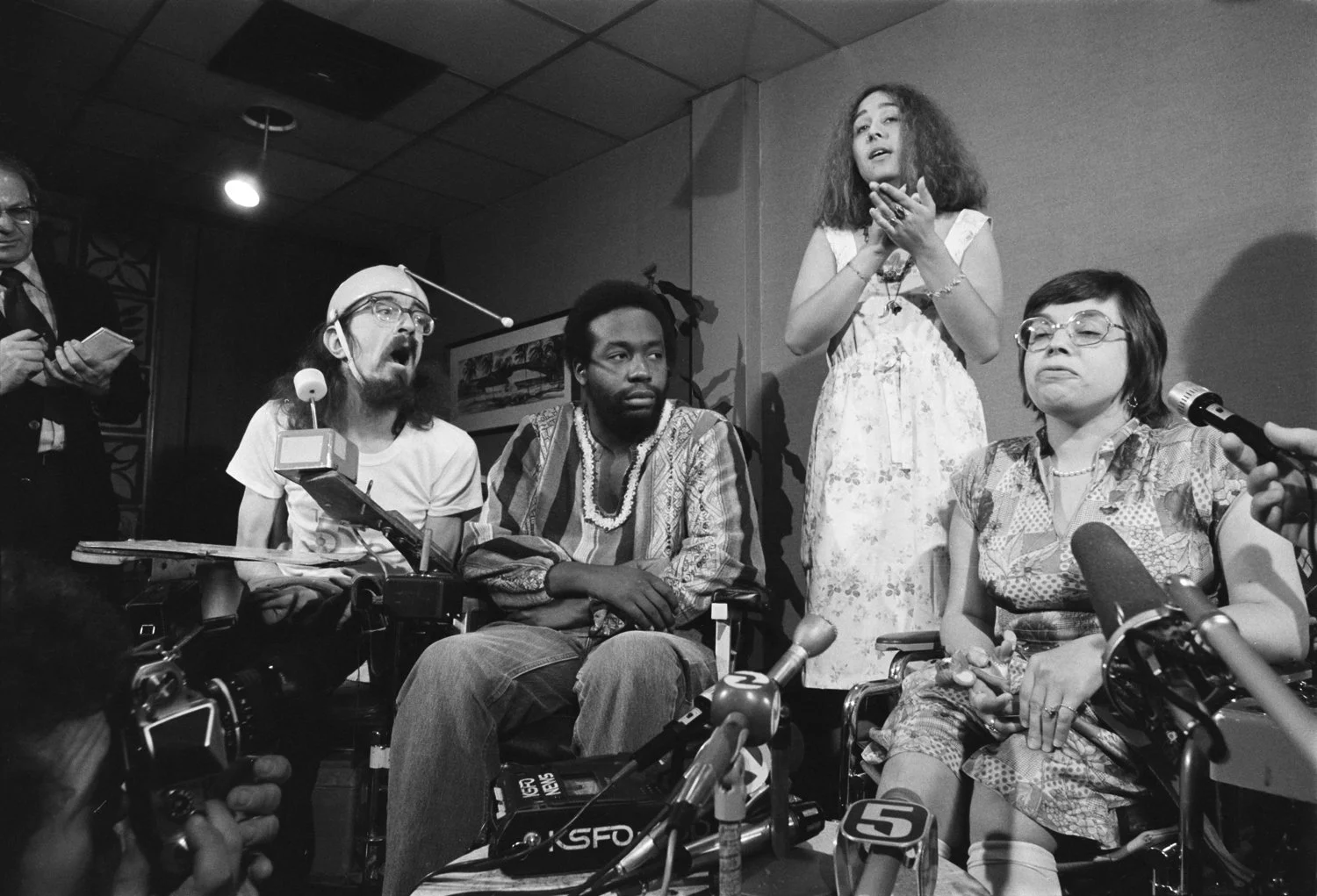
Image: A group of protesters with disabilities speaks during the Section 504 protest in 1977.
In April of 1977, more than 100 activists with disabilities occupied the federal building in San Francisco and refused to leave. They stayed 26 days, the longest occupation of a federal building in United States history, and they did not go home until the regulations for Section 504 of the Rehabilitation Act were signed. Deaf participants interpreted. The Black Panther Party brought hot meals every night. Judy Heumann, Kitty Cone, Brad Lomax, and hundreds of others occupied the building until the federal government agreed that excluding people with disabilities from federally funded programs was against the law. Kitty Cone's own account of those 26 days is preserved by DREDF and worth reading in full.
That same year, here in Boulder County, CPWD began.
Next year marks 50 years since both the 504 sit-in and the founding of CPWD. This historic milestone inspires us to define the Independent Living philosophy, showcase its daily impact, celebrate five decades of progress, and chart the course for our future.
IL Philosophy, In One Sentence
“Nothing about us without us.”
We are the authors and experts of our own lives. That is the whole idea, and it was a radical one when the movement began.
Before Independent Living, the governing assumption was that a person with a disability was a patient. A professional assessed you, decided what you needed, and arranged your life around that decision. Where you lived, what you did during the day, and who helped you were determined by someone else's judgment about what was appropriate for you.
Independent Living replaced that with consumer control. You decide. The services follow your decision. Ed Roberts, who was refused admission to UC Berkeley because administrators said a student with polio could not manage there, went on to help found the first Center for Independent Living in 1972 with the clarity that people with disabilities are the experts on their own needs. The United Nations Convention on the Rights of Persons with Disabilities later put the same idea in treaty language, affirming "respect for inherent dignity, individual autonomy, and independence."
We wrote more about that principle in our article on peer support. What it looks like on an average day
Philosophy is easy to admire and harder to picture. Here is what consumer control looks like in the ordinary running of a life.
You hire your own attendant, and you train that person in how you want your morning to go, because you know your body and your routine better than an agency does.
You decide to stay in the home you already live in, and support comes to you, versus living in a home or institution.
You set and work towards your own independent living goals, the ones that are important and meaningful to your independence.
You talk to and listen to peers, other people with disabilities. And this fellowship brings friendship, shared lived experience, encouragement, courage, and possibility- powerful elements of living that cannot be found through directive medical or case management.
Amber's story is a good example of Independent Philosophy in action. Diagnosed with Bipolar II and PTSD, she spent years unable to leave her home. She connected to IL services, set her own IL goals, and got the support she needed; participated in peer groups and found courage and possibility in her life. Today she is living independently, fully employed, completely off SSDI, and raising her son.
The 4 Pillars of IL Philosophy
These tenets of the philosophy, when transformed into action, become the building blocks of successful independent living.
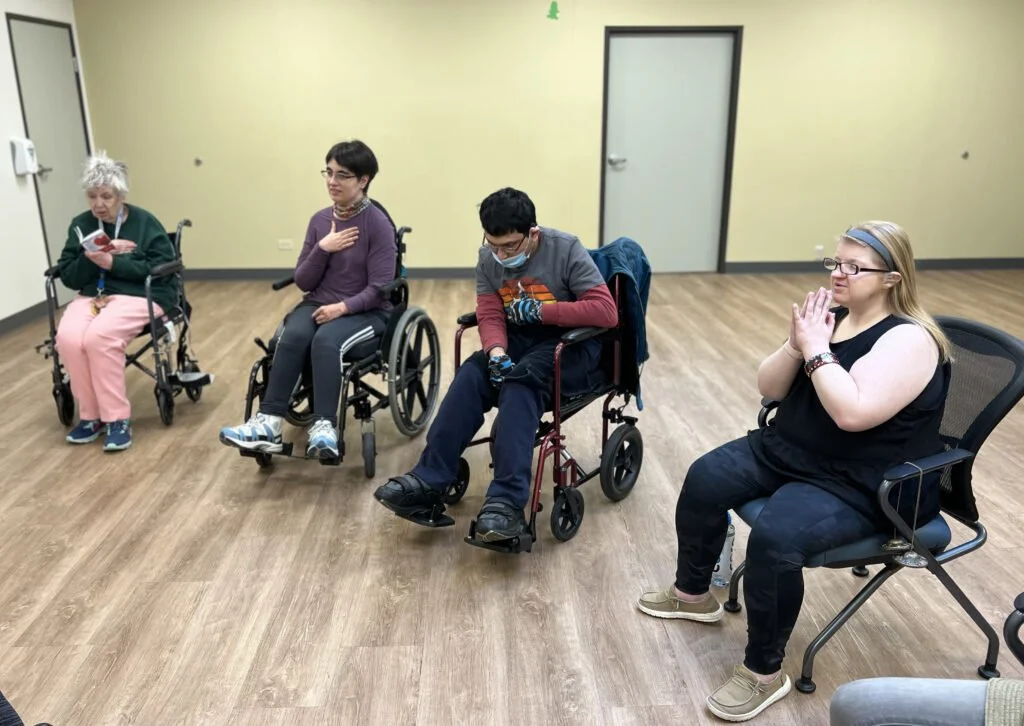
Image: A group of consumers participates in a Movement class at the Boulder CPWD office.
Self-determination. Consumers direct their own services. Anchored in this principle, Centers for Independent Living are led and staffed by a majority of individuals with disabilities, ensuring expertise remains rooted in lived experience and is not directed by external policies or guidelines.
Peer support. Someone who has lived it, sitting alongside someone living it now. A person who has already fought a benefits denial, learned to use a white cane, or requested a workplace accommodation carries knowledge no credentials can match. Being truly understood is powerful. Peer support brings sharing at all levels, from first-steps learning to mentorship. Connecting with others with similar experiences is the human magic that makes all the other skills training and goal setting work.
Cross-disability community. Our cross-disability model brings people with all types of disabilities under one roof. While our individual needs differ, whether it's a curb cut, closed captioning, a flexible schedule, or plain-language forms, the barriers we face overlap. By bringing every disability together, we build a more accessible, equitable community that ultimately works better for everyone.
Systems change. Removing barriers at the structural and policy levels. Individual advocacy unlocks the door for one person; systems advocacy opens that door for the entire community. It requires sustained effort. We take a seat at the city planning table, bring our voice to policy meetings, and share the importance of equity and accessibility with our representatives and lawmakers.
Fifty Years of Progress
When we look at our history of hard-earned freedoms and accomplishments, we can see that some of the things we once took for granted were considered impossible. We can celebrate these and take inspiration from them to keep working towards a more independent and inclusive future.
1973 and 1977. Section 504 established that any program receiving federal funds could not exclude us. It took the sit-in to make it real, and it became the legal foundation on which everything else was built.
1975. The Education for All Handicapped Children Act opened the schoolhouse door. In 1970, American schools educated only one in five children with disabilities, and more than a million were shut out of the education system entirely. The new law guaranteed free and appropriate public education to every child with a disability, in the least restrictive environment, and it created the Individualized Education Program. The IEP was one of the first times when people receiving services, and their families, were co-authors of their service plan. This was the genesis of consumer control. The law was renamed the Individuals with Disabilities Education Act in 1990.
1990. The Americans with Disabilities Act extended civil rights protection into employment, public services, public accommodations, and telecommunications. Thirty-six years later, its most visible legacy lives in the outcomes we all see as normal now: curb cuts, captions, ramps, automatic doors, and other public accessibility features. These accessibility improvements not only make independent living for people with disabilities more feasible, but they also benefit many community members. Curb cuts are important for parents with baby strollers, bicyclists, older adults, and more. Captions, ramps, and automatic doors increase access for everyone.
1999. In Olmstead v. L.C., the Supreme Court held that unnecessary institutionalization is discrimination. Community living shifted from a hard-to-achieve preference to a civil right. That same year, the Ticket to Work and Work Incentives Improvement Act made it possible to work without losing health coverage, extended premium-free Medicare Part A for up to 93 months for people receiving SSDI, and opened a Medicaid buy-in option for states. This changes increased choice, accessibility, and independence for people with disabilities in their choice of home and work.
2002 and 2005. Colorado created Consumer Directed Attendant Support Services, which the state describes as "an initiative led by members of the disability community." CDASS lets a person hire, train, supervise, and schedule their own attendants, with no home care agency as a go-between. Nationally, Money Follows the Person began helping states move people out of institutions and back into homes of their own. By the end of 2023, it had transitioned 127,184 people to community living.
2008 and 2010. In 2008, Congress passed the ADA Amendments Act to overturn a series of Supreme Court rulings that had narrowed the definition of disability. The Act mandated that the legal definition be interpreted broadly, restoring the ADA’s original intent. Instead of forcing individuals to prove whether they were 'disabled enough' to deserve protection, it shifted the focus back to where it belongs: whether businesses, employers, and governments are meeting their obligations under the law. Two years later, in 2010, the Twenty-First Century Communications and Video Accessibility Act brought accessibility standards into the digital era. The law required that televised programming retain closed captioning when streamed online and mandated built-in accessibility features across smartphones, video-calling tools, and digital messaging platforms.
2014. The Workforce Innovation and Opportunity Act added a fifth Core Service to every Center for Independent Living: assisting people to move out of nursing homes and other institutions and into independent living; assisting people at risk of institutionalization to stay in the community; and assisting youth with disabilities in their transition to adult life after school.
2021. Colorado passed Senate Bill 21-039 to end subminimum-wage employment, and the state completed the job in mid-2023, two years ahead of the deadline. No employer in Colorado may pay a person less than minimum wage because of their disability.
Over the years, through systems advocacy and the courageous efforts and voices of our predecessors, laws were changed, barriers lowered, and independent living became an expected standard. Home and community-based services grew into a genuine alternative to facility and institutional care, and consumer-directed programs spread, includingVeteran-Directed Care, which allows Veterans to manage their own budgets and choose their own caregivers.
Fifty years ago, none of that existed. Every item on that list started as a thought, a dream, a social change that was championed by a few before it became real and available to all.
Looking at the Next Half Century
The next fifty years are already sketched out, and much of the work is underway.
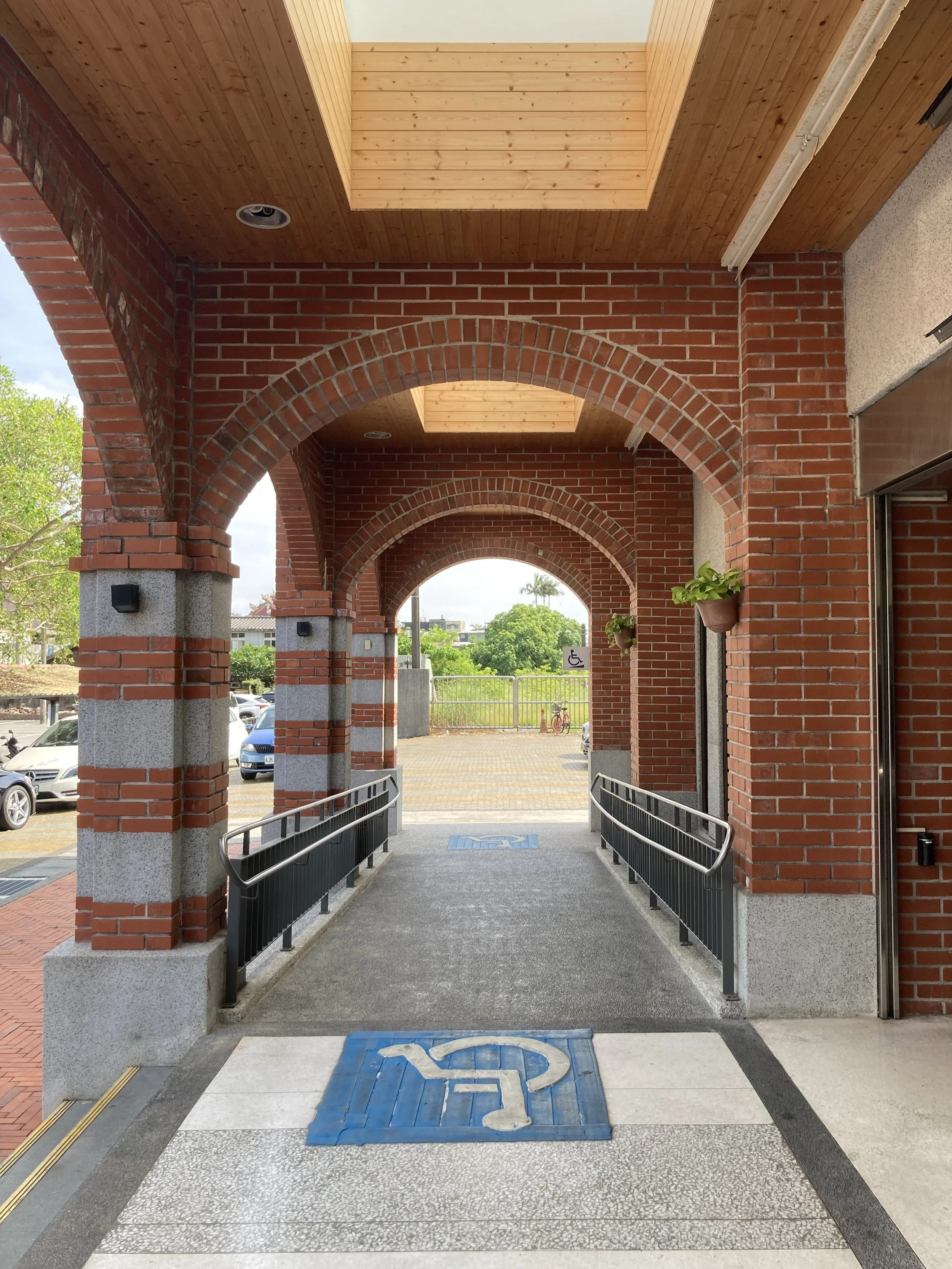
Image: A wheelchair-accessible ramp is shown leading up to the doors of a building.
Universal design as the default. Universal design means designing physical spaces, websites, products, and programs to be fully usable by everyone from day one. They are part of the blueprint and plan, not an accommodation added later. Designing this way creates a seamlessly inclusive world that benefits everyone.
Consumer direction as the standard. Choosing and directing your own support should be the standard for independent living services. People with disabilities have the same right to manage and grow their own lives. They have the right to succeed and fail on their own terms, without constraints from external policies or control.
Technology built with us. Artificial intelligence and the tools built on it are reshaping how everyone reads, navigates, and communicates. We need to bring our voice to the table, give feedback, and make sure we are part of the conversation so that future tech has the accessibility features and options we need to evolve into this developing digital world.
Community infrastructure funded to match the need. We need assistance - caregivers, benefits, accommodations, and more. These should be funded and considered essential parts of community services. There’s a shortage of caregivers, a shortage of Support Service Provider services, and other services. These are essential for people with disabilities to live with equity in our communities, and essential for our independence.
A movement that learns across borders. When Mind Prawatsrichai visited us from Bangkok, she came to study the consumer-directed model and take it home. While we continue to work hard for improvements in the U.S., she noted that we had incredible levels of accessibility, social support, and opportunities for independence compared to her own country. Mind, and advocates around the world are doing the hard work our elders did 50 years ago. Together we are imagining and working for a world that works for everyone, and has the foundations to support independent living.
Get Involved; Your Voice and Efforts Matter
Every great change in society starts small, with a thought, a need, a grassroots group, a petition, a testimony. The changes and successes outlined above took time and effort. Step by step, each step, no matter how small, was necessary and foundational to the successes and outcomes that came, sometimes many years later. You can be a part of building from here. Bring your voice, your story, your experience to the table and the conversation. It makes a difference. And it’s hard to say, “nothing about us without us,” if we choose not to participate.
Sign up for advocacy updates at cpwd.org/advocacy-updates. We will send you updates about bills, laws, other changes, as well as opportunities to bring your voice or get involved.
Share your barriers and experiences. Systems advocacy begins with someone naming a specific barrier: the curb that never got cut, the clinic with no accessible exam table, the bus stop with nowhere to wait. We cannot work on what we do not know about. Email us at info@cpwd.org.
Advocate for yourself. Ask for accommodations; express your needs; kindly educate people about disability etiquette. We can’t expect others to offer understanding or assistance if we don’t express ourselves clearly. If you need help, join a peer group or talk to an Independent Living Advisor to find out more about your rights, cultivate the courage and confidence to bring your voice.
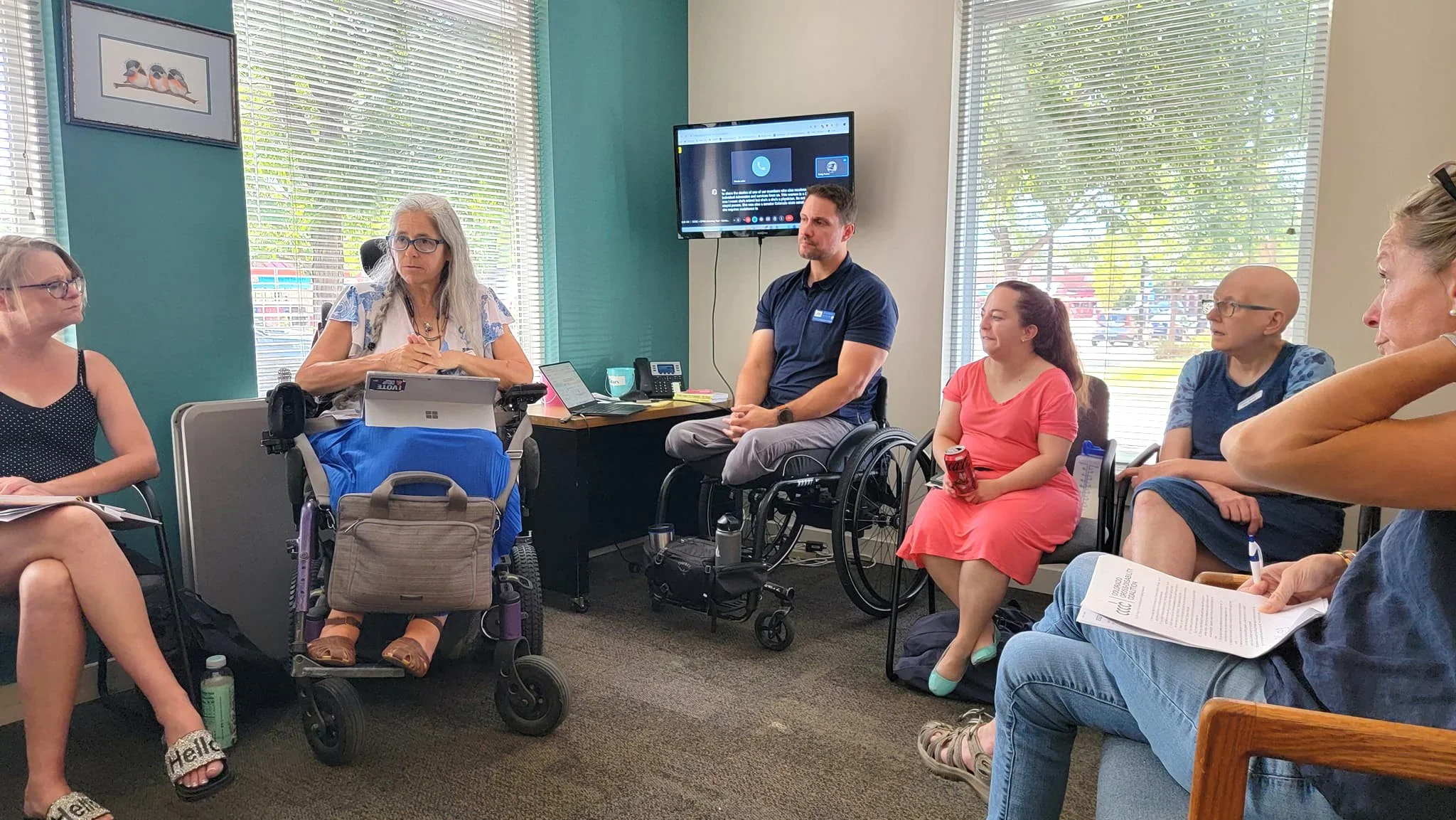
Image: A group of people participates in a City Listening Session in Longmont.
Show up locally. City planning meetings, transit boards, and public comment periods shape access long before anything reaches the statehouse, and they are usually the least crowded rooms in the process. Find out, show up, share your experiences and needs. It’s much easier to influence policy on the front end of planning than to reject policies after they are passed.
Contact your legislators. Share your story. Tell them about policies and laws that work and encourage ongoing support of those. Talk about what is not working and offer solutions. Personal connection and story are perhaps the most powerful influences in shifting opinions, understanding, and policies.
Be of service. Boards, advisory committees, and community task forces need people with lived experience at the table while decisions are being made.
Offer peer support. Join our peer groups, or find somewhere else where you can share your experience to help and encourage others. When we help each other, we all grow and benefit.
Join us at Disability Rights Advocacy Day. Every February, we descend upon the Capitol to bring the voice and lived experience of people with disabilities to our lawmakers. Join us, be part of something powerful and influential, and meet new friends and companions on the independent living road.
You have rights. You have options. And you do not have to figure any of it out alone. Reach us at info@cpwd.org, and we will help you take the next step.
We say, nothing about us without us. That starts with nothing about you without you. Step into your life; learn the skills and get the support you need; become the designer and decision-maker of your own independence; and then share it and help others. If we all do this, we can change the world as our predecessors did.