

A Living Law: Using the Americans with Disabilities Act Today, and Building What Comes Next
Image: A black clipboard has the words “Americans With Disabilities Act” and rests on an American flag.
This July, we mark 36 years since the Americans with Disabilities Act was signed into law. At CPWD, we recognize this anniversary with gratitude and also with resolve. Gratitude for the advocates who made the ADA possible, and resolve because even after many decades, we still have more work to do.
It can be tempting to treat a landmark law like a monument, something we visit once a year, admire, and leave untouched. The ADA is not a monument. It is a living tool, one that only works when we pick it up and use it, and one that grows stronger each time we ask it to do more. So this year, we want to hold two honest truths at once. Much of what the ADA already provides, by law, goes unused. And, much of what our community still needs remains unbuilt. This article is a reflection on both.
Lawful Provisions of the ADA
At the heart, the ADA is a promise of equal access and equal opportunity in the places where everyday life happens. It is organized into sections the law calls titles, and knowing them in plain language is the first step toward using them. Once we do, we begin to notice that the ADA is quietly woven into ordinary life in ways we may not have noticed. Title I protects us at work. It says an employer cannot refuse to hire, promote, or keep a qualified person because of a disability, and it requires reasonable accommodations, such as flexible schedules, screen-reading software, or an adjustable desk, so we can do our jobs.
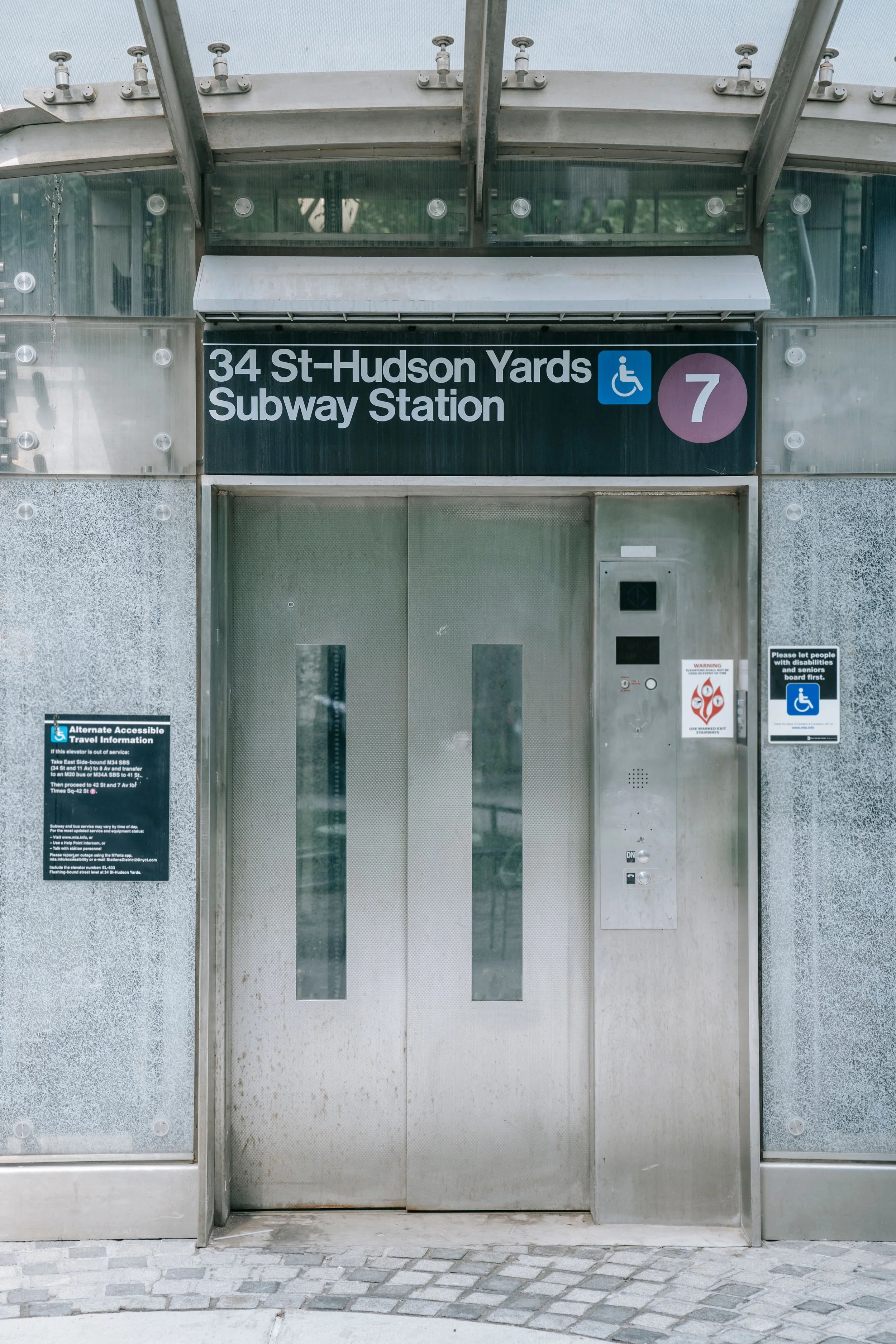
Image: A subway station provides an elevator for accessibility.
Title II covers state and local government, and its reach affects citizens in all aspects of life. The curb ramp on the corner, "kneeling" buses that lower to curb height at stops, the elevator and accessible restroom in the public library, and the polling place arranged so every voter can cast a private ballot are all Title II at work. So are sign language interpreters at public hospitals and government notices offered in large print or Braille. In recent years, that reach has extended into the digital world as well. In 2024, the Department of Justice issued a rule under Title II requiring state and local governments to make their websites and mobile apps accessible, using a standard called WCAG 2.1 Level AA. Phased in by the size of the government, with larger ones meeting it by April 2027 and smaller ones and special districts by April 2028, the rule means the public services many of us rely on, from paying a utility bill to reading a health notice or signing up for a program, are expected to work for people using screen readers, captions, and keyboard navigation, so that access online is as ordinary as access through the front door.
Title III covers businesses open to the public, the restaurants, stores, doctors' offices, gyms, and theaters. It is the reason for ramped or automatic entrances, accessible parking spaces near entry points, wider restroom stalls with grab bars, lowered sections of checkout counters, and the welcome that service animals receive in stores and public places. Title IV addresses telephone and communication access. It created the telecommunications relay services that let people who are Deaf, hard of hearing, or who have a speech disability make and receive phone calls through a relay operator or a captioned phone, so a conversation the rest of us take for granted is open to everyone.
Taken together, the examples add up quickly. The tactile numbers under our fingers on an elevator button. The Braille beside a hotel room door. The ramp running alongside a flight of stairs. The reserved seat near the front of the bus. The parking space closest to the entrance. Most of us pass these a dozen times a day without a second thought, and nearly every one of them exists because the ADA required it. That is what it means to call this a living law. The ADA is far more present, and far more useful, than many of us realize.
Putting Those Rights to Work
Rights that sit on a shelf change nothing. Rights that we understand and use change everything. Here is how we can take more of the ADA provisions from information to experience.
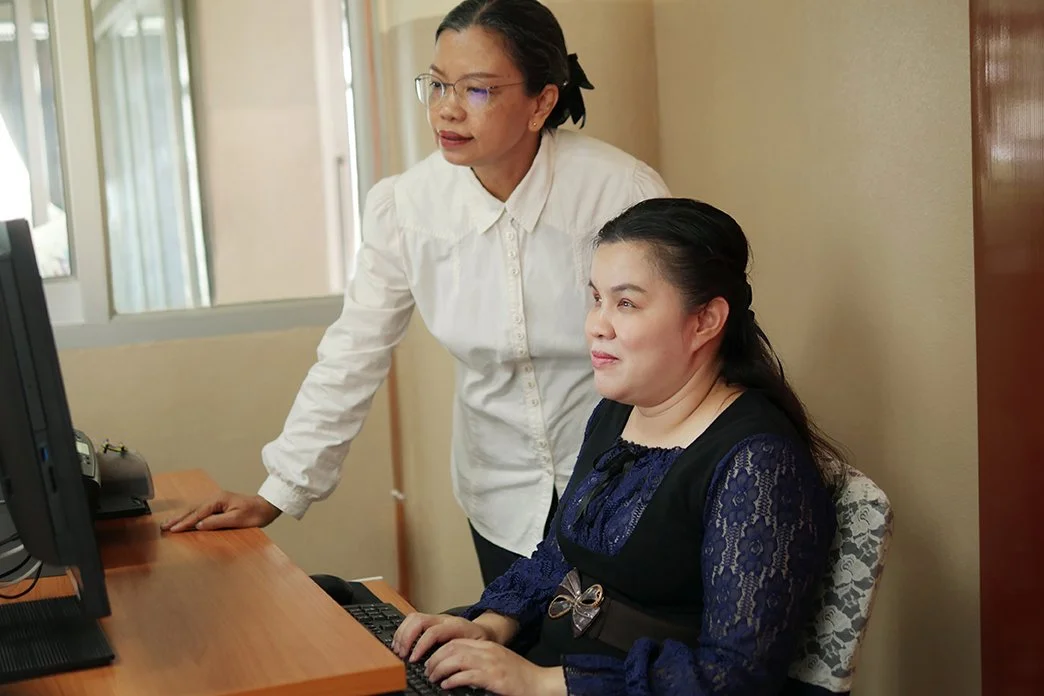
Image: A woman who is blind uses a braille keyboard and screen reader on her computer at work while her coworker stands next to her.
At work, the ADA gives us the right to a reasonable accommodation. A reasonable accommodation is simply a change to a job or a workplace that lets a qualified person do the work, such as a modified schedule, assistive technology, a quieter workspace, or the option to work from home. You do not need to use legal language or even say the words "reasonable accommodation" to ask. A plain, honest request is enough. What usually follows is what the law calls the interactive process, a back-and-forth conversation where the worker and the employer explore what will help. Coming to that conversation with a clear description of the barrier, and one or two ideas for solving it, makes it far more likely to succeed.
In the community, businesses and public spaces are required to remove barriers when doing so is readily achievable, meaning it is possible to do without much difficulty or expense, and also to welcome service animals. When a space is not accessible, we have the right to ask for what we need, whether that is a ramp, a document in an alternate format, a sign language interpreter, or a reserved accessible seat.
And when access is denied, the ADA gives us a path forward. For a problem at work, a person can file a charge with the Equal Employment Opportunity Commission, generally within 180 days of the discrimination, or up to 300 days where a state or local agency also handles the complaint. For a problem with a government service or a business, a person can file a complaint with the U.S. Department of Justice at ADA.gov. None of us has to walk that path alone. This is exactly the kind of situation where a Center for Independent Living like CPWD can stand beside you, with information, peer support, and advocacy. Reach out by emailing info@cpwd.org or calling (303) 442-8662.
Where We Need to Continue the Work
The ADA opened many doors. It did not, on its own, walk us all the way through them. Naming what remains is not a lack of gratitude. It is how we honor the law's purpose.
The clearest gap is work. In 2025, only about 22.8 percent of people with disabilities were employed, compared with 65.2 percent of people without disabilities. Roughly 75% of people with disabilities are not in the labor force at all, and unemployment for those seeking work is about twice as high as for everyone else. These numbers show that a civil right to fair hiring has not yet become the lived reality.
The gap is written into the wage system as well. Under a decades-old provision called Section 14(c), some employers can still legally pay workers with disabilities less than the federal minimum wage. A federal effort to phase this out was proposed and then withdrawn in 2025, so the practice remains legal nationally, even as more than two dozen states move to end it on their own. Beyond work, barriers to accessible and affordable housing, to reliable transportation and paratransit, and to services in rural communities persist.
Steps We Can Take
The good news is that every gap has a next step, and most of those steps are achievable if we ask for what we need as individuals and work together as a community.
We can use the rights we already have. Every accommodation requested, every barrier reported, and every complaint filed strengthens the law by showing that it matters and that people are counting on it. Employers can go beyond minimum requirements, intentionally hire more people with disabilities, provide reasonable accommodations readily, and design workplaces that are accessible and welcoming to everyone. Communities and businesses can embrace universal design, the practice of building homes and public spaces that are accessible to all abilities. The curb cut, first won by wheelchair users, is now used by every parent with a stroller and every traveler with a suitcase. Access built for some often becomes a gift for all.

Image: Members of the CPWD staff and community speak with state representatives.
We can also bring our voices to affect change. We can support state efforts to end subminimum wage, share our own stories with decision-makers to help them understand what is truly at stake, and to help them understand our lived experience. We can tell our legislators that disability rights are civil rights worth funding and defending. And we can stay connected to one another because a community that knows its rights and shares its knowledge can have a greater impact for positive change.
Building Upon the ADA Foundation
Thirty-six years ago, the ADA gave us a foundation of dignity, independence, and belonging. A foundation is a beginning, not an ending. What we build upon it- the jobs, open doors, and full, independent lives- is the work that lies ahead, and it is work we are meant to do together.
At CPWD, we remain committed to that work every day, and we invite you to join us. Learn your rights, use them boldly, and reach out when you need a partner. If you feel drawn to changing the systems themselves, oursystems advocacy work is one of the best ways to get involved, and we would love to hear from you. And if you want to dig deeper into the law itself, the Department of Justice keeps its official home atADA.gov, where you can explore each Title, learn your protections, and even file a complaint.
The next chapter of the ADA will not be written by a law alone. It will be written by all of us, together.