

Accessible Colorado: 2026 Summer Edition
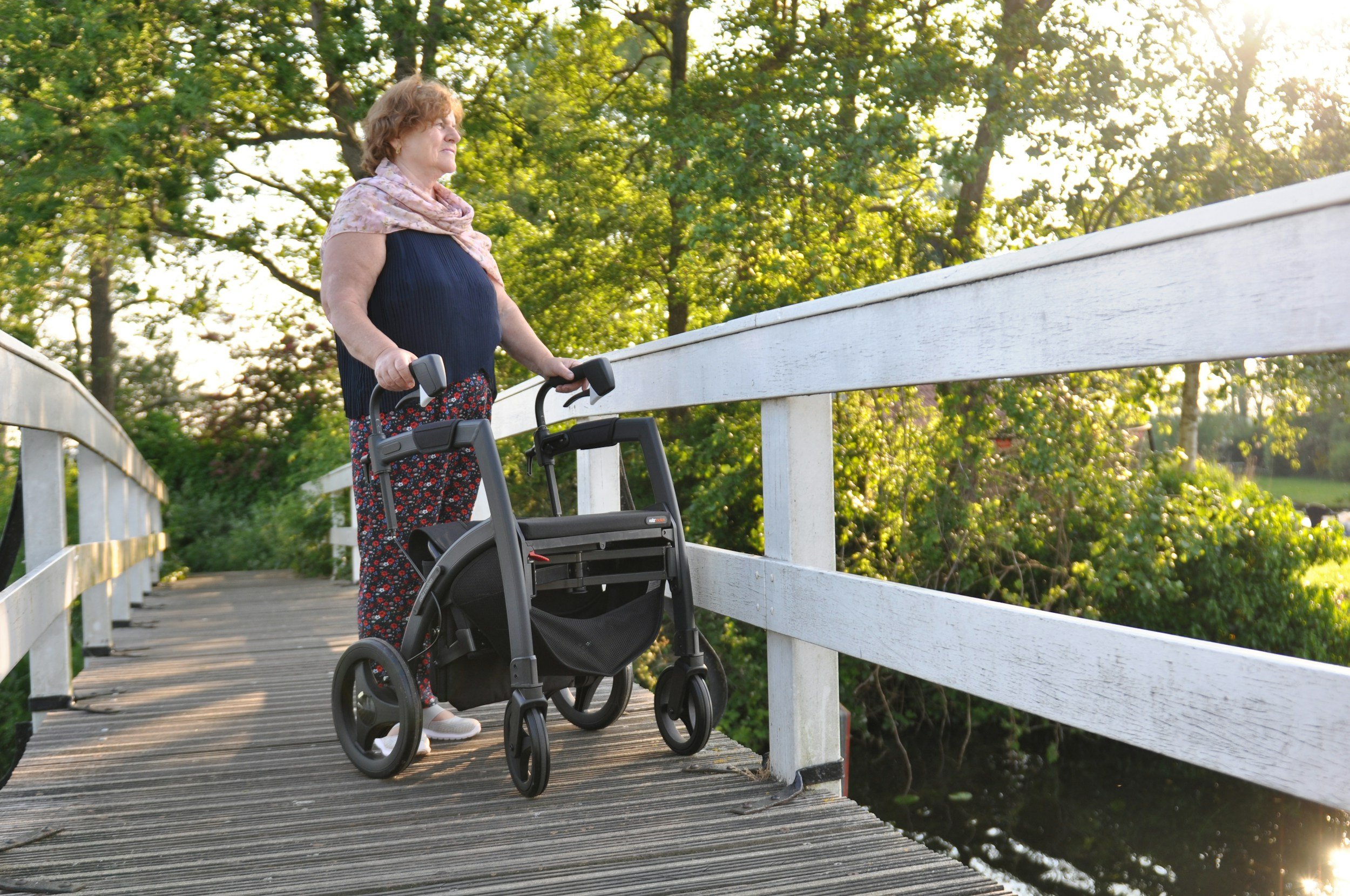
Image: A woman using a walker stands on a bridge overlooking a lake.
The outdoors belong to everyone. Recreation is not a luxury, and it is not an afterthought. It is a pathway to wellness, independence, and community, and every person deserves a fair chance to experience it. When a trail is built with care, when equipment is made available, and when access is treated as a right rather than a favor, the mountains, the lakes, and the open space of Colorado become what they were always meant to be, which is a place for all of us.
Last summer, we shared a guide to accessible recreation across the state. A great deal can change from one season to the next, so we wanted to return with fresh, updated information for 2026. This year's guide brings a new set of places to explore, a few longtime favorites worth revisiting, and the practical resources that make a day outdoors possible. We offer it in the spirit of independent living, because getting outside, on your own terms, is one of the most powerful ways a person can claim their freedom.
Three Accessible Lake Loops in Rocky Mountain National Park
Some of the most beautiful water in Colorado sits at the end of a smooth, gentle path. Rocky Mountain National Park maintains three lake loops that welcome wheelchairs, walkers, and anyone who prefers an even surface.
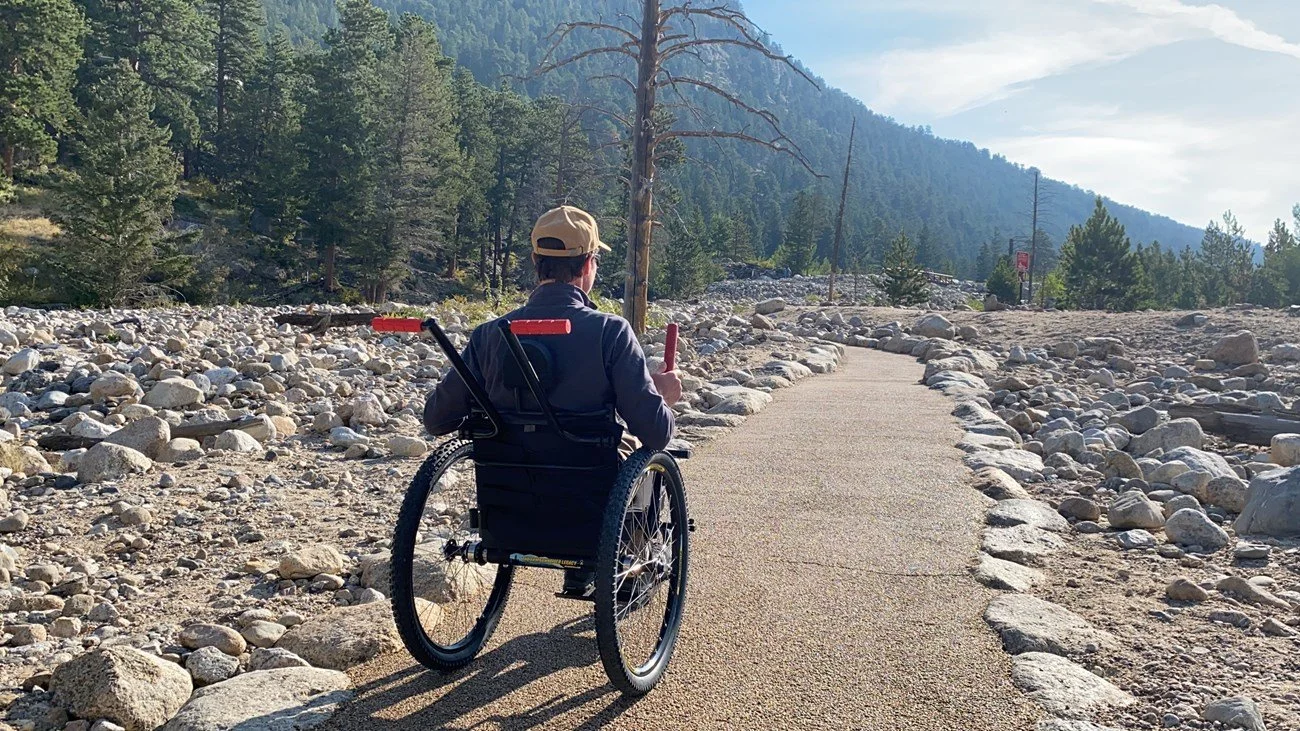
Image: A man uses an all-terrain wheelchair at Sprague lake in Rocky Mountain National Park.
Sprague Lake is a 0.8-mile packed-gravel loop that is nearly flat, with only about 36 feet of elevation rise from end to end. It offers accessible parking, flush toilets in the summer and vault toilets year-round, an accessible fishing pier, accessible picnic tables, and benches spaced along the way. It even connects to an accessible backcountry campsite for anyone who wants to stay the night.
Lily Lake is another 0.8-mile route, a packed-gravel path with a wide boardwalk along the south shore and only 32 feet of elevation change. You will find accessible parking, vault toilets, an accessible fishing pier, and picnic tables. One short stretch is a little hilly, so it helps to have a companion along for that section.
Bear Lake is a shorter 0.6-mile loop but more of a workout, with grades greater than8 percent and a few log steps on the southwest side. The park suggests traveling clockwise so you climb the steps rather than descend them. Accessible parking, vault toilets, and shoreline benches are all here.
One planning note. The park often requires a timed-entry permit in the summer months, so check Rocky Mountain National Park's timed-entry passes on recreation.gov before you go, and give yourself time to enjoy the drive.
Close to Home in Boulder County
Outdoor exploration does not always mean a long drive to the high country. Sometimes it is a quiet morning by the water, close to home, on a path that anyone can travel. Boulder County offers several.
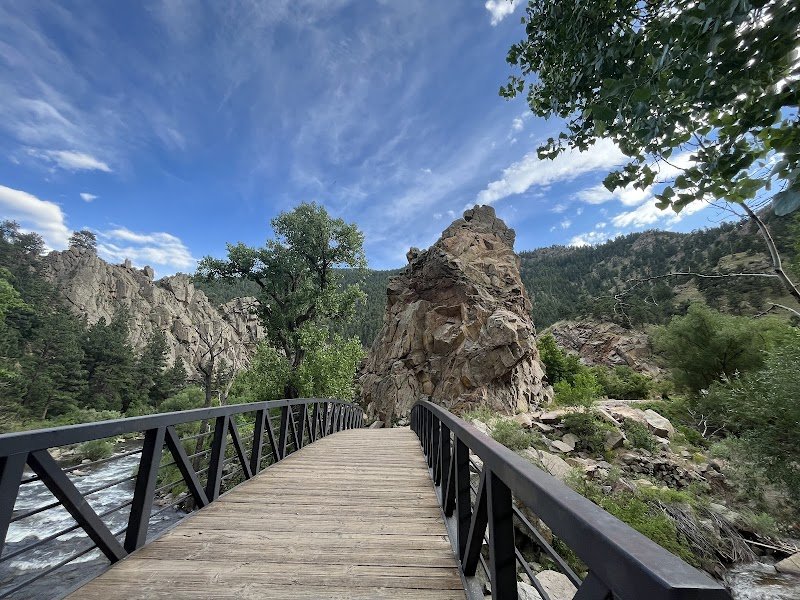
Image: A wooden bridge stretches over Boulder Creek on the Boulder Creek Path.
Walden Ponds Wildlife Habitat has easy, level trails across a series of ponds, with accessible parking at all three trailheads and restrooms at the Cottonwood Marsh and Wally Toevs areas. Wally Toevs Pond is set aside for people 65 and older, people with disabilities, and their young companions. The fishing pier there is temporarily closed for repairs, but shoreline fishing remains open, and the birdwatching is wonderful year-round.
Sawhill Ponds, right next door, and Coot Lake, near the Boulder Reservoir, are two more flat, close-in options with wide, level paths. When a shorter and gentler outing is what the day calls for, these are easy places to breathe and take in the Front Range.
In town, the Boulder Creek Path follows the water on a paved, level route through the heart of downtown, and the Wonderland Lake Trail in north Boulder pairs an easy path with wide foothills views. The City of Boulder's Open Space and Mountain Parks program adds even more, with adaptive bike rides, accessible group hikes, all-terrain wheelchairs you can borrow with advance notice, and a downloadable accessible-trails guide. You can find it all at bouldercolorado.gov/services/visitors-experiencing-disabilities.
Track Chairs for Access to Backcountry
A track chair is an all-terrain power wheelchair that rolls on sturdy, tank-like treads instead of ordinary wheels. It travels over dirt, gravel, sand, and grass, and it reaches ground that a standard chair simply cannot. These chairs can make otherwise challenging terrain into an accessible trail. In 2026, the program that provides them keeps growing.
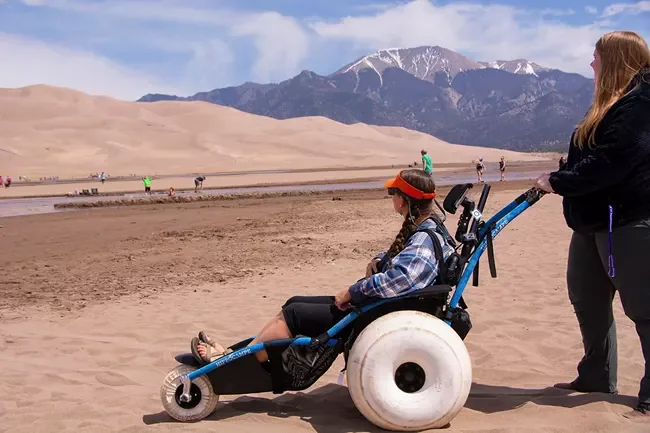
Image: A woman is pushed through the sand at great Sand Dunes National Park in an all-terrain wheelchair.
Staunton State Park, near Conifer, has offered track chairs for years. Their chairs reach rocky, rooted, and steep trails, including scenic overlooks and a mountain-lake fishing pier. Reservations are made through Colorado Parks and Wildlife.
Barr Lake State Park, northeast of Denver, recently added an all-terrain chair, and programs in other parts of the state expanded their season this year, so it is worth checking what is newly available near you.
Great Sand Dunes National Park lends free sand wheelchairs designed to move across soft ground, and an accessible mat leads out to the edge of Medano Creek at the foot of the tallest dunes in North America. The sand still takes some effort, so a companion is a help. You can reserve a chair in advance by calling the visitor center at (719) 378-6395.
The chairs are free to use, but they must be reserved ahead, and they book quickly in summer. Colorado Parks and Wildlife's Park Visitors Experiencing Disabilities page is the best place to begin.
Built With Accessibility In Mind
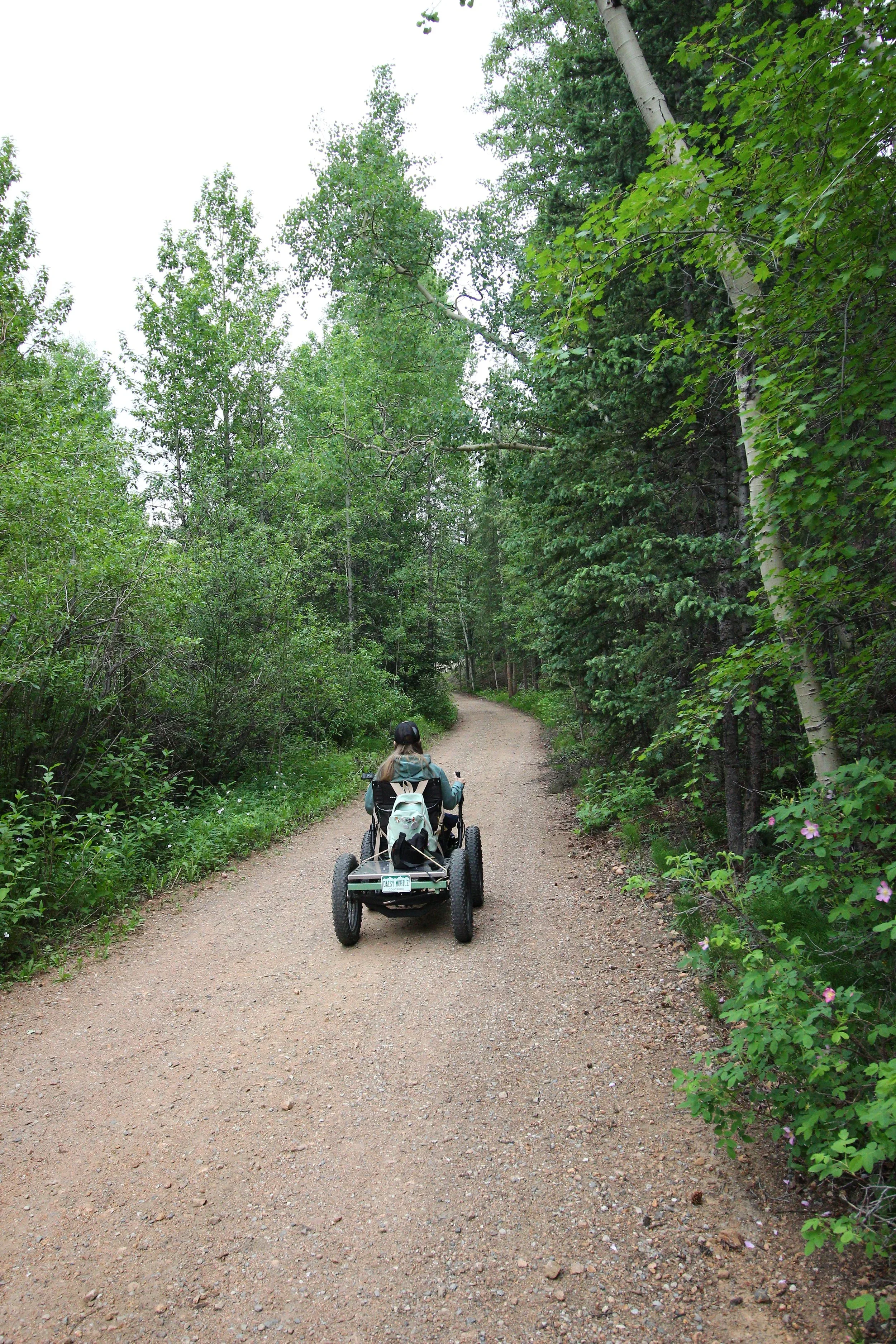
Image: A person uses an electric wheelchair through a Wilderness on Wheels trail.
Some places are built with accessibility, from the very first plank. In the mountains near Grant, Wilderness on Wheels is one of them. An eight-foot-wide, gently graded boardwalk winds a full mile through pine forest and meadow, climbing to nearly 9,000 feet, with benches, picnic areas, and rest stops all along the way. There are fully accessible campsites and a stocked trout pond, so the day can be a short afternoon or a night under the stars. You can learn more at wildernessonwheels.org.
Recreation is not only about a place to sit and take in the view. For many people, it is about motion, effort, and play, and Colorado's adaptive sports community makes all of it possible.
Adaptive Adventures, a Colorado nonprofit, offers far more than paddling. In summer, that means adaptive cycling on hand cycles and recumbent bikes, rock climbing with specialized gear, and kayaking and rafting on both calm water and whitewater, with alpine and Nordic skiing when the snow returns. Programs serve all ages, children through adults; equipment and instruction are provided, and every program is completely free, both for participants and for the family, friends, and caregivers who come along. Registration is at adaptiveadventures.org, or by phone at (303) 679-2770.
Walk, Talk, and Roll
Recreation is not only something we do on our own. It is also something we share, and community is a large part of what makes the outdoors worth returning to. That is the spirit behind Walk, Talk, and Roll, CPWD's own monthly gathering.

Image: A group gathers together for CPWD’s Walk, Talk, and Roll.
On the third Monday of every month, from 10:00 to 11:00 in the morning, we come together to stroll or roll along a scenic trail in the Denver metro area, moving at a pace that works for everyone. It is open to people of all mobility levels, whether you walk or use a wheelchair, and you are always welcome to bring a friend, a family member, or a companion along. There is good conversation, fresh air, and the simple pleasure of being outside with others who understand.
The next gathering is Monday, August 17, 2026. To join us, sign up through the event page on our services calendar, or reach out to Betsabet at betsabet@cpwd.org or 720-310-0715 for the location and any help you may need. We hope to see you on the trail.
Making It Affordable: The Columbine Parks Pass
Access is a matter of cost as much as terrain, and the Columbine Parks Pass is one of the best values in Colorado. For $14 a year, residents with a total and permanent disability receive entry to every Colorado state park. That single pass opens up fishing, camping, accessible trails, and lakeshores across the state for less than the price of one day's entry. Applications are handled through Colorado Parks and Wildlife at cpw.state.co.us/park-specialty-passes.
A Word About Wildfire Season
Summer in Colorado is also wildfire season, and a little planning goes a long way toward both safety and peace of mind. Preparedness is not about fear. It is about staying in control of our own safety and independence. A few simple steps make a real difference.
Sign up for your county's emergency alert system so warnings reach your phone right away. In Boulder County, that is the county's emergency notification service.
Build a go-bag you can grab in minutes. Pack several days of medications, any medical supplies you rely on, backup batteries or chargers for equipment that needs power, and copies of your prescriptions and care plan.
Plan your ride in advance. If you would need accessible transportation to evacuate, arrange it now, and identify a few people who could help on short notice.
Keep mobility aids, a spare charger, and service-animal supplies near an exit, so nothing is left behind in a hurry.
Share your plan with a small support network, so someone always knows how to reach you and what you need.
A Few Habits That Make Every Trip Smoother
Reserve early. Track chairs and adaptive bikes book quickly, especially on weekends, so a call ahead is worth the effort.
Check conditions. Trail status changes with the season and the weather, and a quick look before you leave can save a wasted drive.
Bring a companion when it helps. An extra set of hands with a transfer or a hill can make the day both easier and more joyful.
Look for adaptive recreation days. These events are a wonderful way to try new equipment and to connect with the disability community.
Before any trip, check current conditions, reserve equipment or park entry when it is needed, and give yourself plenty of time. Colorado belongs to all of us. Its trails, its lakes, and its dunes are part of the independence we work for every day. CPWD hopes this summer carries you somewhere new, and we will keep sharing the places and the resources that make the outdoors open to everyone.