

Your Assistance Animal and Your Home: What Colorado's New Law Protects
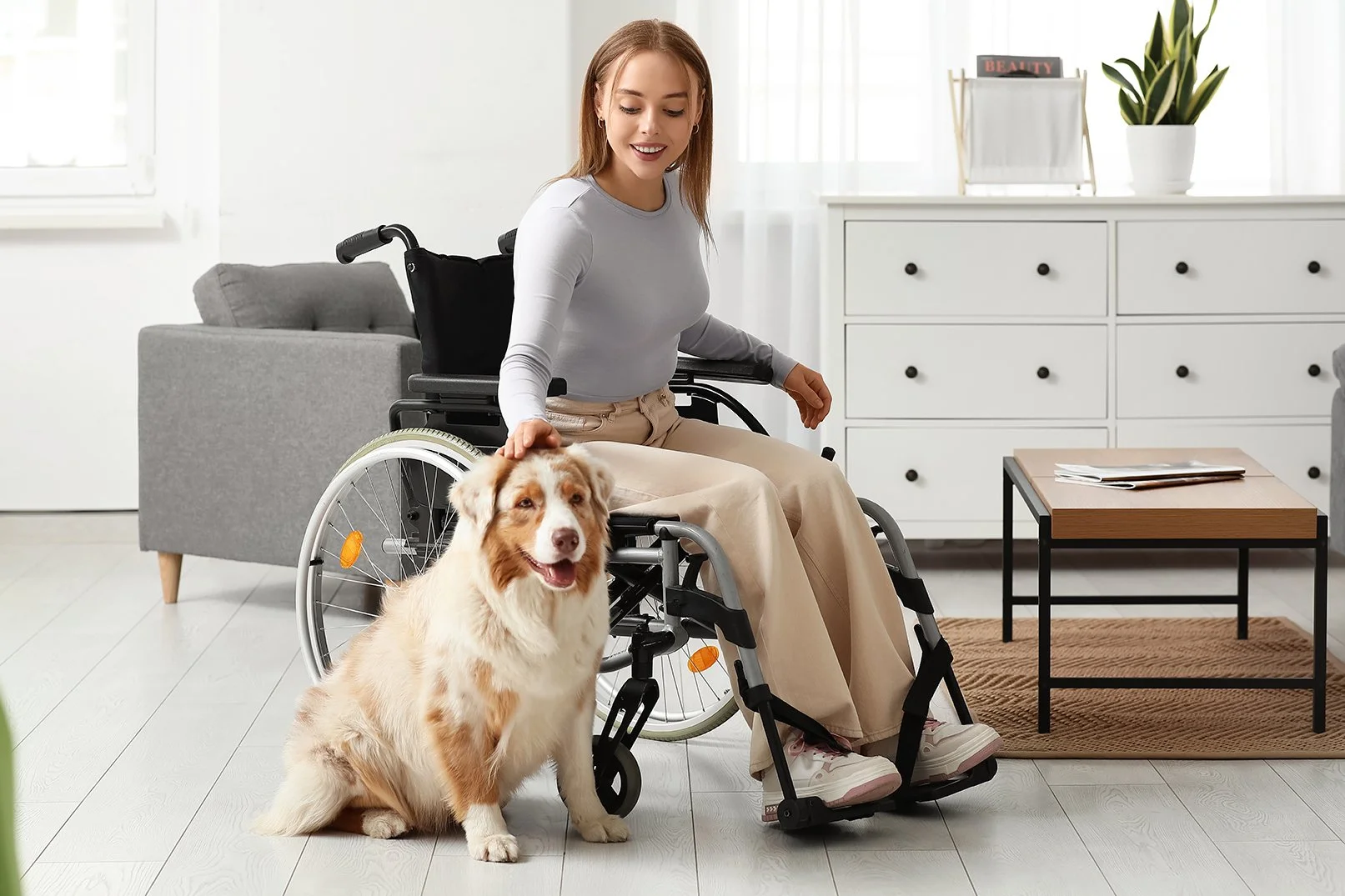
Image: A woman who uses a wheelchair pets the head of her service dog as they sit together in her living room.
For many of us, an assistance animal is how we get through the day, keep our independence, and stay in our homes. On August 12, 2026, a new Colorado law took effect to protect access where we live, and it arrived just as federal protections were being rolled back. This article covers what service and assistance animals actually do and why people rely on them, the federal change that put housing access at risk, and how Colorado answered with House Bill 26-1045.
What service and assistance animals do, and why people need them
A service animal is individually trained to do specific work for a person with a disability, and that work is clearly defined. For example, a guide dog helps a person who is blind travel safely. Other dogs alert their handler to an oncoming seizure or a dangerous drop in blood sugar before it becomes a crisis. Some interrupt a PTSD episode or a panic attack, retrieve medication or a dropped phone, or brace and balance a person who has challenges walking unassisted.
Under the Americans with Disabilities Act (ADA), these animals are allowed to go wherever their handler goes - stores, restaurants, and other public places. By law, storekeepers and service staff may ask only two questions: 1) is the animal required because of a disability; and 2), what task is it trained to perform? We explored how to interact with businesses and staff, and the myths about service animals, in our previous article Beyond the Vest. Re-read to refresh your memory.
Different from a service animal, and governed by different laws, emotional support animals are also important supports for people with disabilities. These are not individually trained to perform a task, but rather alleviate emotional distress, reduce isolation, provide structure and routine, and offer stability and grounding during times of emotional or other crisis . Emotional support animals ease anxiety, depression, or panic that would otherwise make it hard to sleep, work, or leave the house. For someone managing a mental health disability, these support animals can be the difference between living life relatively consistently or being in and out of crisis constantly. To learn more about the different roles of emotional support animals, read our previous article, Celebrating and Understanding the Roles of Assistive Animals.
Again, there are differences in the laws and allowances for service animals and emotional support animals. One important overlap: in residential housing, the term “assistance animal” was previously used, which included both service and emotional support animals. That’s where the roll-back from the federal government and the move forward from the State of Colorado come into play. Let’s look at what happened, and what the laws say now.
The problem: the federal government pulled back
In 2026, the federal government narrowed the protections tenants with disabilities had relied on. The U.S. Department of Housing and Urban Developmentrescinded guidance clarifying assistance-animal rights under the Fair Housing Act, and the administrationnarrowed the definition of "assistance animal" for housing to exclude emotional support animals. HUDsaid the older guidance had caused "immense confusion" and made it easier to file fraudulent emotional support animal claims, pointing to an industry that markets online certificates that turn pets into support animals. It said the narrower rule would let its staff focus on people with the greatest need.
Disability advocates dispute that framing. They point out that most people who ask for an assistance animal are tenants with disabilities with a real need, not people gaming the system, and that narrowing the rule for everyone to address a smaller amount of fraud puts people with genuine disabilities at risk of losing their housing.
Basically, this means federal protections for emotional support animals are weakened, and the door is opened for landlords to deny those animals or treat them as ordinary pets. Kelly McCullough of Disability Law Coloradoidentified the real concern: landlords denying people with disabilities emotional support animals is, in effect, denying a reasonable accommodation. For a person whose animal keeps them stable enough to hold a lease and a job, this could disrupt basic stability in every area of their life.
The solution: Colorado wrote the protection into state law
Colorado responded with House Bill 26-1045, "Disabilities Housing Protections." Governor Polis signed it on May 28, 2026, and it took effect on August 12, 2026. The prime sponsors were Representatives Chad Clifford and Yara Zokaie and Senators Jessie Danielson and Cathy Kipp. As Senator Kipp said, "After the federal government repealed existing protections for Coloradans with disabilities, we're stepping in to reinstate those protections."
The law writes assistance-animal protections into the Colorado Anti-Discrimination Act, so they are held under state law even as federal guidance retreats. In plain terms, it does a few key things:
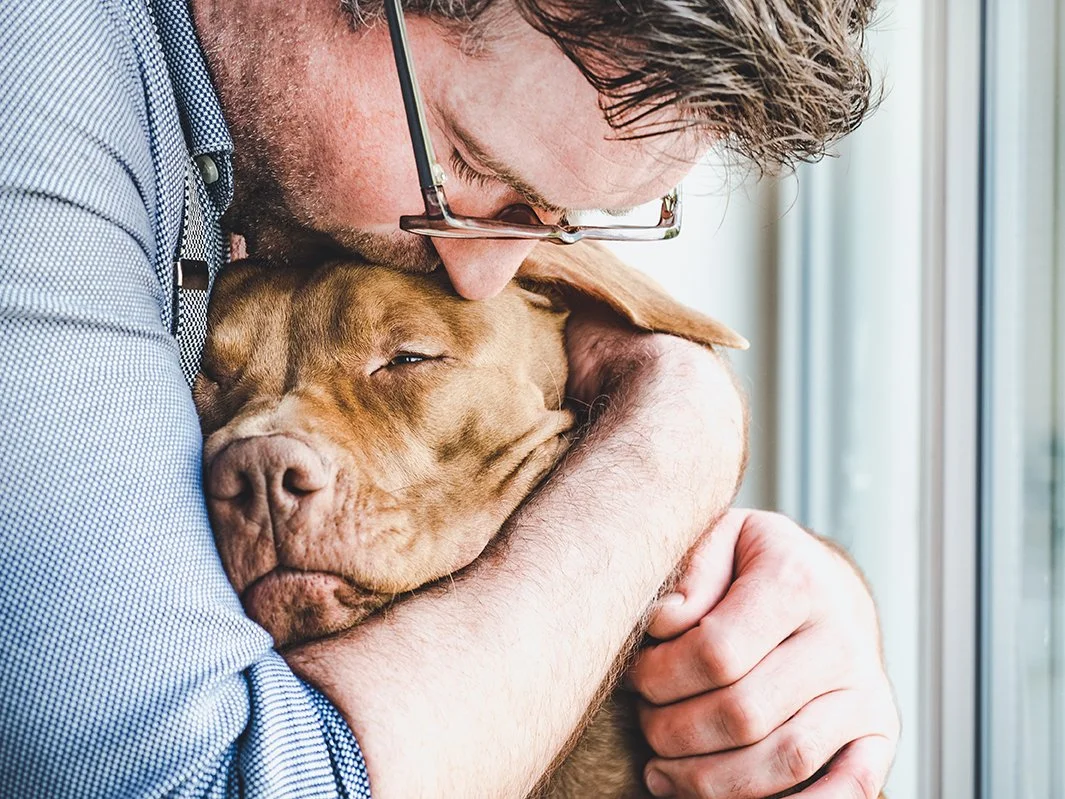
Image: A man hugs his emotional support dog.
It defines "assistance animal" to include both service animals and emotional support animals, and defines "reasonable accommodation" and "emotional support animal" so everyone is working with the same terms and definitions.
It starts with the assumption that allowing you to keep your assistance animal is reasonable. Your housing provider is expected to talk it through with you and work toward a solution rather than simply saying no.
It establishes that a live-in service animal is a reasonable accommodation, and it treats a ban on live-in service animals as a discriminatory housing practice.
It still lets a housing provider ask for reasonable documentation when a disability or the need for the animal is not obvious, and it keeps narrow exceptions for an animal whose documented, specific conduct is a direct threat to safety or causes substantial property damage.
Representative Yara Zokaie summed up the result: "Essentially, you cannot be denied housing because you have an assistance animal." For tenants, that certainty is the point. As Jordan Sibayan, who relies on assistance animals, told reporters, "The fact that the state has our back on this is really a relief for us."
What this means for you as a tenant
If you have a disability and an assistance animal, you can ask your housing provider for a reasonable accommodation to keep that animal, even in a building with a no-pets policy. Here is what the process looks like under the new law:
You make the request. The provider is expected to work with you through an interactive process, and permitting the animal is presumed reasonable.
If your disability or need for the animal is not obvious, the provider may request reasonable documentation, such as a letter from a provider familiar with your situation. They cannot demand your full medical records, nor require proof of training, certification, or registration for the animal.
A provider can push back only on documented, specific conduct by your animal that directly threatens others' safety or causes substantial property damage. Breed, size, and assumptions are not grounds for denial.
A landlord cannot flatly refuse to allow a live-in service animal. Doing that is a discriminatory housing practice under Colorado law.
If you are denied, you have options, and you do not have to sort them out alone. Write down what was said and when, and keep copies of your request and any response.
Where to turn
If you are facing a housing or assistance-animal problem, CPWD is here to help you understand your rights and stand alongside you. Our Information and Referral and Advocacy teams can talk through your situation and point you toward the right next step. Reach us at (303) 442-8662 or info@cpwd.org, or visit one of our offices in Boulder, Longmont, Thornton, and Broomfield.
For legal help, Disability Law Colorado assists Coloradans with disability rights issues, including housing. To file a formal complaint under the Colorado Anti-Discrimination Act, contact the Colorado Civil Rights Division.
This protection did not appear on its own. It exists because people with disabilities, families, and allies showed up and asked for it. Every year, Disability Rights Advocacy Day brings that community to the Colorado State Capitol to meet directly with lawmakers and turn lived experience into policy. This year it was held on February 12, 2026, alongside partners including AdvocacyDenver, Disability Law Colorado, and The Arc. Disability rights are civil rights, and they require ongoing advocacy to remain strong. HB26-1045 is what that advocacy looks like when it works.
To join in the next DIsability Rights Advocacy Day, and to learn more about current issues, visit our Advocacy Updates page and sign up to receive email updates.
You have rights. You have options. And when it comes to your animal and your home, you do not have to face it alone.