

Benefits in 2026: What Is Changing, What Is Available, and Where to Get Help

Image: A stack of papers sit on a desk. on the top page are the words “Benefits in 2026”.
If you live with a disability, or you love someone who does, 2026 brings real changes to the benefits and services you count on, and they are worth understanding one at a time. Social Security increased benefits this year, and raised the amount you can earn from work before it counts against your check. ABLE savings accounts opened to an estimated six million more people. Medicaid added a work requirement for some adults, along with exemptions that protect many of us, but only if they are on record. Here in Colorado, several home and community services moved into a new program called Community First Choice, and the state passed three new laws on disability funding, housing, and access. A few of these rules are still being written, which means there is still time to help shape them.
What follows is our plain-language guide to each change: what it is, who it affects, and where to get help. You have options, and you do not have to sort them out alone. We start with the increases, the part that puts more money within reach.
Bigger Checks, and More Room to Work
Start with the good news. Benefits rose this year. Social Security applied a 2.8 percent cost-of-living adjustment for 2026, which lifted the maximum SSI payment to $994 a month for an individual and $1,491 for a couple, and put the average SSDI check at about $1,630.
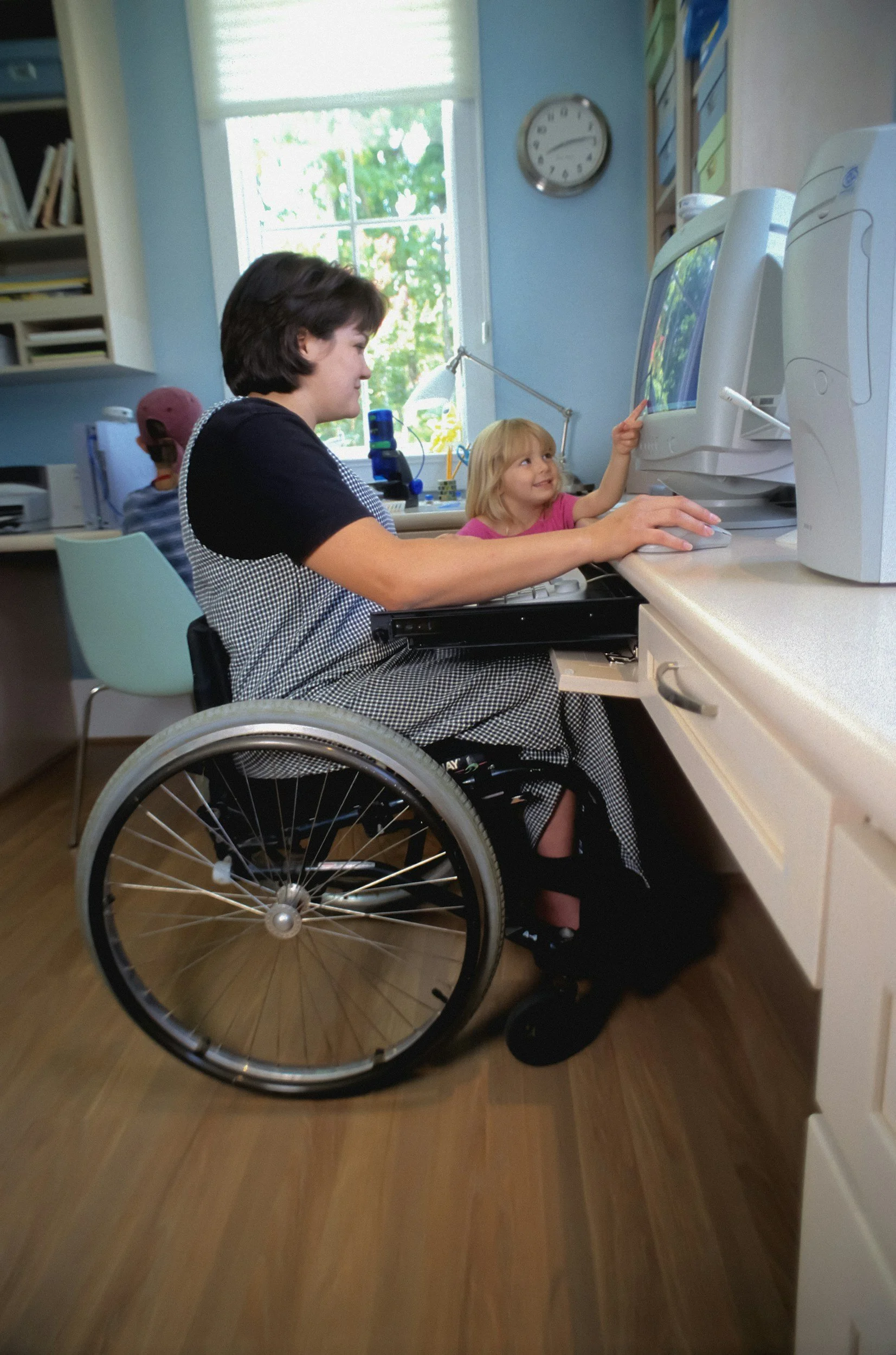
Image: A woman who is a wheelchair user works at a desk with two small children around her.
If you work, the news is better still. The amount you can earn before it counts against you, what Social Security calls Substantial Gainful Activity, climbed to $1,690 a month, or $2,830 if you are blind. The Trial Work Period figure, the one that lets you test a job without your benefits vanishing overnight, rose to $1,210. None of this makes anyone rich. What it does is widen the space between working and losing the floor beneath you, and that space is where a lot of living happens.
A Door That Was Closed to Most People Just Opened
For years, an outdated savings limit sat at the center of disability benefits. Save more than $2,000, and you could lose them. People were, in effect, penalized for planning ahead.
ABLE accounts were designed to undo that, and on January 1, 2026, the ABLE Age Adjustment Act expanded eligibility for them. You can now open an account if your disability began before age 46, up from age 26. What matters is when your disability began, not how old you are today, so a person in their fifties whose disability started at 40 now qualifies. That one change makes an estimated six million more people eligible. An ABLE account lets you save well past the old limit for disability related expenses without risking SSI or Medicaid, and if you work, the ABLE to Work provision lets you set aside even more. If you were ever told you could not save, this is the year to ask again.
New Medicaid Work Rules, and the Weight of the Word "Exempt"
This modification to Medicaid needs a closer look. The federal law passed in July 2025 made keeping Medicaid conditional on work for many adults who get their coverage through Medicaid expansion. If the rule applies to you, you have to log at least 80 hours a month of work, school, or volunteering, or you can lose your coverage. States must have these requirements running by January 1, 2027, some sooner.
Here is the word to hold onto, and it is worth being precise about it. Certain groups are exempt from the work requirement itself. Being exempt does not mean giving anything up. It means the 80-hour rule does not apply to you at all, and you keep your Medicaid without logging a single hour. The law exempts many of us from this work requirement, including people who receive SSI or SSDI, people determined to be medically frail, parents and caregivers of a child under 14 or of a person with a disability, American Indians and Alaska Natives, and people already meeting work rules through other programs. If you are on SSI or SSDI, the requirement simply does not apply to you. Your coverage stays, with nothing to report.

Image: A man with IDD wearing a headset answers calls at a call center.
Challenges arise for individuals who have a disability but are not on SSI or SSDI. Nationally, about a third of Medicaid enrollees report a disability, while only about one in ten qualify through a formal determination. If that is you, the state may not know you should be exempt, so the work requirement could be applied to you by default, and that is when your Medicaid is genuinely at risk. The fix is to get your exemption on record before the rule takes effect, so the 80-hour requirement is never applied to you. For many people who have a disability but are not on SSI or SSDI, the exemption that applies is "medically frail." To use it, you provide documentation, usually from your doctor, that shows your condition and how it limits your ability to work. That documentation is what lets the state record your exemption. Once it is on file, the work requirement does not apply to you at all.
If you are not sure whether you qualify, or how to document it, CPWD's Benefits Counseling can help you find the exemption that fits your situation and get it on record, before a missing exemption becomes a lost month of coverage.
Shifts in Colorado: Services Moving to Community First Choice
The biggest change close to home is structural. In July 2025, Colorado launched Community First Choice, which pulled several services out of the individual Medicaid waivers and gathered them into one State Plan benefit. Personal care, homemaker services, personal emergency response, home-delivered meals, and health maintenance all moved.
Starting July 1, 2026, you receive those services through Community First Choice rather than through the SLS, CES, or other waivers. The move happens gradually. Current members keep getting the services through their waiver until their next Continued Stay Review, then shift over, as long as they stay eligible and use at least one waiver service a month. These amendments are part of the state's Medicaid Program Sustainability Actions and are still pending legislative approval, so some details may not yet be finalized. One more to know: as of July 1, 2026, young people aging out of the CES or CHRP waivers no longer roll automatically onto the DD waiver, and your Case Management Agency has to request an exception based on need.
If this sounds like a lot, don’t worry. You do not have to do anything on your own right now. When changes affect your services, they get reviewed with you at your regular planning or monitoring meeting, and you can talk them through with your case manager. If something you depend on is impacted, your Case Management Agency is the office that files for exceptions, and can ask them to do so on your behalf.
What the Legislature Did This Year
Colorado's 2026 session, which wrapped in May, was a productive one for our community. Three new laws stand out, and most take effect August 12, 2026.
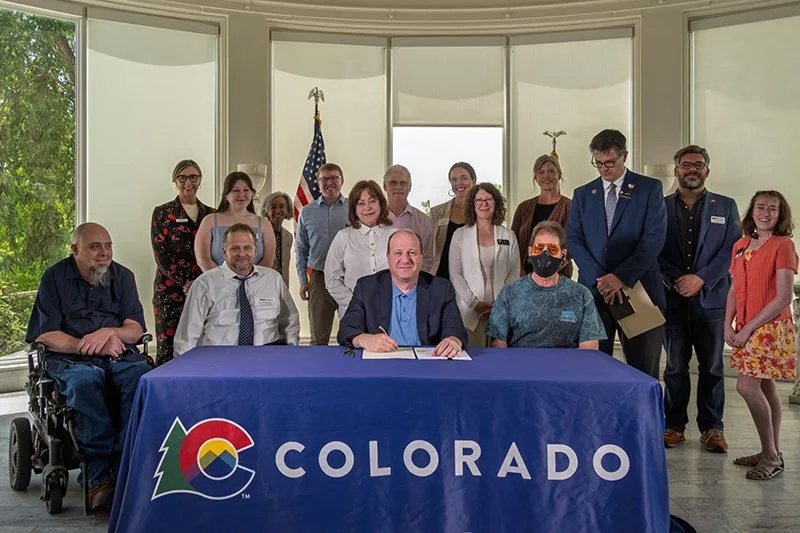
Image: Governor Jared Polis signs HB 26-1382. He sits at a table surrounded by constituents. Behind him on the left is Lt. Gov. Diane Primavera
House Bill 26-1382, Support of Coloradans with Disabilities, creates the Colorado Disability Funding Authority, which will fund the organizations that help people obtain and keep their benefits, along with programs built to expand independence. Because it is paid for through specialty license plate donations, it is a steady source of support rather than a one-time line in a budget that can vanish next year. Governor Polis signed it on June 2, 2026.
House Bill 26-1045, Disability Housing Protections, puts firmer ground under fair housing, spelling out what counts as an assistance animal and an emotional support animal, and defining reasonable accommodation and how a landlord must weigh a request. If your accommodation has ever been questioned or brushed aside, this law is on your side.
House Bill 26-1141, Public Accommodation Protections, names public schools, colleges, and universities as places of public accommodation and bars discrimination there, including on the basis of disability. It carries the protections you expect in other public spaces into the classroom.
Some Changes are Still Being Written, and They Need Your Input
Two of these changes are not finished, which means they are still open to your voice. How Colorado defines its hardship and medically frail exemptions to the Medicaid work rules will decide how many people keep coverage without a fight, and the waiver amendments are moving through public comment right now. The Department of Health Care Policy and Financing posts its public comment opportunities publicly, and comments matter because rules are written in general terms and finalized by the people who show up.
Two federal bills are worth watching too. The Supplemental Security Income Restoration Act of 2026 would finally lift the SSI resource limit that has been frozen at $2,000 since 1989, the very wall ABLE accounts were invented to climb over. The SSI Savings and Efficiency Act of 2026 would end the rule that docks a person's SSI simply because the family helped with a meal or the rent. Neither has passed, so they are bills to follow and to weigh in on, not law you can count on yet. But telling your representatives that they matter to you is precisely the kind of thing that turns a bill into a law.
This is the heart of independent living. Policy is not weather that happens to us. It is something we help write. Staying informed, keeping your exemptions on file, and speaking up when the comment window is open are all forms of advocacy, and every one of them is open to you.
The hard part is knowing when to act, and that is where we come in. Follow CPWD'sAdvocacy Updates to keep pace with the changes in this article and the ones still coming. We watch the comment windows, the bills, and the waiver amendments so you do not have to, and we will tell you when your voice can make the most difference. When we say a window is open, take five minutes and use it. That is how these rules get written with us in the room.
Where to Turn For Support
You do not have to sort this out alone, and you were never meant to.
Start with CPWD's Benefits Counseling, because it was built for exactly the questions this year raises. Will working cost me my check? Am I exempt from the new work requirement? Can I open an ABLE account without losing my coverage? Our benefits counselors are trained Community Partner Work Incentives Counselors, CPWD is a Ticket to Work provider through Social Security, and the service is free. You can reach a counselor at benefits@cpwd.org or (303) 442-8662, extension 233.
Alongside that, CPWD's Peer Support groups put you in a room with people who have walked the same paperwork, and our independent living services help you turn a change on paper into a plan you can act on. You can reach us anytime at cpwd.org.
For your waiver services, your Continued Stay Reviews, and any exception requests, your case manager and Case Management Agency are your first call. For the fine print on Community First Choice and the waiver amendments, the Colorado Department of Health Care Policy and Financing keeps the current details. For benefit amounts and work rules, go to the Social Security Administration. And to open an ABLE account or check this year's contribution limit, the ABLE National Resource Center will walk you through it.
The Bottom Line
2026 hands our community more in the monthly check, a savings door that just opened to millions more people, new state funding and protections, and a reshaped set of services that, handled with care, keeps people supported. It also brings Medicaid rules that make documentation and advocacy matter more than they have in years. The throughline is the same one independent living has always insisted on. You have rights. You have options. And you do not have to face the paperwork alone. If any of this raises a question about your own life, come talk to us. That is what we are here for.