

Celebrating Women's History Month: Five Voices Shaping Disability Rights
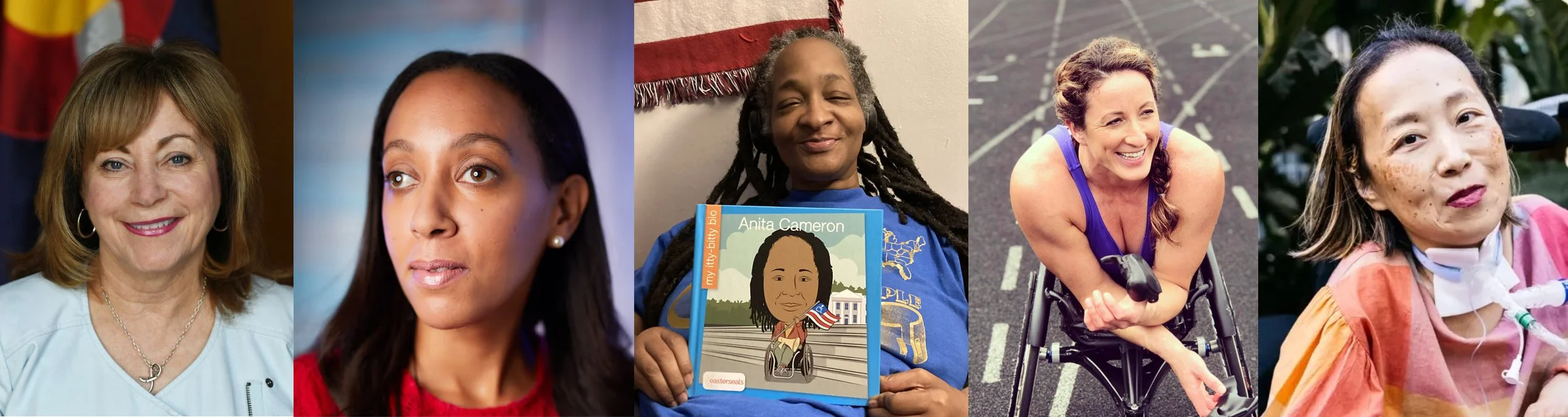
Image: pictured from left to right: Dianne Primavera, Haben Girma, Anita Cameron, and Alice Wong
March is Women's History Month, and once again, we are proud to highlight extraordinary women with disabilities and champions for people with disabilities, who are making a lasting difference in the world. According to the CDC, approximately 36 million women with disabilities live in the United States, which is more than half of the entire disability population of the U.S. While there are countless amazing women with disabilities living independently, in this piece, we will feature five stand-outs whose stories are filled with strength, bravery, and positive impact. From Colorado's statehouse to Harvard Law School, from the streets of direct action to the Paralympic tracks, these five women represent the depth and diversity of today's disability rights movement. Their courage, creativity, and commitment continue to guide society toward greater equity, inclusion, and accessibility for people with disabilities everywhere.
Dianne Primavera
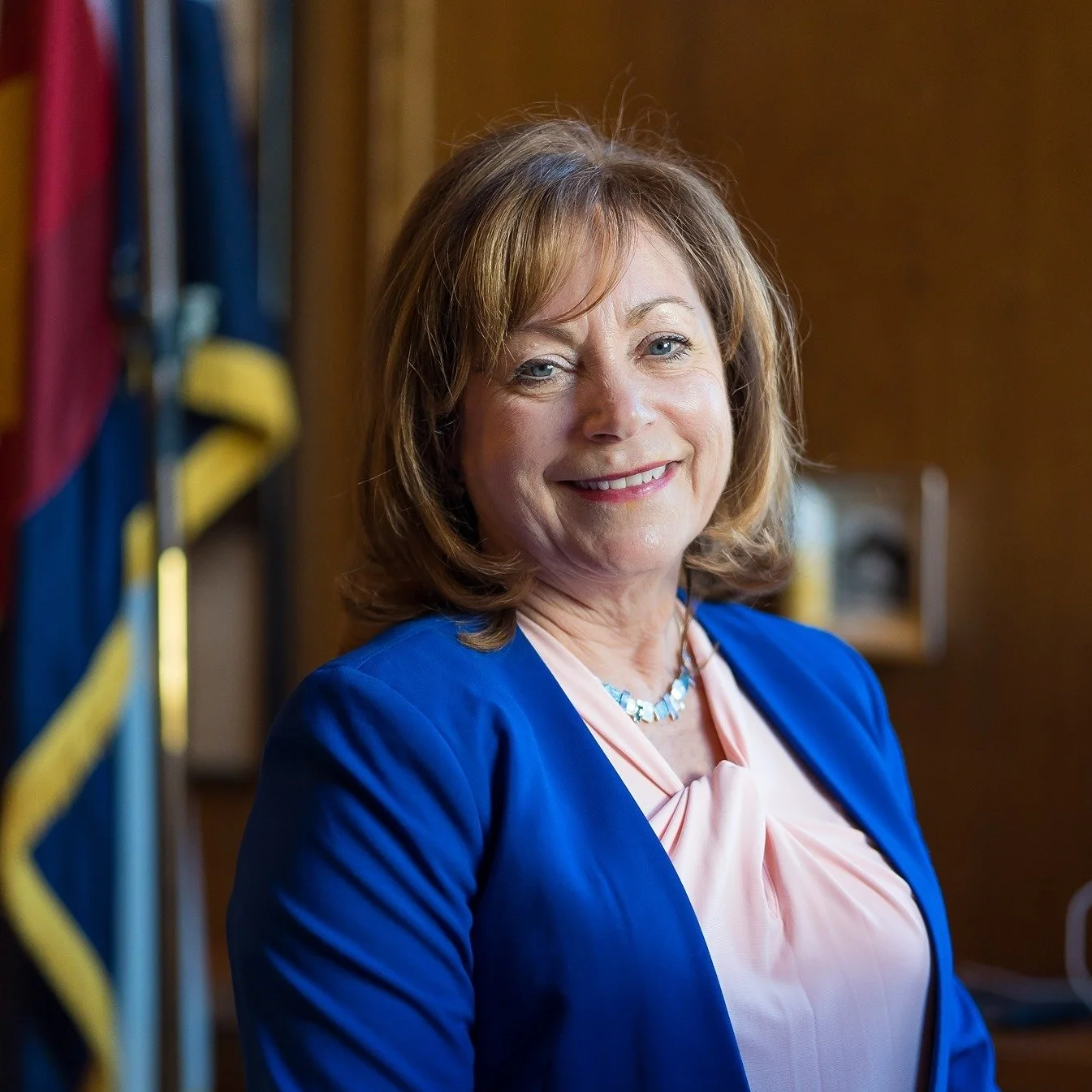
Image: Dianne Primavera is pictured smiling at the camera. She has a blue blazer and should length brown hair. Photo by Bergreen Photography
Dianne Primavera has spent her entire professional life fighting for people with disabilities, first as a vocational rehabilitation counselor, then as a state legislator, and today as Colorado's Lieutenant Governor. A lifelong Coloradan and longtime Broomfield resident, she has built one of the most consistent and consequential records of disability advocacy in Colorado's history, and her work is far from finished.
Primavera's commitment to disability advocacy is both professional and deeply personal. In 1988, she was a single mother raising two daughters in Colorado when she received a terminal breast cancer diagnosis and was told she had five years to live. She has since survived cancer four times. That lived experience of navigating serious illness, uncertainty, and a healthcare system filled with barriers and diversions has shaped every policy decision she has made. She went on to earn a master's degree in Vocational Rehabilitation Counseling from the University of Northern Colorado, beginning her career working directly with people with disabilities to help remove barriers to employment.
After eight years in the Colorado State Legislature, where she championed healthcare access for people with disabilities and sponsored legislation to fund cancer screenings and treatment for underinsured women, Primavera became CEO of Susan G. Komen Colorado, the world's leading nonprofit breast cancer organization, before being electedColorado's 50th Lieutenant Governor alongside Governor Jared Polis. Her legislative work earned her a Lifetime Achievement Award from the Colorado Cross-Disability Coalition, presented at the 30th anniversary of the Americans with Disabilities Act. As Lieutenant Governor, she leads the Colorado Disability Funding Committee, which, under her leadership, has grown from generating roughly $100,000 over ten years to over $500,000 per month for organizations serving people with disabilities across the state. She also chairs the state's Disability Rights Task Force.
In 2023, Primavera signed theRemedies for Persons with Disabilities Act (HB23-1032), giving people with disabilities in Colorado the right to file civil lawsuits against businesses that discriminate against them in employment, housing, and public accommodations. This is among the most significant legislative wins of her tenure. That same year, her administration announced that Colorado hadeliminated subminimum wages for workers with disabilities two years ahead of schedule, ensuring that no Colorado employer could pay a person less than minimum wage simply because they have a disability. The administration also signed legislationincreasing special education funding by over $40 million, and championed the creation of a newColorado Disability Opportunity Office to serve as a permanent, dedicated hub for disability policy at the state level.
For Primavera, this work is a lifelong calling. "I've been an advocate in the disability community most of my life," she said. "The ADA has been law for over 30 years, and we are still fighting for basic access." As she wraps up her second and final term as Lieutenant Governor - her term ends in January 2027 - her legacy in Colorado's disability rights landscape is already profound and lasting. Colorado is fortunate to have had a leader who showed up to advocate for disability rights and make a huge impact in the lives of people with disabilities.
Haben Girma
Haben Girma is the first person who is DeafBlind to graduate from Harvard Law School, and she has spent her career turning that milestone into a movement. Born in Oakland, California, to Eritrean (East Africa) immigrant parents, Haben began losing her sight and hearing in early childhood due to a progressive condition. From the start, Haben was clear that her DeafBlindness was never the barrier; ableism was. When schools didn't know how to teach her, and employers turned her away, she pushed back, taught herself to self-advocate, and eventually built a career advocating for millions of people with disabilities worldwide.

Image: Pictured is the cover of Haben Girma’s book, titled "Haben: The Deafblind Woman Who Conquered Harvard Law.”
At Lewis & Clark College, Haben discovered the Americans with Disabilities Act when she fought for and won a petition to have accessible cafeteria menus in Braille. That experience was transformative. "I reframed the problem as a civil rights issue rather than something nice to do," she has said, "and that changed everything." Inspired by what legal advocacy could accomplish, she applied to Harvard Law School, which had never before enrolled a student who is DeafBlind. She not only enrolled; she graduated in 2013, pioneering new ways of participating in lectures using a refreshable Braille display connected to a wireless keyboard.
After law school, Haben joined Disability Rights Advocates as a Skadden Fellow, working to improve access to technology and education for people with disabilities. Today, she travels the world as a speaker, author, and consultant, helping organizations, from Apple to the United Nations, understand that accessibility is not a concession but a catalyst for innovation. Her bestselling memoir, Haben: The DeafBlind Woman Who Conquered Harvard Law, has inspired countless readers. She has been recognized on the Forbes 30 Under 30 list, received the Helen Keller Achievement Award, been named a White House Champion of Change by President Obama, and, in 2023, was appointed as a Commissioner on theWorld Health Organization's Commission on Social Connection.
Haben's perspective is both bold and clear: a person's disability is not a barrier. Ableism is. Her mission is to help the world understand that when we design for inclusion, in technology, in education, in workplaces, we expand what is possible for everyone.
Anita Cameron
Anita Cameron is a disability justice legend. An AfroLatina and Choctaw woman, and a Black woman with a disability who is also a member of the LGBTQ+ community, Anita has spent more than four decades at the intersection of disability rights, racial justice, and LGBTQ+ advocacy, and she has never stopped fighting. With over 140 arrests for acts of nonviolent civil disobedience, she is one of the most committed and consequential direct action activists the disability rights movement has ever known.

Image: Taken at the 1990 Capitol Crawl, several people with disabilities are seen crawling up the stairs at the Capitol.
Anita joined ADAPT, originally American Disabled for Accessible Public Transit, in 1986, just three years after its founding in Denver, Colorado, a city with deep roots in the disability rights movement. She participated in landmark ADAPT protests that pushed cities across the country to install wheelchair lifts on buses, and later fought at the federal level to ensure the Americans with Disabilities Act became law. She was present at the 1990 Capitol Crawl, which was one of the most iconic moments in U.S. disability rights history when hundreds of protesters, many leaving their wheelchairs behind, crawled up the steps of the U.S. Capitol to demand passage of the ADA.
Beyond her direct action work, Anita serves as Director of Minority Outreach for Not Dead Yet, a national disability rights organization that opposes the legalization of assisted suicide and medical discrimination against people with disabilities, particularly communities of color who face compounding inequities in healthcare access. She has been vocal about the need for the disability rights movement to confront its own racial biases, pushing ADAPT and the broader movement to address how disability intersects with race, class, gender, and sexuality.
In 2024, Anita received a $100,000 grant from Borealis Philanthropy's Black Disabled Liberation Project for her project We Were There, Too: Blacks in the Disability Movement. This project is an effort to document and preserve the contributions of Black people with disabilities whose stories have too often been erased from the official history of disability rights. Anita's work is a reminder that the disability rights movement has also been built on the shoulders of those whose full identities were not always fully embraced, even by the Independent Living Movement, and that honoring that truth is essential to moving forward together.
Tatyana McFadden
Tatyana McFadden is the most decorated American track and field athlete in Paralympic history, and she has used every platform her athletic career has given her to make the world more equitable for people with disabilities everywhere. Born in Leningrad with spina bifida, Tatyana spent her earliest years in an underfunded orphanage where no wheelchairs were available, walking on her hands to keep up with other children. At age six, she was adopted by Deborah McFadden, then the U.S. Commissioner of Disabilities, and brought to Maryland, where she discovered wheelchair racing and found her calling.
A seven-time Paralympian, Tatyana has won 22 Paralympic medals, including eight gold, across multiple Summer and Winter Games. She was the first person — with or without a disability — to win all four World Major Marathons (Boston, Chicago, London, and New York) in a single year, accomplishing that feat in 2013. At the Paris 2024 Paralympic Games, she competed at age 35, still racing and still inspiring, earning a silver medal in the 100m and a bronze in the universal relay. But her impact goes far beyond the finish line.

Image: Tatyana McFadden is pictured at the 2012 London Olympics medal ceremony, where she received her gold. She sits in her wheelchair, waving her arms to the crowd, with a bouquet of flowers in her hand. Her medal is around her neck.
When Tatyana returned home from her first Paralympic Games in Athens at age 15 with a silver and bronze medal, she was denied a spot on her high school track team and was told her racing chair was an unfair advantage and that there were "sports for your own kind." Her family filed a lawsuit, which led directly to the passage of Maryland's Fitness and Athletics Equity for Students with Disabilities Act in 2008, known as "Tatyana's Law," making Maryland the first state to require schools to provide equal athletic opportunities for students with disabilities.
Today, Tatyana remains deeply committed to the next generation of people with disabilities in sports. Through the Tatyana McFadden Competitor Award, she funds young athletes with disabilities to compete in adaptive sports competitions nationwide. She believes that when young people with disabilities see themselves reflected in elite sports, it changes what they believe is possible for their own lives. She has dedicated herself to making this experience possible.
Alice Wong (1974–2025)
We close this article with a tribute to someone the disability community lost this past November. Alice Wong, founder of the Disability Visibility Project, passed away on November 14, 2025, at the age of 51. Her death was a profound loss for people with disabilities and allies around the world. Her life is an example of how much one person can change the world.
Born in Indianapolis to immigrant parents from Hong Kong, Alice was diagnosed at birth with spinal muscular atrophy, a progressive neuromuscular disease. Doctors told her parents she would not live past 18. She lived more than three times that prediction, and she spent every year of that time fighting to make the experiences of people with disabilities visible, celebrated, and central to conversations about equity and justice.
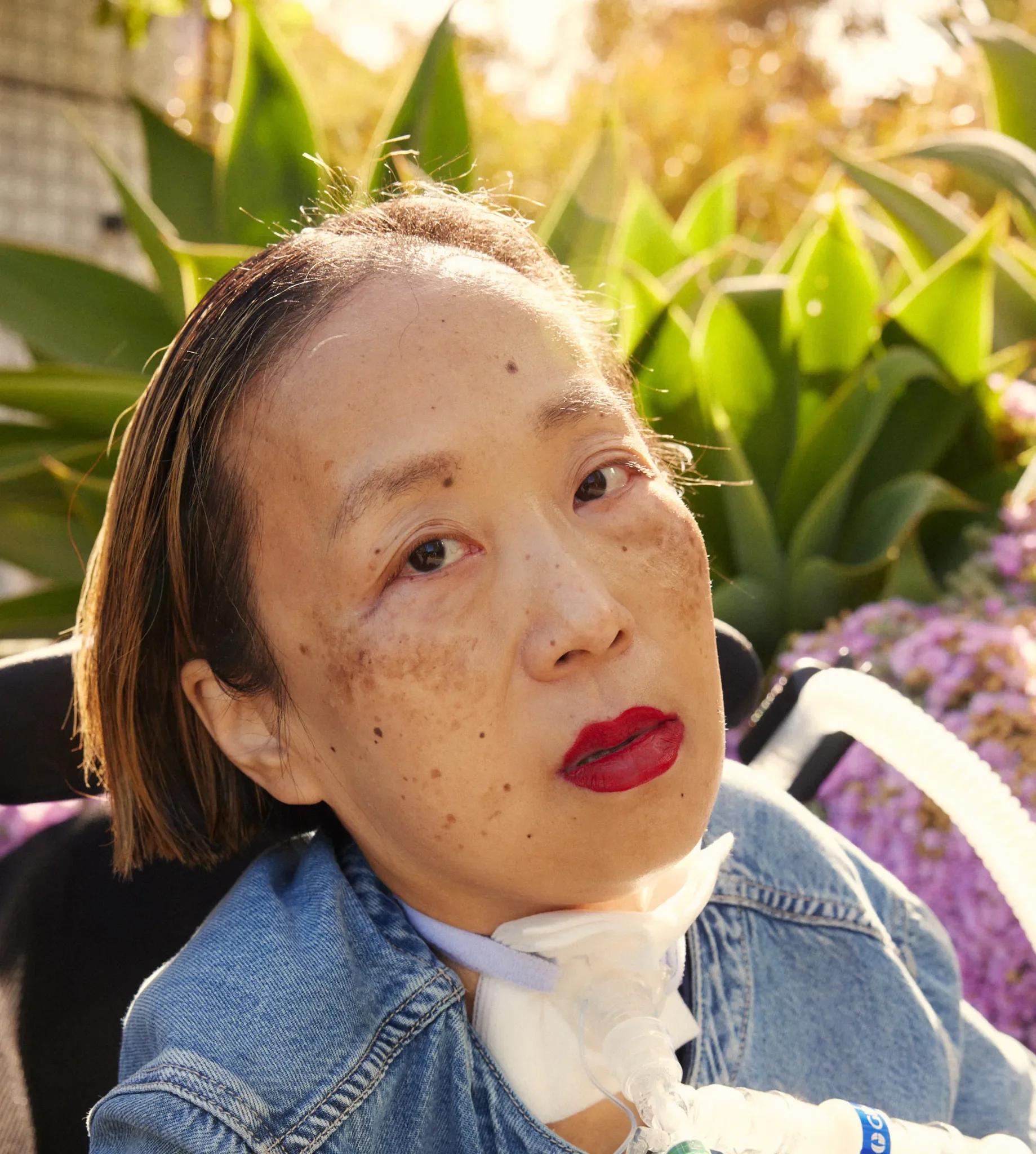
Image: Alice Wong, an Asian American disabled woman with a tracheostomy at her neck. She is wearing a bright red lip color and a denim shirt. She is looking intently into the camera and the sun is shining behind her with a bunch of plants. Photo credit: María del Río
In 2014, Alice founded the Disability Visibility Project in partnership with StoryCorps, creating an oral history archive that now houses over a hundred recordings at the Library of Congress. What began as a storytelling initiative grew into a podcast, a blog, a community, and a cultural force. She edited landmark anthologies including Disability Visibility: First-Person Stories from the Twenty-First Century (2020) and Disability Intimacy: Essays on Love, Care, and Desire (2024), and published her own memoir, Year of the Tiger: An Activist's Life (2022), to wide acclaim. In 2024, she was named a MacArthur Fellow, considered a "genius grant", in recognition of her lifetime of work raising the political and cultural visibility of people with disabilities, particularly those at the intersections of race, ethnicity, gender, and disability.
Alice described herself as a "disabled cyborg," reclaiming the ventilator and powered wheelchair that kept her alive as part of her identity rather than markers of limitation. She co-founded movements like #CripTheVote to engage voters with disabilities in the political process, and as one of her final acts, co-founded Crips for eSims for Gaza, a project that raised over $3 million to maintain phone and internet access for people living in Gaza.
Alice was funny, fierce, generous, and uncompromising. She believed in disability culture as something worth celebrating, not just accommodating. Her final message, shared publicly after her death by her friend Sandy Ho, was a charge to the community she had spent her life building:
"We need more stories about us and our culture. You all, we all, deserve everything and more in such a hostile, ableist environment. Our wisdom is incisive and unflinching. I'm honored to be your ancestor and believe disabled oracles like us will light the way to the future. Don't let the bastards grind you down. I love you all."
The Disability Visibility Project continues in her memory. We honor her here as one of the most important disability justice voices of our time, and we carry her work forward.
These five women, past and present, local and national, remind us that the fight for the rights of people with disabilities is not a single movement with a single face. It is a living, intersecting, ever-expanding field of advocacy built by people who refused to accept the world as it was. This Women's History Month, and every month, we celebrate their courage and invite you to learn more, share their stories, and carry their work forward in your own communities.