

Low Vision Awareness Month: Understanding Low Vision, the Numbers, and the Power of Community
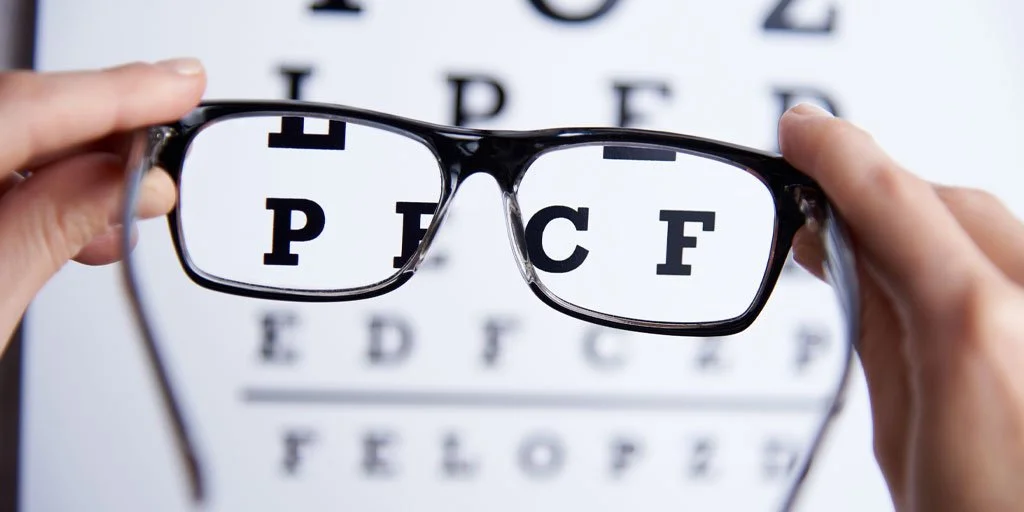
Image: Hands holding a pair of eyeglasses in front of an eye chart
February is National Low Vision Awareness Month, a time to increase understanding about low vision, its impact on daily life, and the solutions that make independence possible.
Here’s a surprising fact: many people do not consider low vision a disability. They think of it as “just aging.” They think of it as “needing stronger glasses.” They think of it as an inconvenience.
But when vision loss begins to interfere with reading mail, managing finances, cooking safely, navigating public spaces, or recognizing faces, it becomes more than an inconvenience. It becomes a barrier to independent living. But, it does not have to be a barrier. Resources are available to continue living a full, independent life.
What Is Low Vision?
Low vision as a disability is defined as a visual impairment that cannot be corrected with glasses, contact lenses, medication, or surgery, and that interferes with everyday activities.
Low vision may include:
Blurred or hazy vision
Central vision loss - difficulty seeing directly ahead
Peripheral vision loss - tunnel vision
Night blindness
Reduced contrast sensitivity
Common medical causes include:
Age-related macular degeneration
Glaucoma
Diabetic retinopathy
Cataracts
Stroke and traumatic brain injury
Low vision occurs from a variety of causes, and manifests in a myriad of ways. Some people lose all visual capacity, but many retain some usable sight. With the right tools and training, they can learn adaptive skills, use assistive technology, and continue to live independently.
Low vision is far more common than most people realize.
Approximately 3.3 million Americans aged 40 and older are blind or have low vision.
Nearly 12 million Americans aged 40 and older experience some form of visual impairment.
Visual impairment in the United States is projected to double by 2050.
In Colorado, an estimated 115,000 to 173,000 residents report blindness or serious difficulty seeing, even with corrective lenses.
In other words, tens of thousands of Colorado families are currently navigating life with vision loss.
When Vision Loss Changes Everything
Losing your vision can be a seachange moment for independence and living fully. Consider an elderly couple who have lived independently for decades. One partner begins to lose their vision. At first, the changes are subtle - increased difficulty reading, trouble driving at night, missed steps in dim lighting, and so forth.
Gradually, daily tasks become harder. They need help reading, choosing the right foods and medications, finding things around the house, walking up and down stairs, bathing, and other activities of daily living. As the other partner steps in, over time, they become a full-time care-giver to their low vision spouse.
This burdens the system. The seeing partner typically does not have training, and is also elderly, perhaps with their own physical or other challenges. They may not have the energy or confidence to provide that level of support. The coupleship is also in pseudo-crisis - their life as they know it has changed; everyday is a new unknown; expenses can mount; and they begin to operate in crisis-management mode. This is not only challenging physically and emotionally, but disheartening and the landscape of old age has shifted.
Without support, skills training, and services, often couples become exhausted and resigned, moving out of their life-long home and into assisted living. Or worse, into a nursing home. The tragedy is that this is a disability, not just an inconvenience, and with some training and support, most couples - and individuals - can continue living fulfilling independent lives for many more years, even with vision loss.

Image: An older woman holding a maginfier and reading a magazine while smiliing
A Different Reality Is Possible
National Low Vision Awareness Month was established in 2005 to expand public understanding of visual impairment and promote rehabilitation services. Historically, options were limited. Individuals who lost vision were often told their future was narrow: learn Braille, rely on others, adjust your expectations. Today, the landscape is entirely different.
Assistive technology has transformed what is possible. Smartphones can read text aloud. Screen readers and magnification software make digital work accessible. Navigation apps support safe travel. Smart devices respond to voice commands. Wearable magnifiers enhance remaining sight.
A 2024 National Eye Health Report, published by Vision Australia summarized that advancements in technology have significantly expanded opportunities for education, employment, and independent living for people with low vision. The report highlights how the rapid evolution of technology—specifically AI-driven tools, wearable devices, and screen-reading software—has acted as a "great equalizer" for the blind and low-vision community.
While technology provides tools never before available to support independence, technology alone is not enough. Individuals with visual impairment also need technology training, practical strategies for living, and most important, peer support and community to find connection, courage, inspiration, and know they are not alone.
Beyond Vision: Protecting Independence in Colorado
CPWDs Beyond Vision program was specifically designed to provide a continuum of training, resources and support to assist people with visual impairment at maintaining independent living.
Beyond Vision provides skills training, assistive technology training, practical strategy, and has regular, ongoing peer support groups where people with low vision can share their experiences, challenges, and successes, learn skills, find friends, and build community.
Participants learn:
How to use assistive technology effectively
White cane skills and safe navigation strategies
Practical adaptations for home and community life
Self-advocacy tools
That they are not alone, and, in fact, they can help others
As participants find a community of others who are experiencing the same thing, they can share insights, tools, and build friendships. Without connection and peer support, low vision usually leads to isolation, secondary injury, and loss of independence. A fulfilling, independent life is possible in a thriving community of friends and peers.
Watch this video of Marcy and hear how her life expanded through the Beyond Vision program at CPWD.
The goal is simple: preserve independence. When people receive early support and practical training, they are far more likely to remain in their homes, maintain employment, and continue participating fully in community life. Low vision is not the end of independence. Rather, lack of education and access to services is what leads to losing independence.
Awareness Leads to Action
As Colorado’s population ages, low vision will affect more families. Early detection, rehabilitation services, assistive technology, and peer programs are essential infrastructure for independent living.
If you or someone you love is experiencing vision loss, reach out to us. CPWD’s programs are designed to help you build skills, connect with the community, and maintain independence. You do not have to navigate vision loss alone.
During National Low Vision Awareness Month, we invite you to rethink what low vision and vision loss mean, and what is possible when access, technology, and community come together.
If you need support, reach out to our Beyond Vision program by emailing info@cpwd.org or calling (303) 442-8662. Your independence is worth it.