

When Choosing Your Own Caregiver Is a Civil Rights Issue
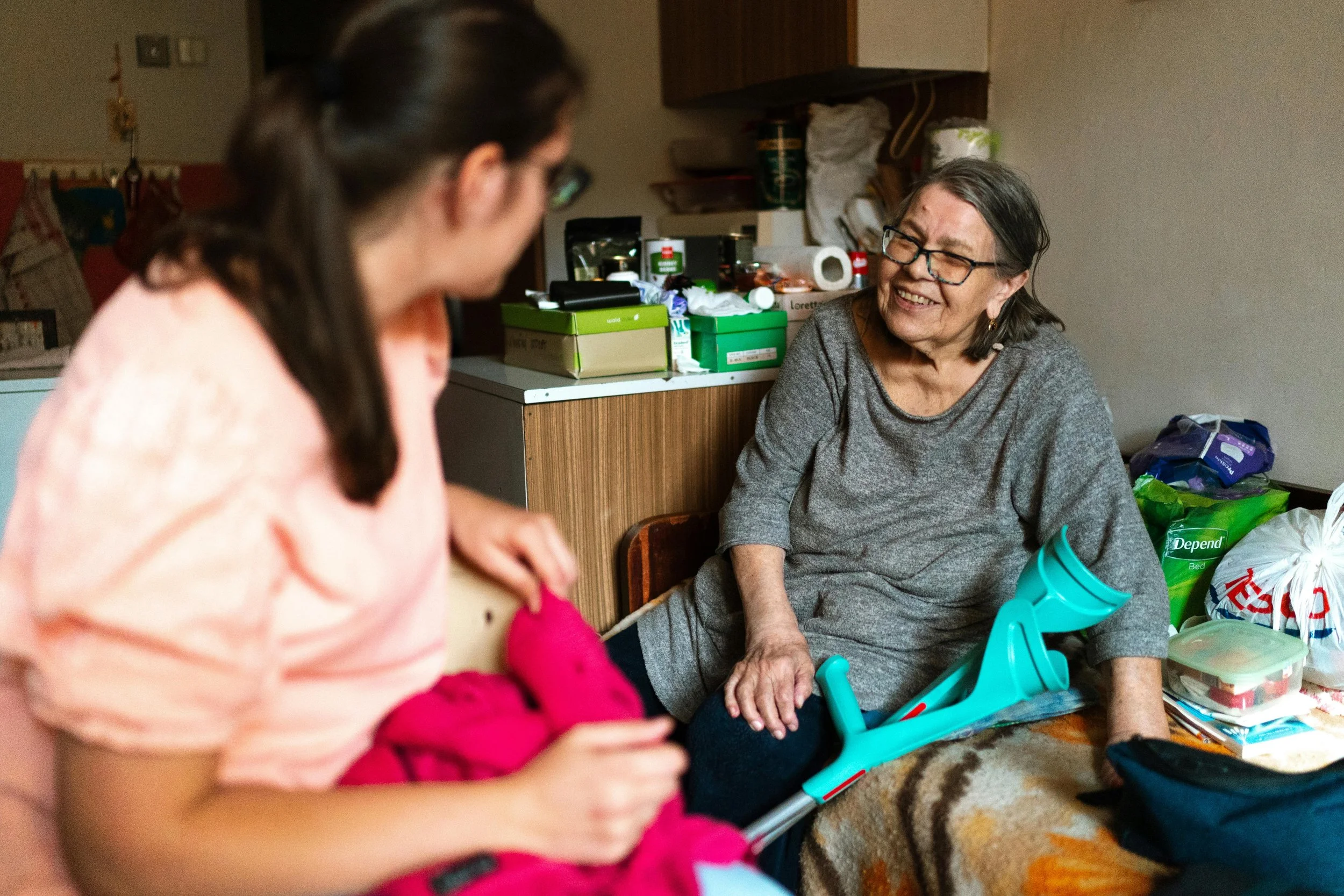
Image: A woman who uses support crutches, sits and smiles at her daughter, her caregiver.
Maria Stepanyan, Executive Director of CPWD, puts it plainly: "Choosing your caregiver is a basic right for people with disabilities. It is essential for independence, comfort, and dignity, since this care is so personal and ongoing."
That right, for many people with disabilities in Boulder County and across the country, is out of reach because of our current U.S. immigration policy.
A System That Fails People Before They Begin
Imagine you are a naturalized U.S. citizen in your 70s, living in Colorado with advanced Parkinson's disease and Lewy Body Dementia. Your condition causes freezing episodes that make you a high-fall risk. Because of dementia, you become frightened and combative with rotating caregivers you don't recognize, strangers cycling in and out of your most vulnerable moments. Your wife, your primary caregiver and the person who knows how to steady you through a freezing episode, has just suffered a stroke. You are facing institutionalization.
Your son, a trained caregiver, lives abroad. He wants to come. You want him there. But the U.S. immigration system has a backlog of more than 4 million family-sponsored visa applications, with some relatives waiting more than 20 years.
The Caregiving Crisis Is a Disability Rights Crisis
The connection between immigration policy and disability rights isn't often made, and that gap is something that CPWD is powerfully aware of, and is actively working with others to find a solution.
In 1999, the U.S. Supreme Court ruled in Olmstead v. L.C. that the unjustified institutionalization of people with disabilities is discrimination under the Americans with Disabilities Act. Community-based care, living at home, with support, in the life you have built, is a civil right.
But the infrastructure that makes community-based care possible is under severe strain. According to PHI, the direct care workforce will need to fill an estimated 9.7 million job openings between 2024 and 2034. Immigrants currently make up 33% of the home care workforce and nearly 28% of all direct care workers overall. And family members outside the U.S., often the most stable, linguistically accessible, and culturally competent caregivers available, are caught in a backlog that makes their timely arrival nearly impossible.
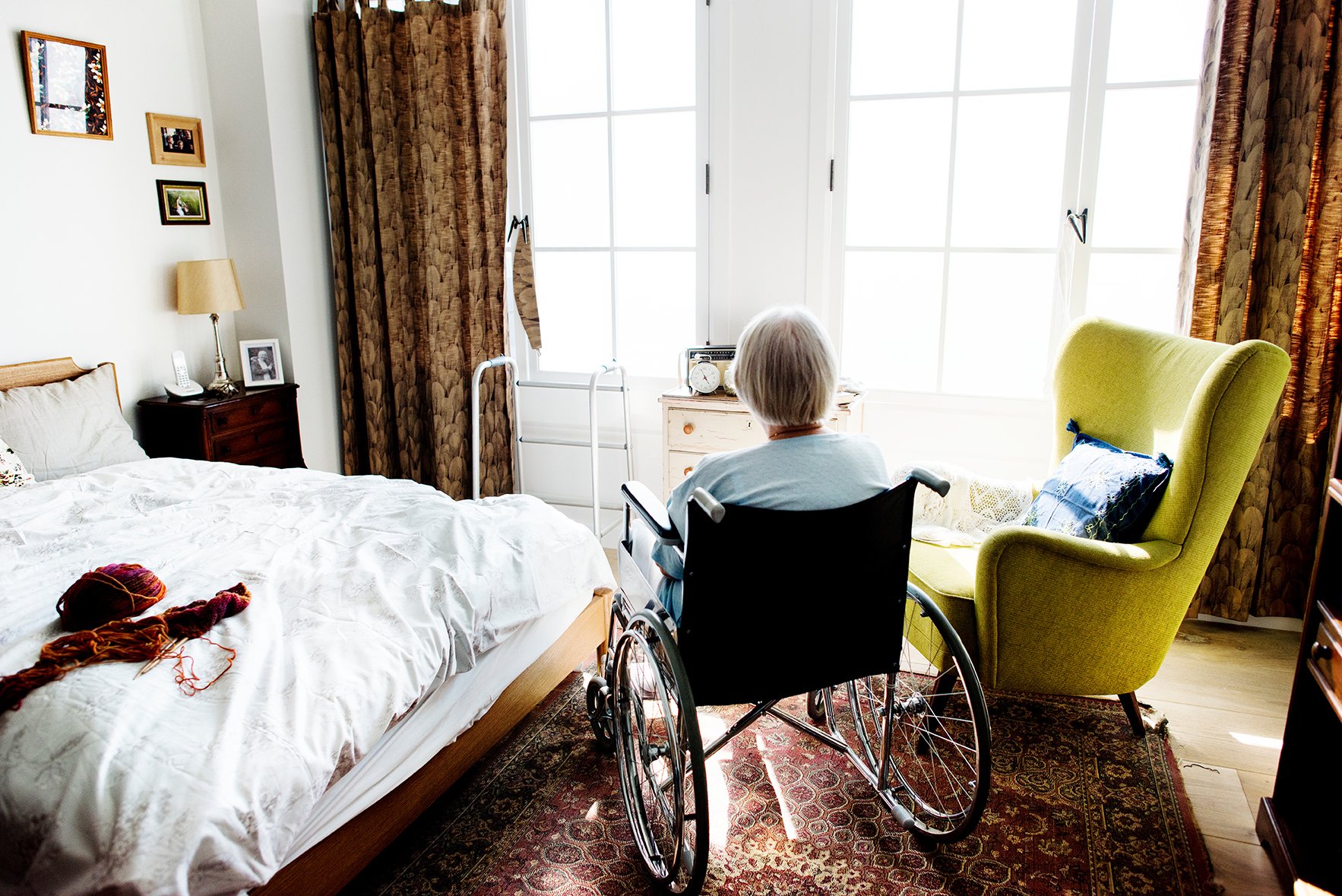
Image: A woman who is a wheelchair user sits alone in her room in a nursing home, looking out the window.
When a caregiver cannot get here, the person they would care for does not simply wait. They go without. They end up in emergency rooms. They develop preventable complications. They lose their independence, their housing, sometimes their lives.
In 2023, a U.S. citizen's primary caregiver, an undocumented relative, was detained during a routine traffic stop. Within 72 hours, without the specialized daily care this person provided, the citizen had developed life-threatening pressure sores. There were no other available caregivers. They were placed in a state-run nursing home, losing their job, their apartment, and the independent life they had built. This unnecessary loss of independence and worsening of health is common among people with disabilities and older adults who can’t afford or find local help, and whose family cannot immigrate.
What a Fair System Would Look Like
The current immigration system does have a mechanism for expediting cases in urgent humanitarian situations, but it is discretionary, inconsistently applied, and only covers part of the process. Even when USCIS approves an expedite, the case then moves to the National Visa Center, where no comparable process exists. Families can wait an additional five to seven years at that stage alone.
CPWD and its collaborators are advocating for systemic changes:
A dedicated Caregiver Priority Category. A new visa sub-category or priority processing track so that documented disability need is recognized as a humanitarian priority from the start, not a discretionary exception.
An executive directive to USCIS and the National Visa Center to prioritize family-based petitions where the petitioner has a documented disability, ensuring the expedited pathway works across the full processing chain.
Modernized annual caps on family-sponsored visas to reduce the backlog that currently stretches two decades for some relatives, particularly siblings, who frequently serve as the most consistent long-term caregivers.
Parole in place for family members already in the U.S. who are serving as primary caregivers, granting them work authorization while their permanent residency is finalized.
None of these are radical propositions. They are practical, targeted solutions to a system that currently forces Americans with disabilities to choose between their independence and their family.
CPWD's Role: Bridging Two Movements
For too long, disability rights organizations and immigrant rights organizations have operated in separate lanes. Disability advocates were not always equipped to navigate immigration complexity. Immigration coalitions were not always equipped to recognize the distinct needs of immigrants with disabilities. The people caught in the middle, including immigrants with disabilities and citizens with disabilities whose caregivers are immigrants, had nowhere to turn that understood both realities at once.
CPWD is building that bridge. With bilingual staff at every level of the organization, from front-line advisors to the co-director of services and the executive director, CPWD provides linguistically and culturally accessible support to immigrants with disabilities across Boulder County and the St. Vrain Valley. Through the PWD for Immigration Advocacy Coalition, CPWD convenes quarterly with local partners to address how the immigration system affects families with disabilities. Through Know Your Rights workshops, CPWD builds legal literacy and confidence among one of the most marginalized communities in our region.
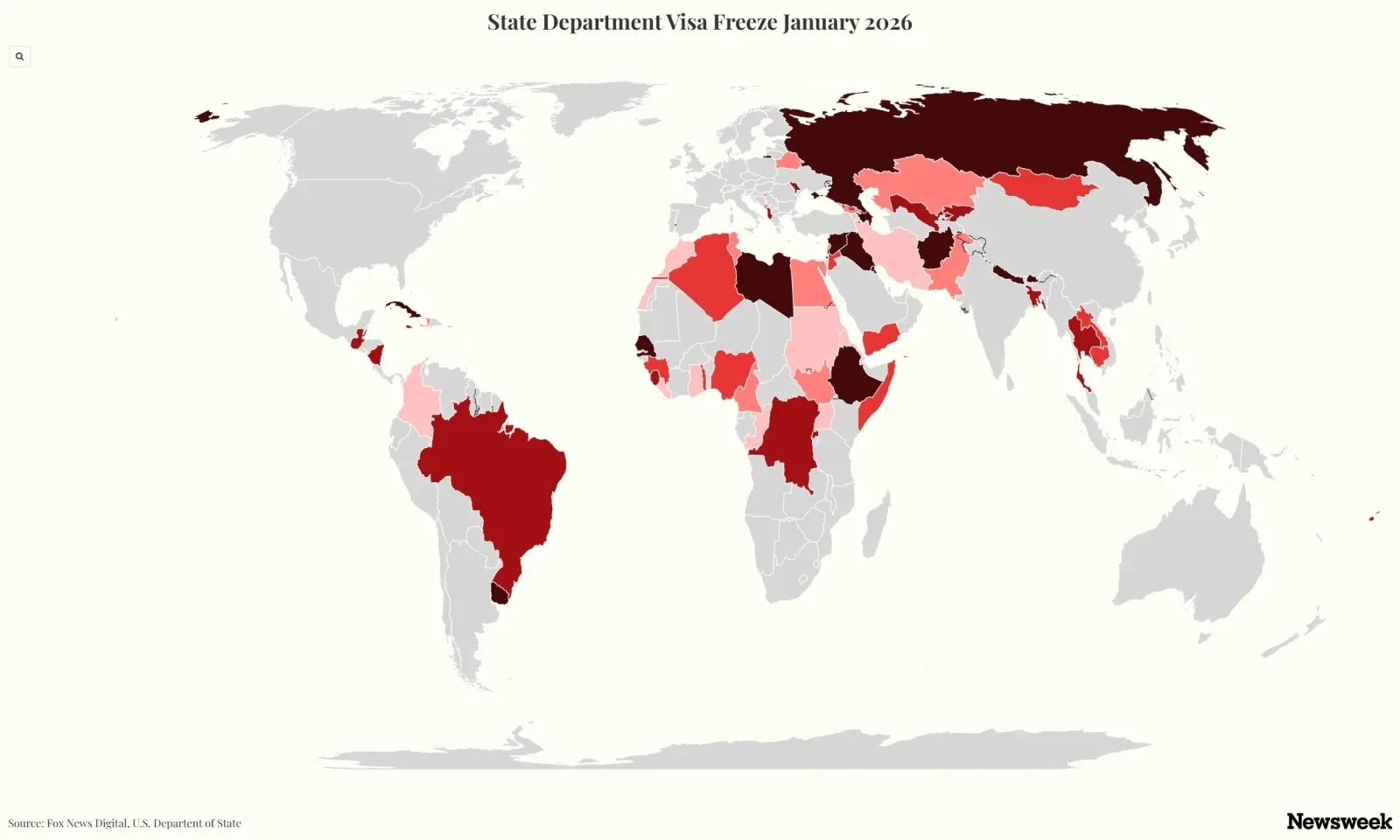
Image: This map shows the countries affected by the January 2026 Visa freeze.
The current political environment has made this work more urgent. On January 21, 2026, the State Department indefinitely froze immigrant visa processing for nationals of 75 countries, spanning regions across Africa, Asia, Latin America, the Middle East, and Eastern Europe. A separate 39-country travel ban took effect on January 1, 2026. Together, these policies now affect roughly half of all legal permanent immigration processed abroad, according to analysis from the Migration Policy Institute.
For a person with a disability waiting on a family caregiver from any of those 75 countries, an already broken system has become functionally closed. The visa petition may be filed. The medical need may be documented. The case may even qualify for expedited review. And still, there is nowhere for it to go.
The administration has also moved aggressively to terminate humanitarian parole programs, including those that had allowed temporary entry for people from Cuba, Haiti, Nicaragua, and Venezuela. For families with disabilities already navigating a system that barely met their needs, these changes are a health crisis.
CPWD serves everyone with a disability, regardless of immigration status, race, or national origin. That commitment does not change with the political moment.
What You Can Do
If you or someone you know is a person with a disability navigating immigration questions, CPWD's bilingual staff can help. Contact us at 303-442-8662 or visit cpwd.org. All services are free.
If you are an advocate, a policymaker, or someone who believes that independence and dignity should not depend on where you were born, we invite you to learn more about CPWD's immigration advocacy work and add your voice to the call for reform.
Choosing your caregiver is a civil right. It is time the immigration system treated it that way.